50 Years Ago

In the shadow world between life and death, the young girl could hear voices coming from afar. One voice sounded urgent, the other placating. The woman with the child must wait her turn.

“This child needs to see a doctor urgently”, a man interrupted. “You go first. Take my spot”, he said to the stricken woman.

A locum was on this week, a doctor that neither mother or daughter had seen before. They had been to the clinic a number of times already this month. The little girl was normally interested in adult conversations, but not this time. The child could barely keep her eyes open or sit up. “Can you do a wee for me?” the doctor asked the listless child. “I don’t feel like it”, the little girl responded, giving lie to her mother’s assertions about the child’s constant thirst and need to urinate.

The doctor turned to my mother. “I know a pediatrician in Parramatta. I’ve rung his office and he will see you as soon as you get there. Go straight there. Don’t delay”, he said.

The woman was relieved that someone was finally taking her seriously. She propped up the lolling child on the front seat of the car. Her daughter’s breathing was shallow. The mother’s gut wrenched with fear.

******

They finally arrived at Dr Vines’ rooms. The woman carried her daughter into the doctor’s rooms. The child was light as a feather, barely there, barely conscious. They were quickly ushered in.

The doctor’s office was bathed in a warm, golden light, afternoon light, and the air smelt of leather. Doctor and mother exchanged some preliminary information but there was scarcely any time for the mother to sit down before the doctor was helping her to her feet again. “Your daughter has Type 1 diabetes”, he said. He seemed to know that without examining the child. The child exuded a sickly sweet smell. “She’s very ill. You must take her to the hospital straight away, the Royal Alexandra Hospital for Children in Camperdown. I could call an ambulance to take her but that will take too long. Drive to the main entrance. The emergency team will be waiting for you there.”

The woman started to panic. She was alone with a dying child and a long journey ahead on unfamiliar roads in busy traffic.

******

The doctor was as good as his word. There were people waiting for the woman as she pulled in. “You go find a park”, another doctor said to my mother, as they whisked me away. “We are taking your daughter straight to Intensive Care. We will meet you there.”

******

I recently asked my mother about the events of that day and the days after. I wanted to know who my doctor was, what date I was diagnosed, etc. “Why do you want to know all this stuff, Trace?” she asked. “I can’t remember. I don’t want to remember. I thought you were going to die in my arms in the car, and in hospital, we didn’t know if you were going to make it.”

I replied that I needed to know this information because it was 50 years ago that I was diagnosed with Type 1 diabetes and I wanted to apply for the Kellion Victory Medal. Apart from my family, saving the planet and a cure for Type 1 diabetes, the Kellion Victory Medal is the only thing I’ve really wanted in my life. All Australians who have been living with diabetes for 50 years or more are eligible for the Kellion Award.

The Kellion Victory Medal was the idea of Dr Alan Stocks, who first put a proposal for the award to Diabetes Australia. For a brief time, at another very shitty time of my diabetes life in the 1980s, I was a patient of Dr Stocks. I was in my early 20s at the time. Dr Stocks was one of the few endocrinologists I’ve really liked, although I do recall liking Dr Vines very much. Dr Stocks told me about the Kellion Medal for those who made it to the 50 year mark. I also remember him saying that I should try to find myself a nice husband because it could save my life. This seemed a pretty odd thing to say to a 20 year old. I think he said that because he attributed his remarkable success in managing his own Type 1 diabetes to his beloved. Apparently there is now also a Kellion Award for carers, and rightly so.

Anyway, Diabetes Australia apparently needs some corroborating evidence, including a date of diagnosis, which of course, I don’t have. The only thing I have is my story. I know I was diagnosed in 1972. Between the two of us, my mother and I figured out that my diagnosis was probably later in the year, because I have photos of a very chubby me in the 1971/1972 summer, while towards the end of the year, photos show that I was very thin. Sometime in 1972, I caught measles and then was diagnosed with Type 1 diabetes shortly after that. I believe my specialist’s name was Dr Robert Vines. I can still remember the smell of his office. It is probably not enough information, but I sure would like that award.

As my mother said to me recently, “You know, Trace, we didn’t have Dr Google in those days. No-one knew anything about diabetes. I had no-one. It was frightening.”

Once again, my father was pretty useless, but that’s another story.

Thank goodness that impressive young locum was on that day. Thank goodness for Dr Vines.

Three is A Trend

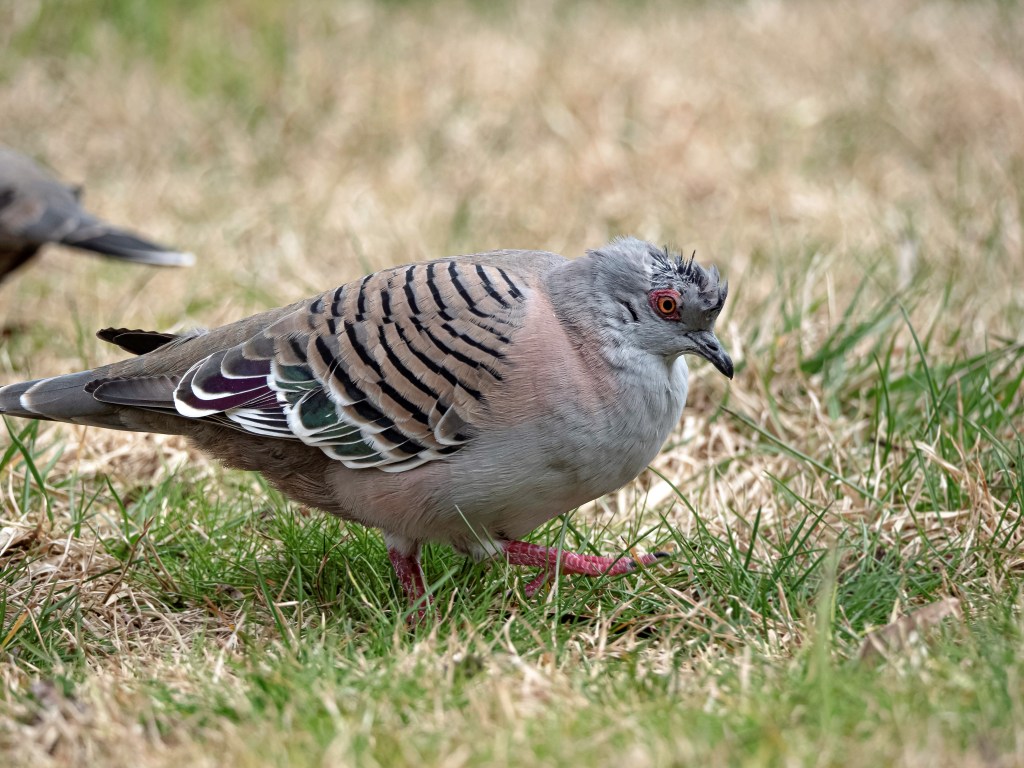
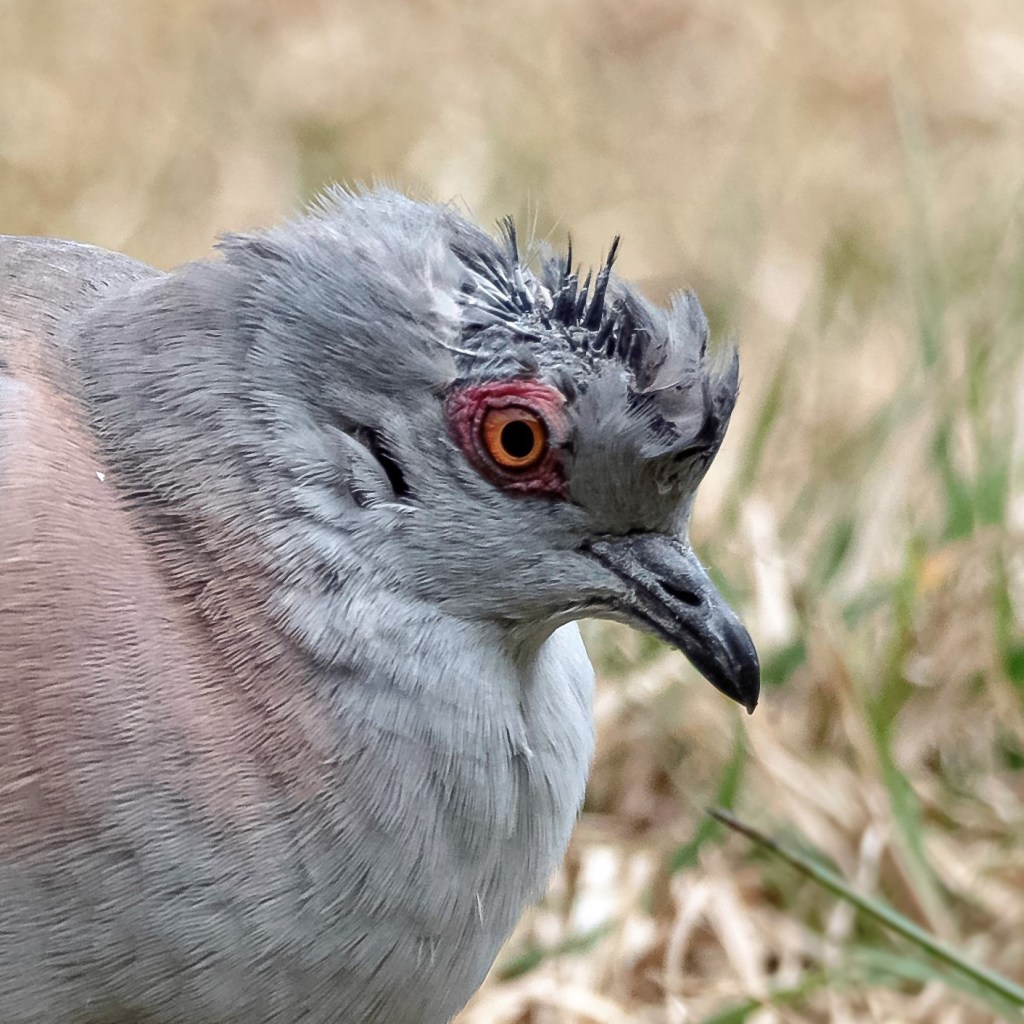
I recently reported on the deaths of two of the park birds, a magpie and a cockatoo. I always keep an open mind as to the probable cause when the manner of death is uncertain but I have my suspicions. Another bird has had a close escape. Occasionally I feed the crested pigeons. I used to give them leftover canary seed so they are regular visitors. Now there is no longer a canary so I am gradually phasing out their seed because to stop abruptly would be incredibly unfair. Plus, it is winter and seed is scarce. I took a photo of one of my favourite pigeons on its most recent visit.

Something has had a go at it. Crested pigeons, cockatoos and magpies all have one thing in common. They are ground foraging birds. If I see another dead bird, I will borrow a cat trap. Having said that, my dogs are pure evil when it comes to birds (and bees) but their technique to bark birds to death is thankfully rather inept. The bees are not so lucky.

Speaking of inept, I have upgraded photography software. It seemed like a good idea at the time but it is not very intuitive so I am keeping a low profile.

Stay well, everyone.

Kind Regards.
Tracy.

The Verge

Work on the verge, or the nature strip as some like to call it, began about a year ago. It began as a folly because our family normally call this area the dead zone. Growing a native garden under a gum tree can be difficult but hopefully not impossible with the right plant choices. We live in a frost hollow so that adds further challenges. It is winter now so not much is happening. Still, I am like an expectant mum, bursting with excitement and ready to bring home the baby. But as you know, these things cannot be rushed.

The design concept evolved over the course of the year from growing whatever would grow in the dead zone under our brittle gum, to instead targetting plants that were native to our local area (Canberra, Australia); there being quite a lot of overlap in these groups. Unfortunately my enthusiasm was not matched by my knowledge and so occasionally I planted some non-local native species in my haste to get plants in the ground before dry weather was upon us again. The definition of our local region is also very broad covering both sub-alpine temperate forests through to natural temperate grasslands on the plains.

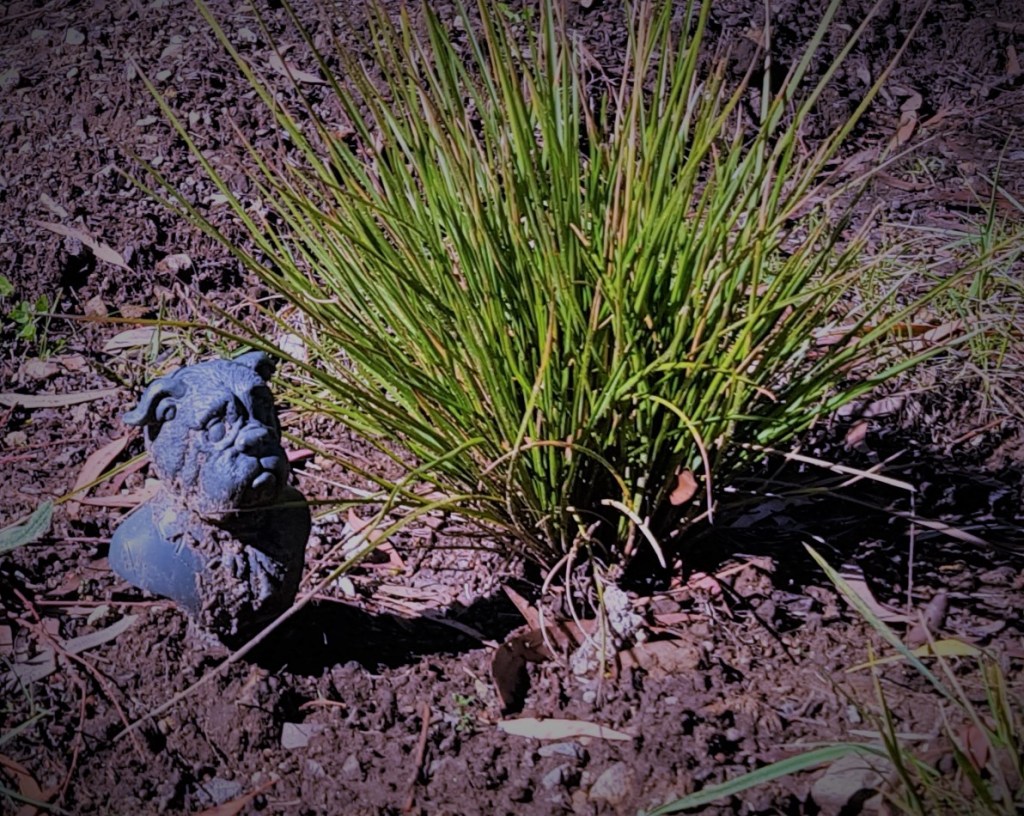
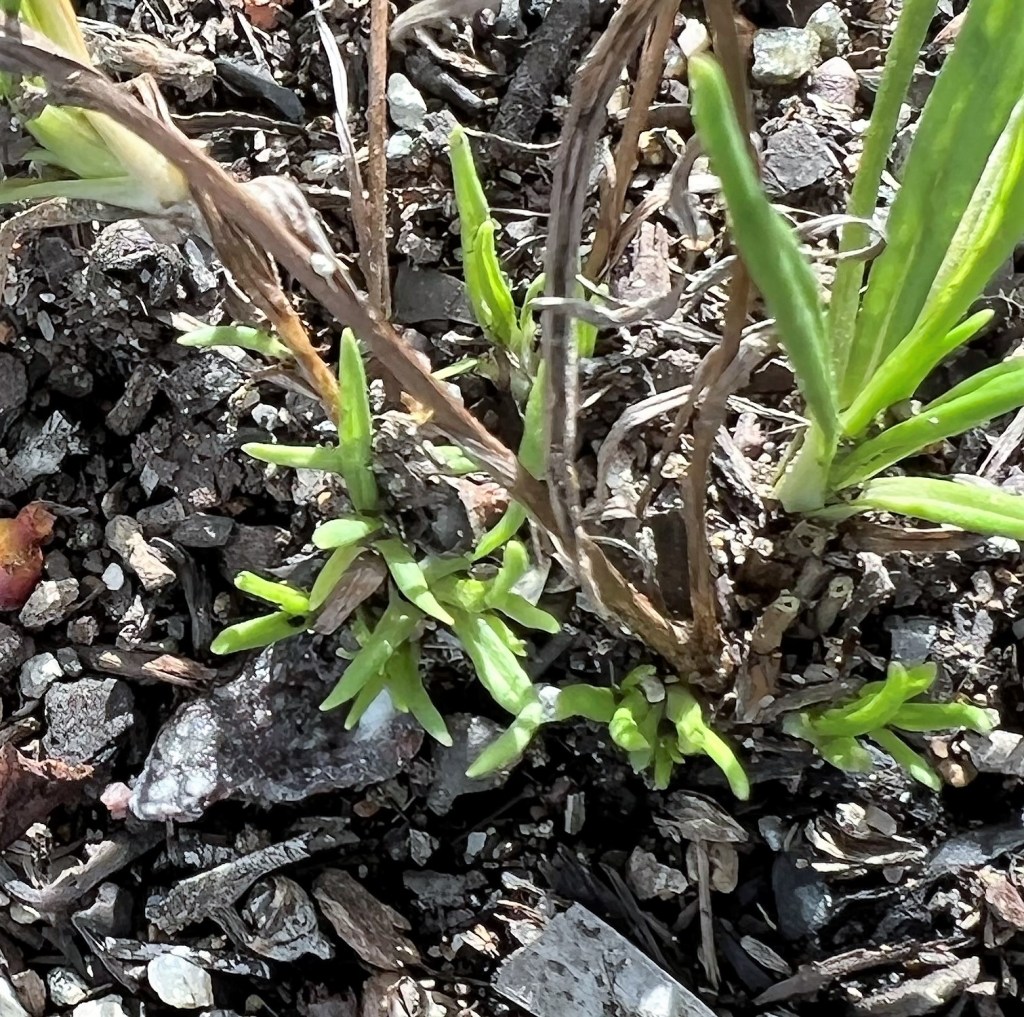
The garden is finally starting to take shape, albeit mostly in my head. To narrow down my plant choices, I began to incorporate a number of species found growing in my nearby local park or plants that perhaps ought to be growing in the park if it had been left in its original natural state. I suspect I have over-planted but I anticipate some losses. By popular demand (a couple of people), below is a list of the plants I’ve jammed into this small space. This list and accompanying photos will be updated from time to time.

Grasses

  1. Cymbopogon refractus (Barbed-wire grass) – despite its name, very soft and beautiful but highly flammable when mature. I may need to reconsider although that choice may have been made for me as it appears to have died over winter 2022.
  2. Enneapogon nigricans (Nine-Awn grass, Bottlewashers) – a small, buxom grass.
  3. Poa sieberiana (Small blue Tussock Grass) – beautiful.
  4. Poa spp (Snow Grass) – I think I have Poa helmsii. Maybe too big? Doing fantastically well.
  5. Rytidosperma spp. (Wallaby Grass)
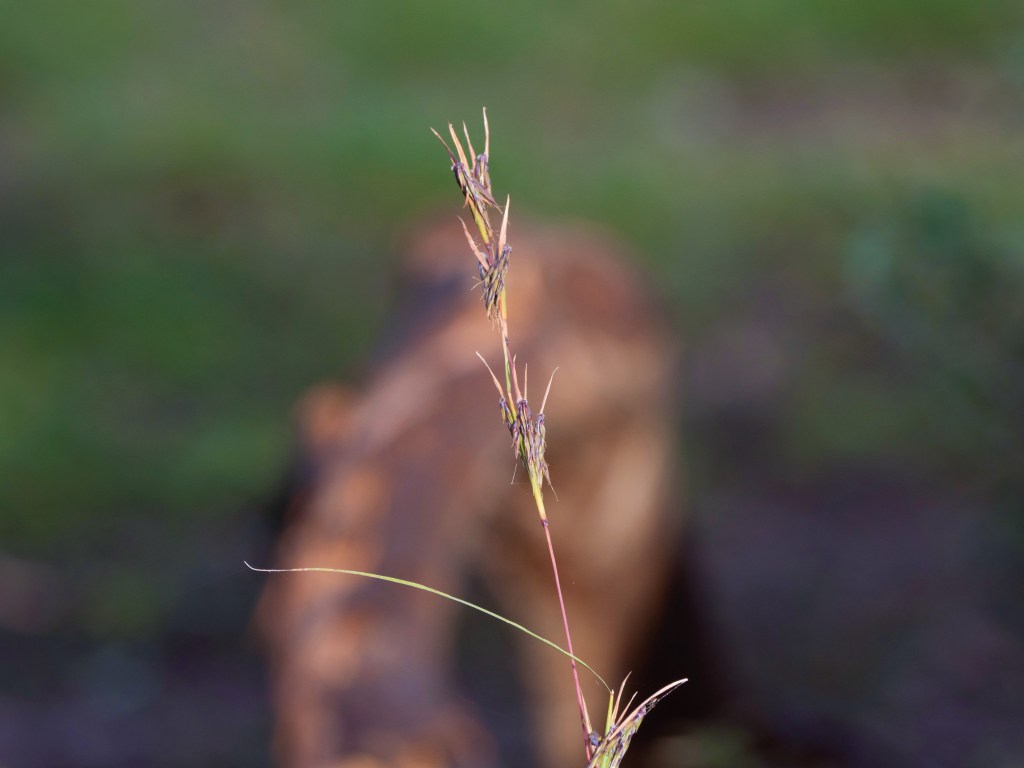
  6. Themeda triandra (Kangaroo Grass) – growing in nearby park and elsewhere in my garden.


Climbers/Groundcovers

  1. Billardiera scandens (Hairy Apple Berry) – local bush tucker.
  2. Glycine clandestina (Twining Glycine) – growing in nearby park.
  3. Convolvulus angustissimus – another species that occurs naturally at the park (where there are fewer snails!)
  4. Hardenbergia violacea (Native Sarsparilla) – limited success previously but wrens seem to like it so I am trying again. Barely survived winter 2022.
  5. Ziera prostrata – non-local threatened species. Unlikely to survive.


Shrubs

  1. Eremophila ‘Piccaninny Dawn’ – non-local but an eremophila that survives in Canberra! I’ll take it.
  2. Eutaxia obovata (Egg and Bacon Plant) – non-local. Shade-loving. Doing well.
  3. Olearia phlogopappa white (Dusty Daisy Bush) – often found locally in alpine areas and/or moist to wet forests.
  4. Pimelea linifolia (Slender riceflower) – a favourite of my son.


Herbs (Forbs)

  1. Arthropodium milleflorum (Pale Vanilla Lily)
  2. Arthropodium minus (Small Vanilla Lily) – eaten by cockatoos
  3. Bulbine bulbosa (Bulbine Lily) – fire resistant, bush tucker
  4. Bulbine semibarbata (Leek Lily) – fire resistant
  5. Calocephalus citreus (Lemon Beauty Heads) – grassland plant doing really badly.
  6. Chrysocephalum apiculatum (Common Everlasting/Yellow Buttons) – keystone grassland plant.
  7. Chrysocephalum semipapposum (Clustered Everlasting, Yellow Buttons)
  8. Craspedia variabilis (Billy Buttons)
  9. Eryngium ovinum (Blue Devil) – spiky but beautiful, dies back in autumn. Seen previously in nearby park but no longer present. Also elsewhere in my garden.
  10. Leucochrysum albicans (Hoary Sunray) – threatened species.
  11. Rutidosis leptorrhynchoides (Button Wrinklewort) – endangered, heartbreaker, ie. difficult to grow. I’ve not had much growing it elsewhere in my garden.
  12. Stylidium graminifolium (Grass Trigger Plant) – because I like them.
  13. Thysanotus tuberosus (Common Fringe Lily)
  14. Vittadinia muelleri (Narrow leaf New Holland Daisy) – growing in nearby park.
  15. Wahlenbergia stricta (Native Bluebell) – native bee loves them. Prolific.
  16. Wahlenbergia communis (Tufted Bluebell)


It is difficult to get the big picture of the garden from the small seedlings in the garden. I will post more photos in spring.

Happy gardening, everyone.

Kind Regards.
Tracy.

*Photos from plants growing elsewhere in the garden.

Last Updated 30/10/2022

Lens Artists – Motion

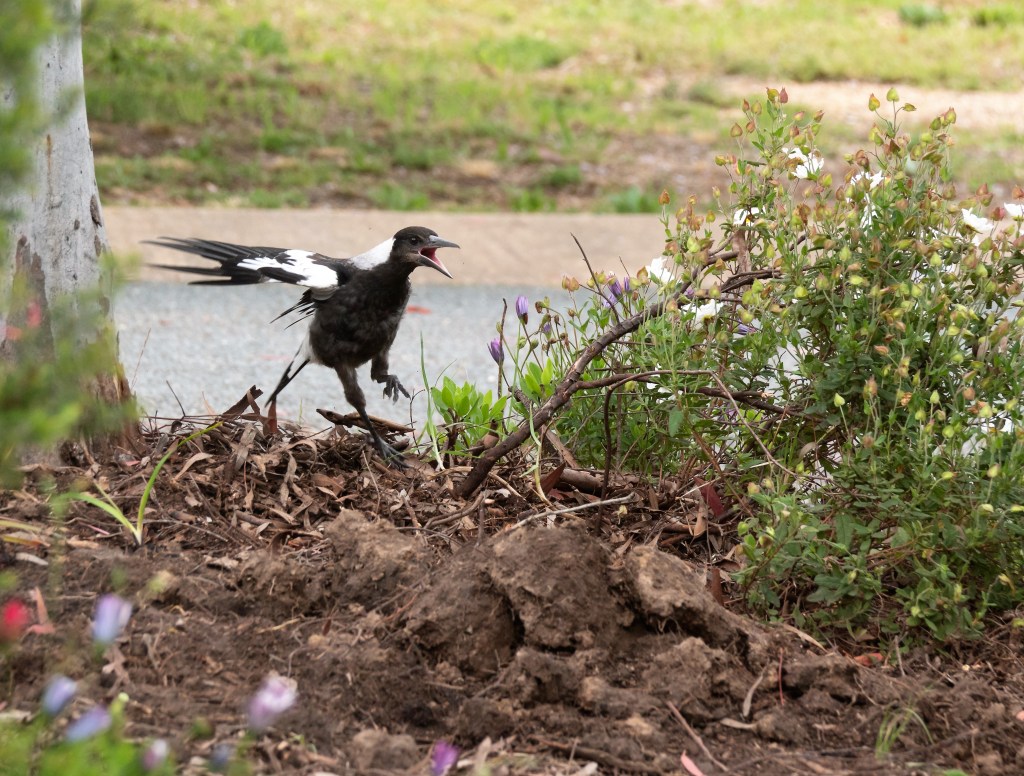
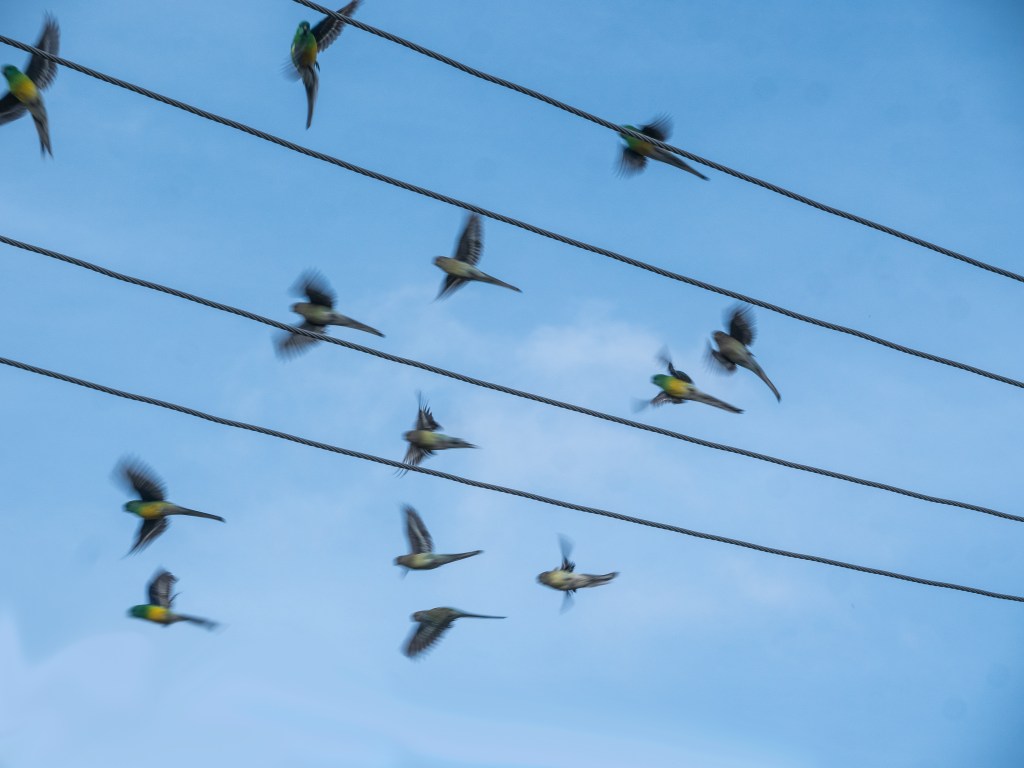
I just happened to have a couple of motion shots that I haven’t published and one that I have. Only three photos, so I thought I would slip in a poem or three. Enjoy.

Strong is mother’s instinct to provide.
Strong is the instinct to survive.
Run along, hungry bird.
Run to mummy.

Showers came in repeated waves
in front of frigid wind.
On the pinnacle, leaves jostled
for attention, but no one saw or heard.

The air shimmers with your power.
The future is green energy.
It won’t hurt you.

Patti, who is back from her holiday, is hosting the Lens-Artists Photo Challenge this week. The theme for the challenge is Motion. Click on the link here to view Patti’s wonderfully creative photos and to discover how other Lens Artists have interpreted this theme.

Take care, everyone.

Kind Regards.
Tracy.

Quick question. Is it acceptable to mix my tenses as I did in that second poem? Okay, I fixed it because it bothered me but it lacks something now. It will do.

Cutting It Up

Welcome to my regular Friday song/tune day, ladies and gentlemen, where I pick a piece of music that reflects my mood or the times, to share with you.

I am having an explosion of gardening creativity at the moment, readers, so unfortunately Friday song day is not getting a look in lately. I have therefore decided to have a break for a month and then re-assess. I want to leave you with one last song before I head off with my pitchfork.

Today’s song is Bored by Canberra’s very own, Sesame Girl. Lead singer, Heather, happens to be my friend’s niece. Check ’em out and remember musicians gotta eat. Enjoy.

Kind Regards.
Tracy.

Lens Artists – Picking Favourites

During July, the dedicated, hard-working hosts of the incredibly popular Lens-Artists Photo Challenge take a well earned break from their hosting duties and co-opt five guest hosts to take on this important responsibility. Wrapping up the final week of the month, is guest host, Sarah, from Travel With Me. Sarah has chosen the theme ‘Picking Favourites’. She has asked that respondents pick three of their best/favourite photos, one each from three different photographic genres. Sarah has also requested that respondents outline why they chose a particular photo. Tough assignment but I’ll give it a go. Here is my response.

Read more

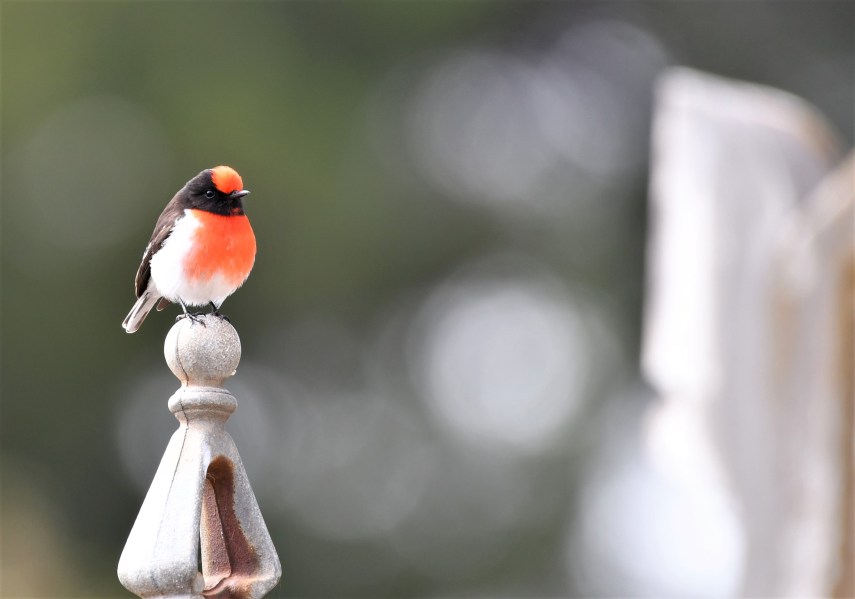
He – Red Capped Robin

Reprise from August 2019 – the start of the fires on the east coast of Australia that traumatised a nation.

I don’t know why my husband and I felt compelled to stop at the old cemetery on that blustery day.  We certainly didn’t go there to take photos.  So maybe it was intuition, a guiding hand.  The power of the robin.  He.  Red-capped robin. Read more

Cashless Fuel Economy

Welcome to my regular Friday song/tune day, ladies and gentlemen, where I pick a piece of music that reflects my mood or the times, to share with you.

I’m struggling with my Friday song day. Perhaps after all these years, I’ve got no songs left in the tank? Some pretty eye watering inflation figures were released in Australia this week. Not as bad as some countries. Apparently, we’ve got coal and gas, to borrow a phrase from a friend, “up the wazoo”. There’s always a but. The price for Aussie gas is set by the global market so we pay the international price. Gas is not the only commodity that is determined by the global market. Aussies, do you reckon you’ll be able to afford your usual groceries in a war/pandemic/climate catastrophe-driven global food shortage?

In the forthcoming federal budget, I will be looking to the new Australian government to stop all public subsidies and public largesse for fossil fuel projects. Gosh, if ordinary people have to pay the fuel excise, I can see no reason why the coal and gas companies should continue to benefit from the diesel fuel rebate. Fair’s fair, right?

Anyway, I digress. I suppose I may have a few songs left. Today, I thought we should listen to an Aussie band. Here is Perch Creek performing Gold Shop. Enjoy.

Check out their album and if you’ve got cash to spare, musicians gotta eat.

Take care, everyone.

Kind Regards.
Tracy.

Lens-Artists Challenge #209 – Surreal

I was recently invited by the Lens-Artists team to be a guest host of the Lens-Artists Photo Challenge, and now, finally, my turn has arrived! I am so excited. I’ve chosen the theme of surreal for this week’s challenge. I think of that word each time I exclaim: “Has the world gone mad?” It’s bizarre. Some might even say, “surreal“. It was therefore no surprise that a century ago, at another time of great societal upheaval, surrealism as an artistic and intellectual movement emerged. Photography too had its place in this avant-garde art form with notable photographers such as Man Ray, Dora Maar, Maurice Tabard, Raoul Ubac, Toshiko Okanoue, Florence Henri, Claude Cahun and Angus McBean, among others, arguably being among the very first lens-artists.

Read more