Garden Artistry

I have been asked by one of my readers to post some progress photos on my verge garden that I started during Covid. Since my verge garden is pretty plain, even plainer than in the first year or two that I planted it out, I will extend this show-and-tell to another small patch of my front yard that I have been giving a makeover.

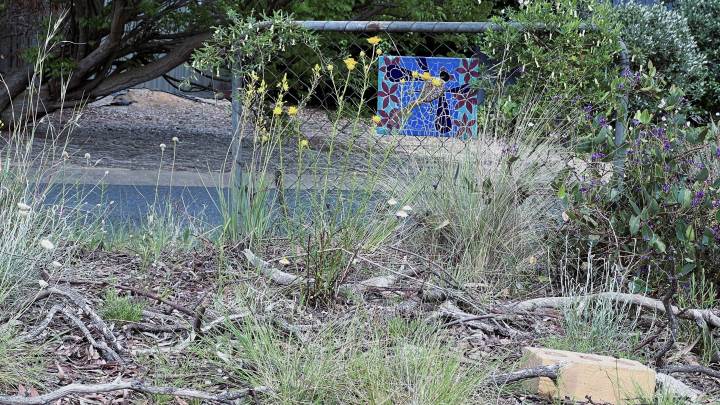
The verge garden has had some setbacks with several plants finding the conditions too harsh/cold/hot/wet/dry, etc. The central feature of my verge garden is the brittle gum (E. mannifera). Brittle gums are difficult trees to grow anything under, especially plants that come from Western Australia, which is on the other side of Australia from where I live. So, duh, I shouldn’t have been surprised by the outcome. So, I’ve found some plants that like to grow under brittle gums and they are going well. Let’s take a look.
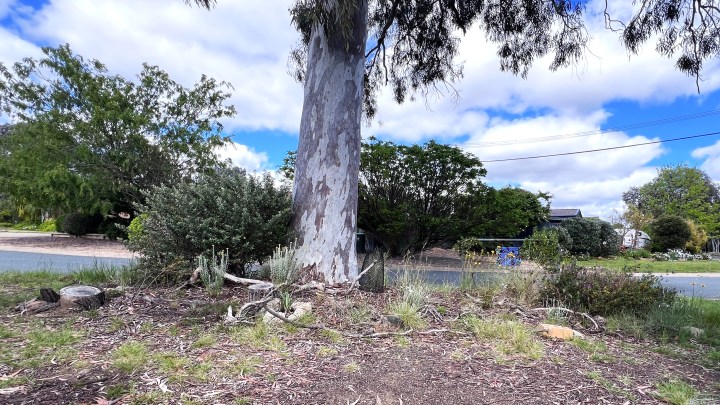
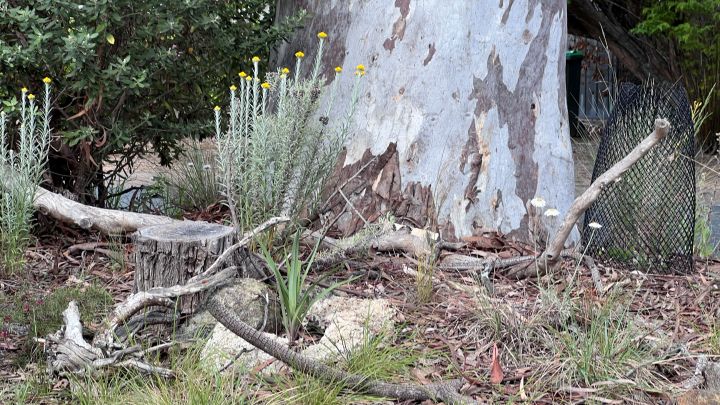
I’ve planted a couple of tiny shrubs on the right hand side because the lack of symmetry offends me.

Not much happening here but, fingers crossed, my vanilla lily might flower this year.

Your view of the bulbine lilies will be interrupted by a shrub in future years.

I’m being hyper-critical. If I was to come across a patch like this under a brittle gum in the bush, I would be delighted. So I’m delighted. Still, six years is a long time to see results.

Keeping with the natural bush theme and planting of locally indigenous plants, I decided to hack out the kikuyu in the front yard. I’ve been working on this for three years now and I’ve only rehabilitated a few square metres. It is one thing to work to improve a patch of woodland that already has an understorey of native plants. Nature is a great artist and she guides the way. However, it is more challenging to create a grassy woodland understorey from scratch, especially without a plan. Voilà the current state of gardening play –
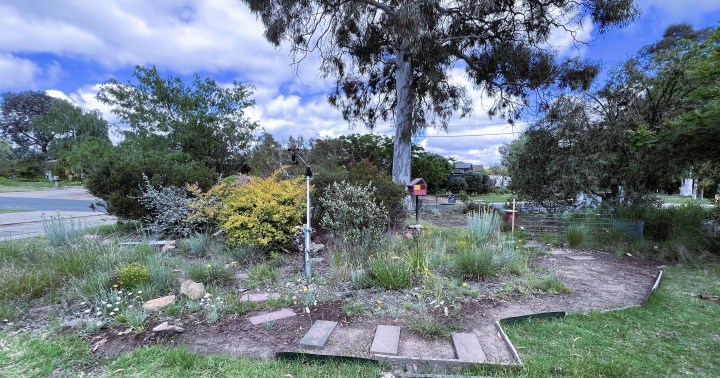
I started with a couple of existing tussocks of kangaroo grass (Themeda triandra) and a few wallaby grasses that I began to work around, clearing the kikuyu and other weeds. The plan is to gradually push back the exotic grass.
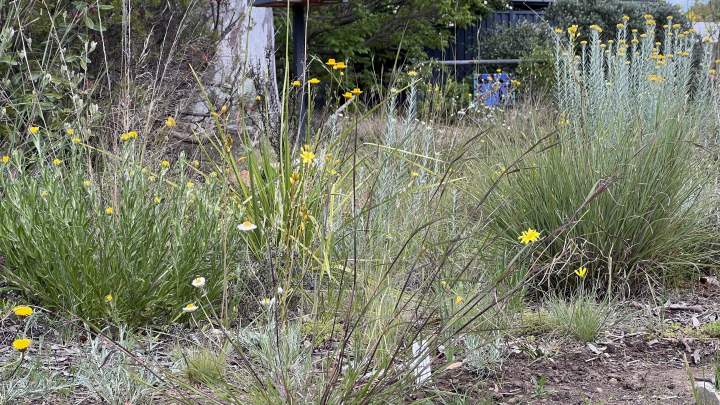
Two years ago I planted out the area below. It is very grassy now. I love it.
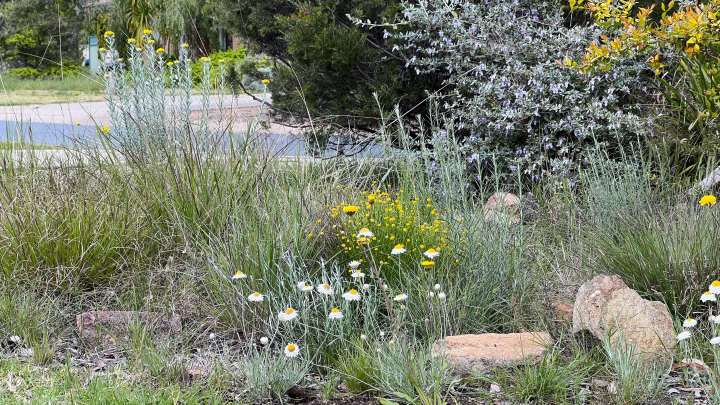
Then I started on the following area last winter and the current spring.
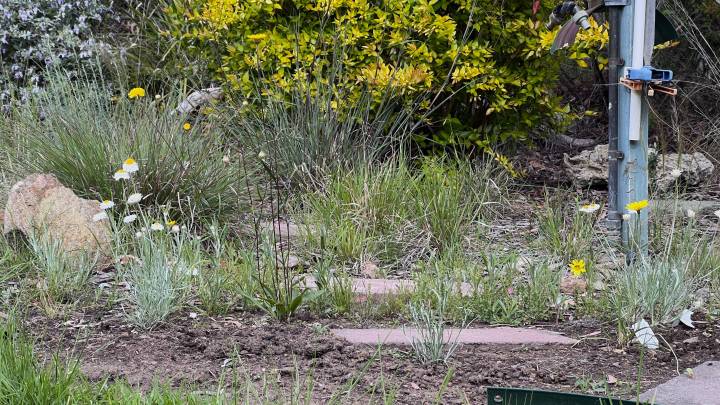
I’m thinking of moving to my twilight home. You know, the one with less yard. No one appreciates this type of garden so when we sell the house, no doubt someone will scrap the native garden and replace it with viburnum hedges and whatever else is the current fad. In the meantime, I need something to do so I will keep improving biodiversity in my own yard. Every little bit helps, especially these days.

Do you have a project to keep you sane and leave the world a little better off? If not, perhaps start something, or plant something, small and watch it grow. I highly recommend it.

Take care, everyone.

Kind Regards.
Tracy.

Pink and Grey

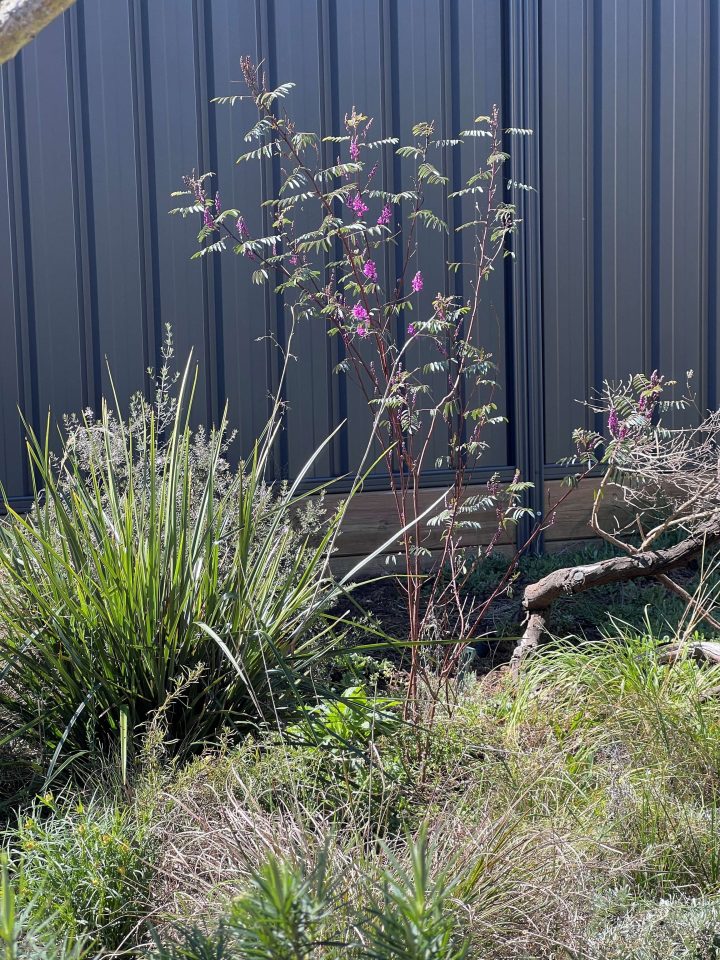
Our neighbour wanted to replace the old timber fence so now we have a grey metal fence which meets the old timber fence of our other adjoining back neighbour. I’m not a fan of the impersonal metal fence but it does make a good backdrop for photography.

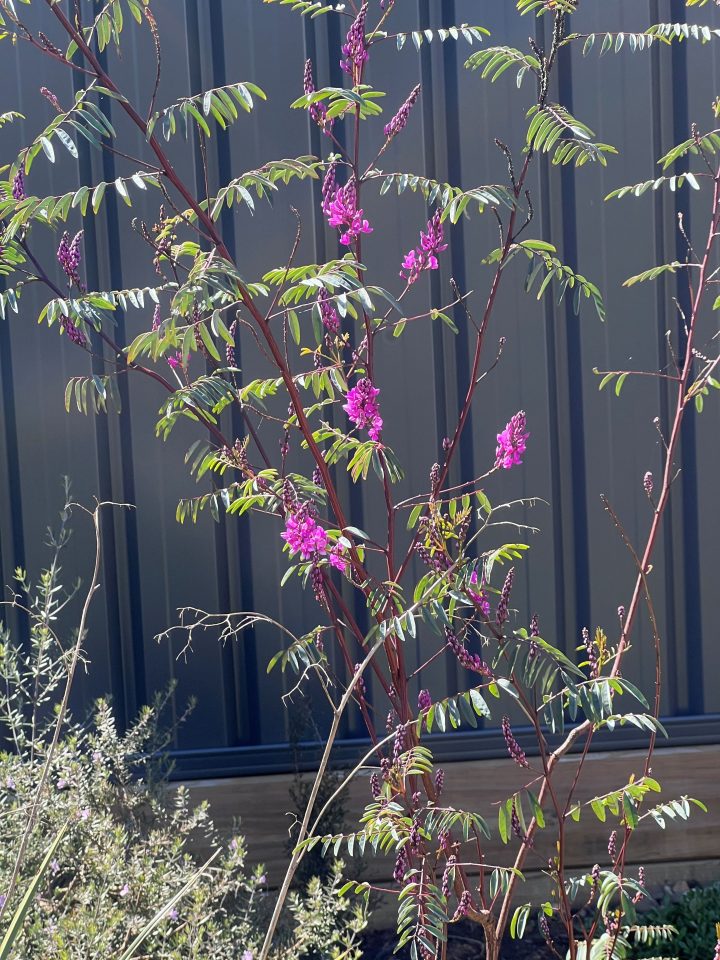
Last year the Indigofera that I planted was killed off in the frost, but it shot again from the base. This year winter was much milder so it did well and is now flowering beautifully. It looks stunning against the grey, even if I do say so myself.

When I went to the Threatened Species Awareness talk last week, I learnt that the endangered Keys Match Stick grasshopper only moves between 200 and 300 metres in its lifetime, so its habitat can be easily fragmented by urban development and metal fences which are obstacles to its movement. At least the other half of my back fence is timber. I have seen a little grasshopper that looks similar at my local park less than 200 metres away. So I hope.

My backyard is looking very sparse and hot without the critically endangered Tumut grevillea that succumbed this year. It only grows in a small area of southeastern Australia but can be bought from native nurseries for home gardens. I have two baby Tumut grevilleas which are its progeny. Only one leaf each. So tiny and an exceedingly hot summer ahead. Still, I can hope.

Life is busy. The dogs are still alive. So is my True Love. Ditto my children who are no longer children. I count myself lucky.

If you are in Canberra this Sunday, the 27th, and wondering what you can do on this cold and blustery day (a change of weather is predicted), why not join the Conservation Council walk to showcase Canberra’s western edge? Canberra’s undeveloped western edge is the next frontier for urban development. The Western Edge is iconic landscape and home to many threatened species. Someone said to me that developing it would be like putting houses all over the undeveloped areas of the Lakes District. Dumb. Anyway, I happen to know that there are vacancies available for the walk. Yep, I’m leading it with a little help from my friends. How the heck did that happen? We don’t have a defibrillator so if I keel over, at least I will die happy.

Take care, everyone. Have hope.

Kind Regards.

Tracy.

A Canberra Gardening Story – Restoring Native Habitat – A Gamochaeta-Led Recovery

2025 was the year I tended my neglected backyard veggie garden and went wild.

In 2024, my TL and I (mostly my TL because I hate gardening) abandoned the veggie garden due to the rodent plague and possum party. Now with three years of Aussie landcare under my belt, I was horrified that my veggie patch had been overtaken by every exotic weed known to box gum grassy woodlands and natural temperate grasslands. So much fleabane (the weed you never walk past) and Gamochaeta (the latter an exotic cudweed)! I’m not sure whether the soil is so good because of the Gamochaeta, or the Gamochaeta so happy because of the soil. I also had some Euchiton (local cudweed), oxalis and other weedy natives, plus one small kangaroo grass (Themeda) tussock, a remnant of a bigger patch that I had exterminated due to the seeds not agreeing with the dogs at one point! Dogs now shut out due to noise issues associated with their favourite prey – rodents.

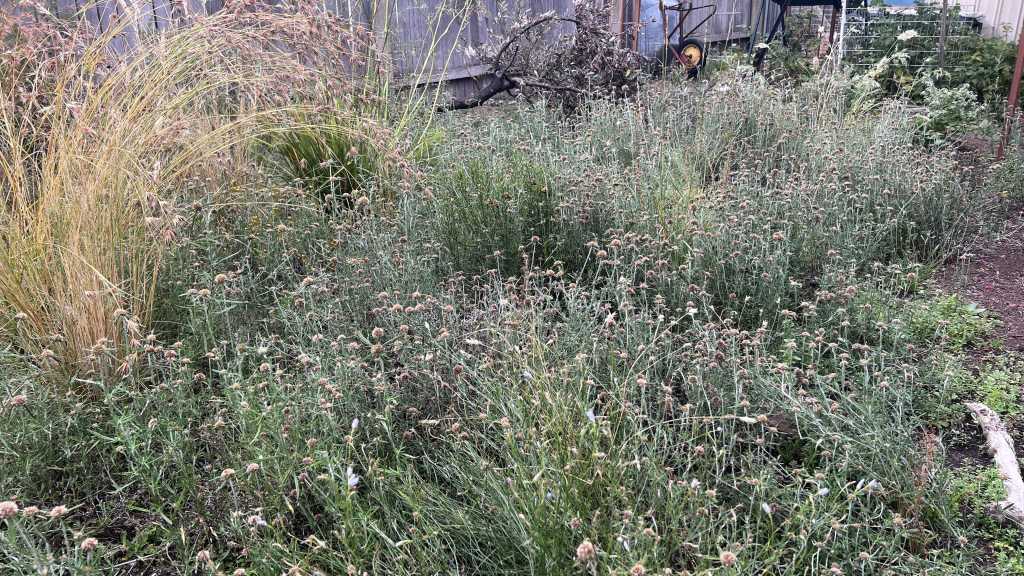
Our backyard soil is what’s known as “seasonally damp”. In summer 2025, I took to the weed whacker with gusto. I planted a couple of native forbs but they didn’t thrive due to the summer sun sapping the life out of the soil. I also threw in some Euchiton seedheads from plants growing up through my pavers. Anyway, by Spring 2025 I had lots of Gamochaeta and Euchiton. Ta da!

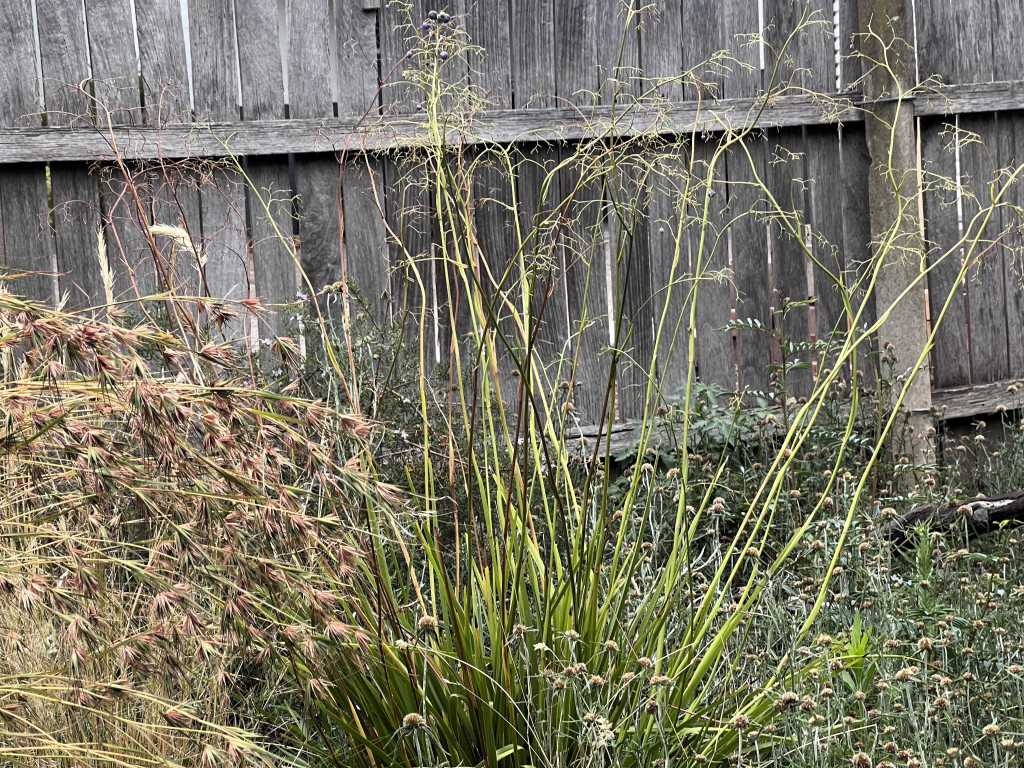
That dead looking shrub in the background of the above photo is a Tumut grevillea. The birds and insects loved it. A week ago I saw its tiny offspring in the Euchiton patch! I hope it survives the heatwave.

Anyway, have you ever seen so much Euchiton in your entire life?

Themeda, Dianella, and a glimpse (back right of photo) of the Indigofera. Also, Euchiton ….

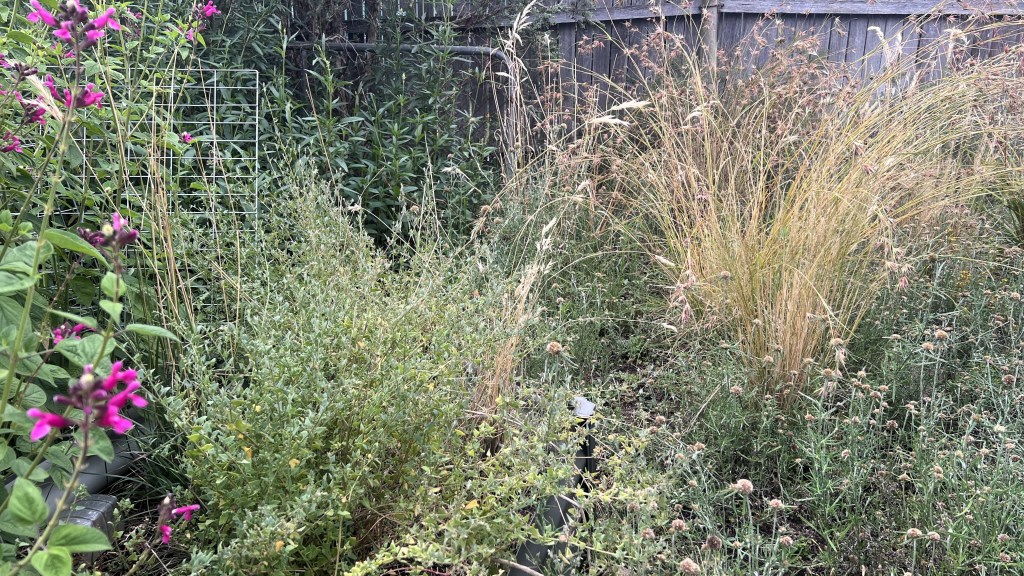
I am keeping some pink salvia because the Blue-banded bees love it. They are experts at buzz pollination. Varroa mite has recently spread to Canberra so the honeybee population is likely to collapse and their numbers not expected to rebound for several years. Blue-banded bees will also pollinate your tomatoes so please keep the pesticides and herbicides to an absolute minimum to support our native bees.

The next step will be to cull some of the Euchiton to make way for some other local forbs and to give our cheeky (and apparently declining) wrens, a space to forage. The native crumb weed (Dysphania pumilio) has now begun its surge. Gosh, the wrens love it. It will also keep some shade over the bare soil when I pull out some Euchiton. Canberra landcarers, please get in contact if you need a colonising species.

Take care, everyone, and happy landcaring.

Kind Regards.
Tracy.

Urban Landcare – A Little Charmer

Just wanted to say a big thank you to our small band of dedicated volunteers who have been pitching in over the last 18 months to help a small green space be its true self. You make a difference.

If only there were less red tape and more green ribbons, but that is an interesting understory for another time. Time for a photo.

I’m so glad I work for love now. Box gum grassy woodlands with a healthy understory are critically endangered but not yet extinct in our suburbs.

Take care, everyone. Grow strong.

Kind Regards.

Tracy.

The High Life

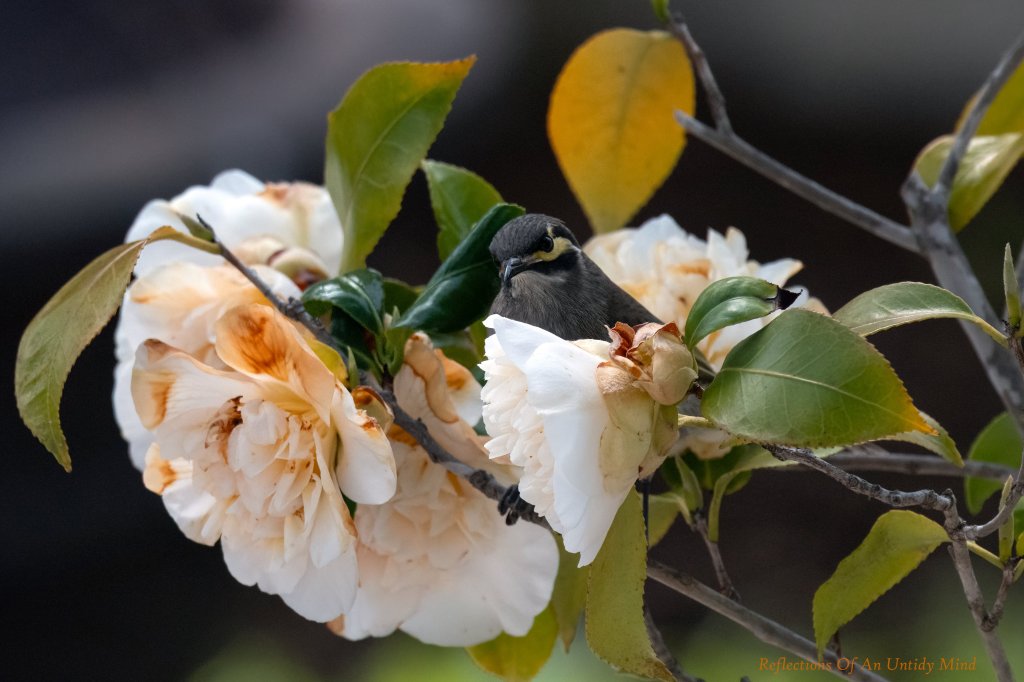
The honeyeater migration is underway. As I have gone native, that is, planting species indigenous to my local area, I have been contemplating ripping out all my exotic plants. It doesn’t help that my new neighbour is trying to hedge me in with European plants. This is ‘Straya, I feel like saying.

Anyway, the visiting Yellow-faced honeyeaters have reminded me that it is okay to retain a few of my less weedy exotic shrubs.

I knew it! Everyone loves camellias.

Still, the woodland birds really love the garden changes. They are coming in droves now.

Take care, everyone. Grow it and they will come.

Kind Regards.
Tracy.

24 Stories – IV – Save Our Trees

It is hard work being a campaigner/activist/decent human being.

During 2024, I spent far too much time rehabilitating our local green space. A big shout out to everyone who joined our Landcare team on this journey. Thank you. In my spare time, I also started a campaign to save some nearby trees. See here. I seriously doubt my ability to keep up the pace. Now I have to write some letters to the powers-that-be. Despite whatever conclusions you may come to while reading this blog, I can assure you that writing is not my forté. Eating chocolate while never getting past the first paragraph is more my thing.

I’m pretty annoyed at how my suburb has been treated. While other suburbs get rehabilitated green spaces and wetlands, we get another big shopping centre, a concrete footpath, yet another sporting oval, and a main road replacing our habitat trees. More trees will be planted apparently to offset the destruction. However, the remnant trees that are to be removed are irreplaceable. The little birds may also have something to say about the removal of many of the other eucalypts that fringe our suburb. Meanwhile, our Landcare team is waiting for a local eucalyptus sapling we requested, to be planted at our Landcare site. We have been waiting for nearly two years. Apparently, there is a shortage. Well, duh. It is no wonder the government’s vote declined at the last election. Wouldn’t it be good if I could send them a message another way, rather than wasting my precious time on writing letters that more than likely will be ignored? Something like this music clip below perhaps.

Hmm, I think I may have just written my letter.

Thanks for your help, everyone.

Kind Regards.
Tracy.