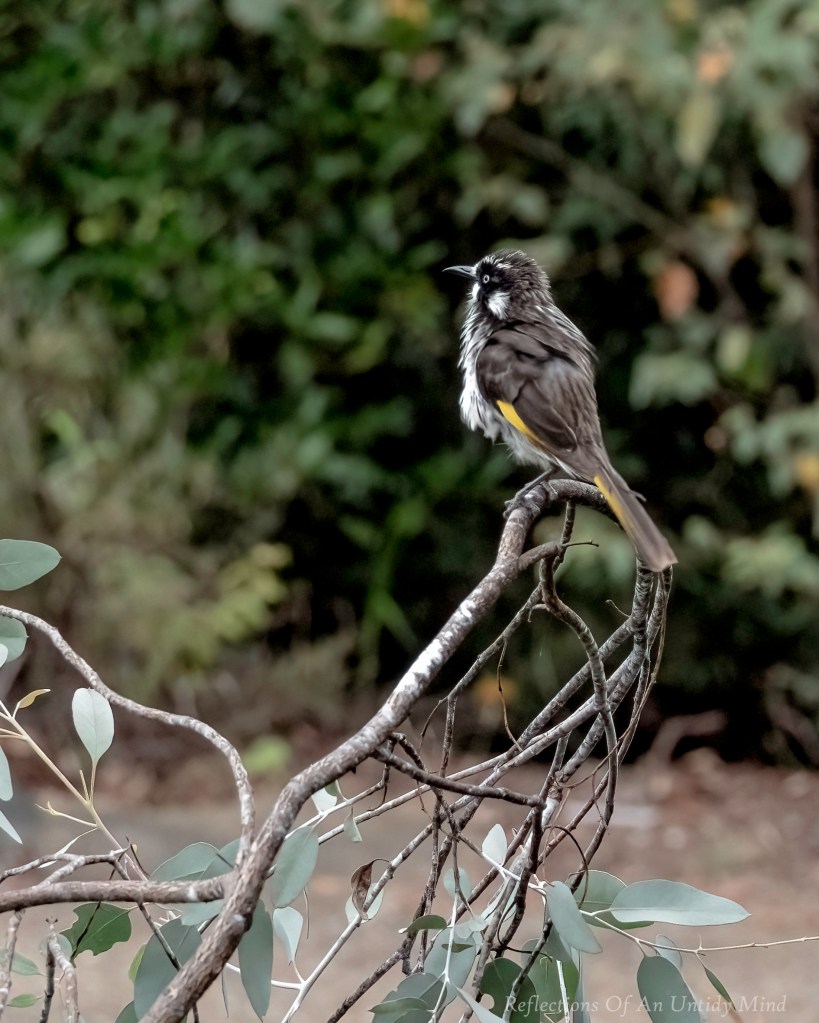
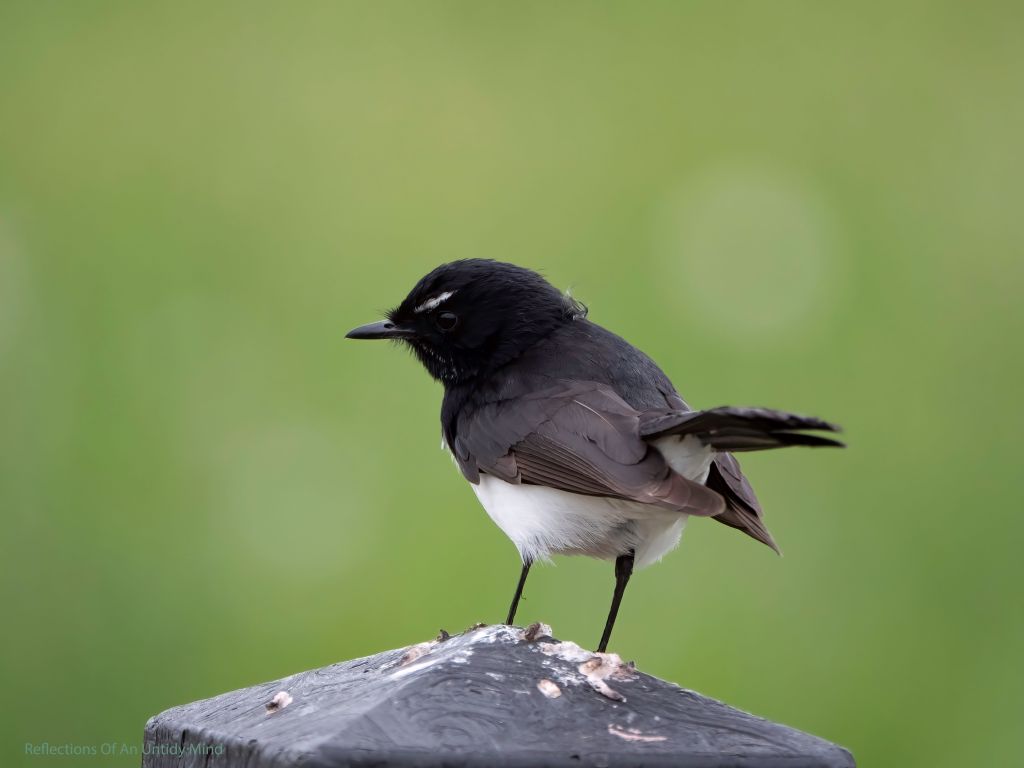
You may be excused for thinking this is Bushboy’s blog, readers. It isn’t! I suppose one of the consolations of having so many rats this year, is that we have had so many more little birds visiting us as well. Anyway, my True Love spent the three weeks of his holiday plugging tiny gaps to prevent the rats getting into the house, thus trapping most of the rats in our roof and wall cavities. We can hear them thundering across the ceiling, perhaps in some rat version of Lord Of The Flies. So maybe the little birds are more comfy to stick around for longer. Anyway, anyway, I digress. There were at least 30 little birds in my yard this morning. This is really extraordinary for our place. They usually never stop to bath in the bird bath but now … they’re into it.
However, one of these birds is not like the others. Equal opportunity here, readers. Well, apart from the rats.
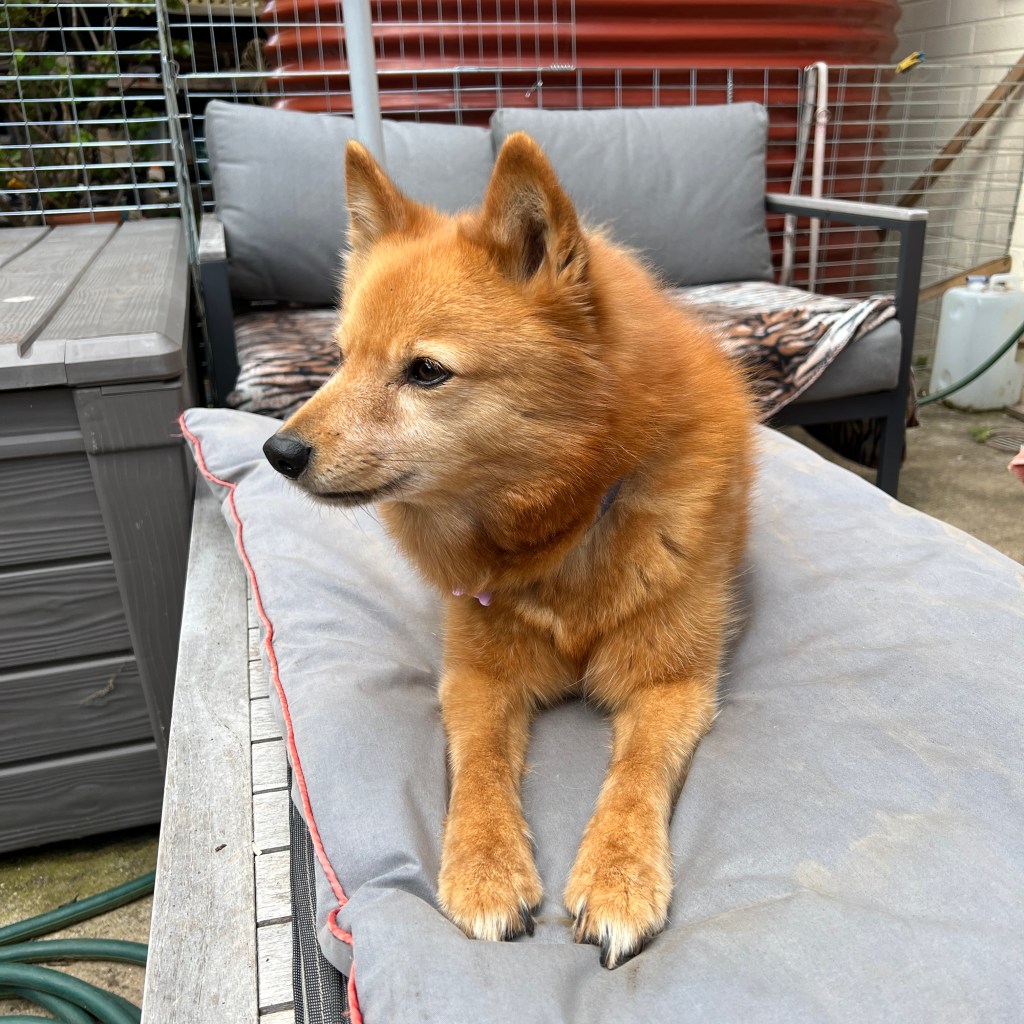
Fortunately, I can now share the joy with you as my youngest son has repaired our internet cable. Our dog, Fynn, chewed through the data cable because he was convinced if he could just rip out the cable, he could start on the wall next, and thus have the starving rodents leap out of the wall cavity into his waiting jaws. Life’s never boring with a Finnish Spitz! But it is not just our house, readers. My vet told me that his cat keeps bringing live rats into the house through the cat door. I am so glad I don’t have a cat.
When my family got involved in the regeneration of our local woodland, I never imagined that one of our tasks would be to photograph the insects in that space. My True Love (TL) needed little encouragement as he already had an interest in insects. Suffice to say, he has found it extraordinarily difficult to get these small creatures in focus. The wind seems to blow constantly and the insects make haste to avoid being eaten or to eat others. Kudos to all the insect photographers out there. I’m not one of them. You have to take lots of photos to get one or two in focus, at least my TL does on his particular camera. Anyway, today I am featuring a few of the photos my TL has taken over the last six months. Let’s get started.
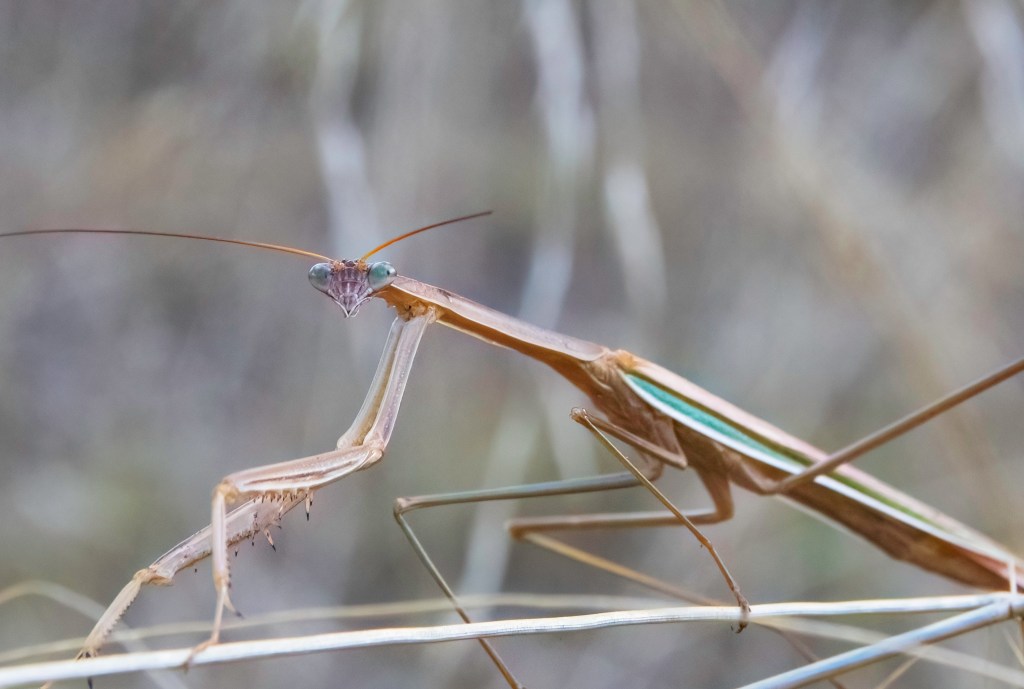
Bug eyes.
Purple-winged mantid – Tenodera australasiae
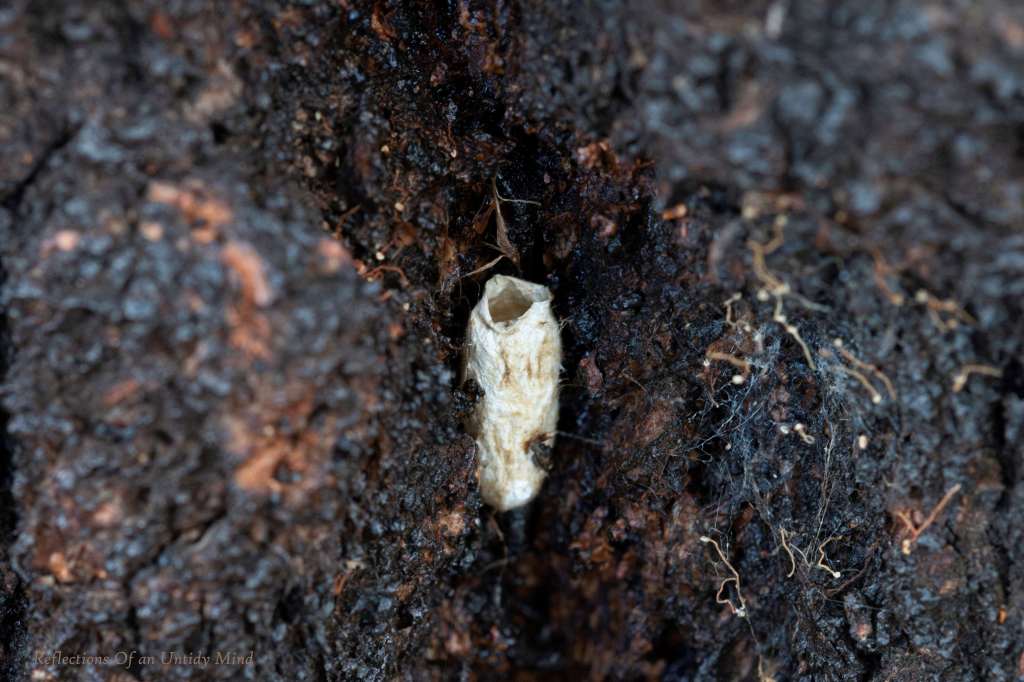
What do you think? Spider egg sacs?
Two-tailed spider egg sac?
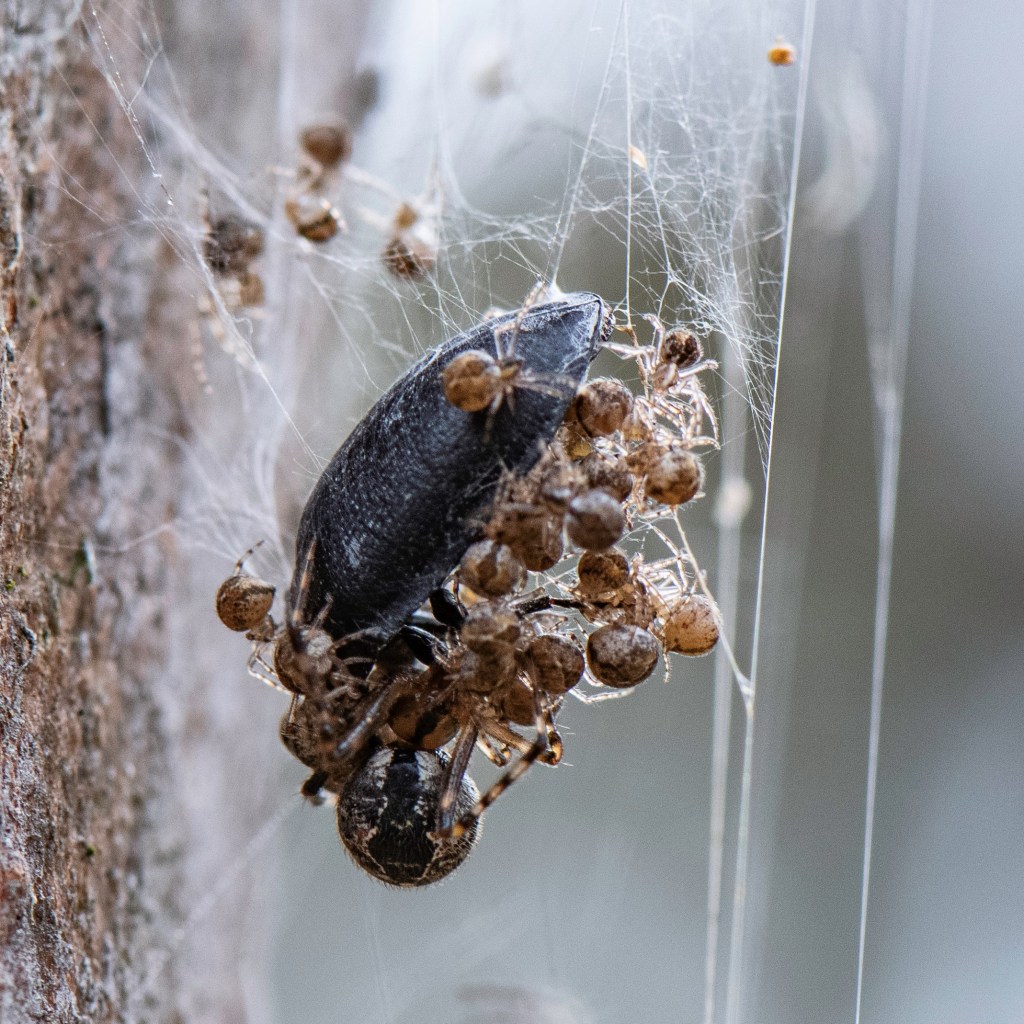
Beetles seem to be the favourite prey of many insects, although to be strictly accurate, spiders are not insects.
Apparently the Cerceris, or digger, wasp likes beetles too. My TL is lucky enough just to get the photo of the wasp, so no beetles were eaten in this photo. Cute, don’t you think?
Cerceris wasp – Cerceris sp. (genus)
My TL also took some photos of cuckoos. How about this tiny cuckoo wasp? It is only about 4-5mm long and super fast.
Cuckoo Wasp – Primeuchroeus sp. (genus)
And a Chequered cuckoo bee. Seriously, there is such a thing.
Chequered Cuckoo Bee – Thyreus caeruleopunctatus
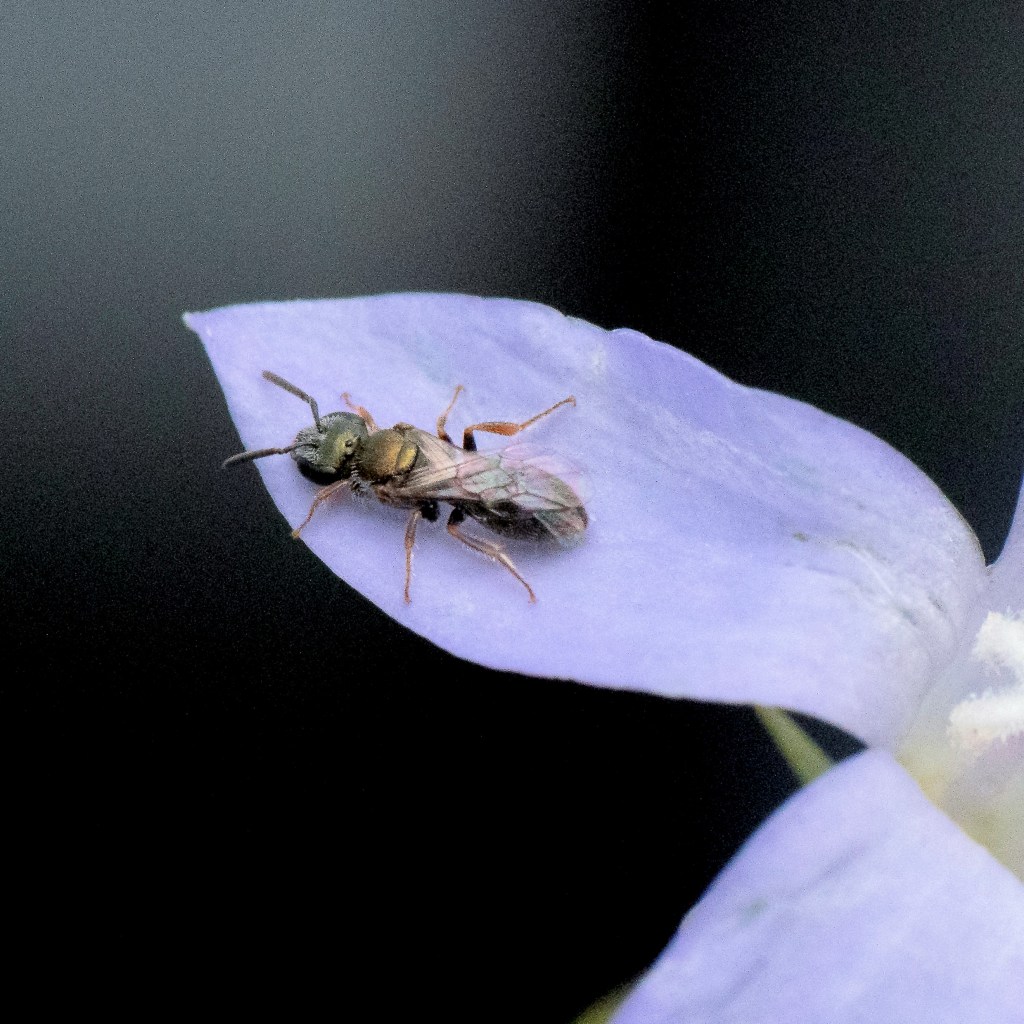
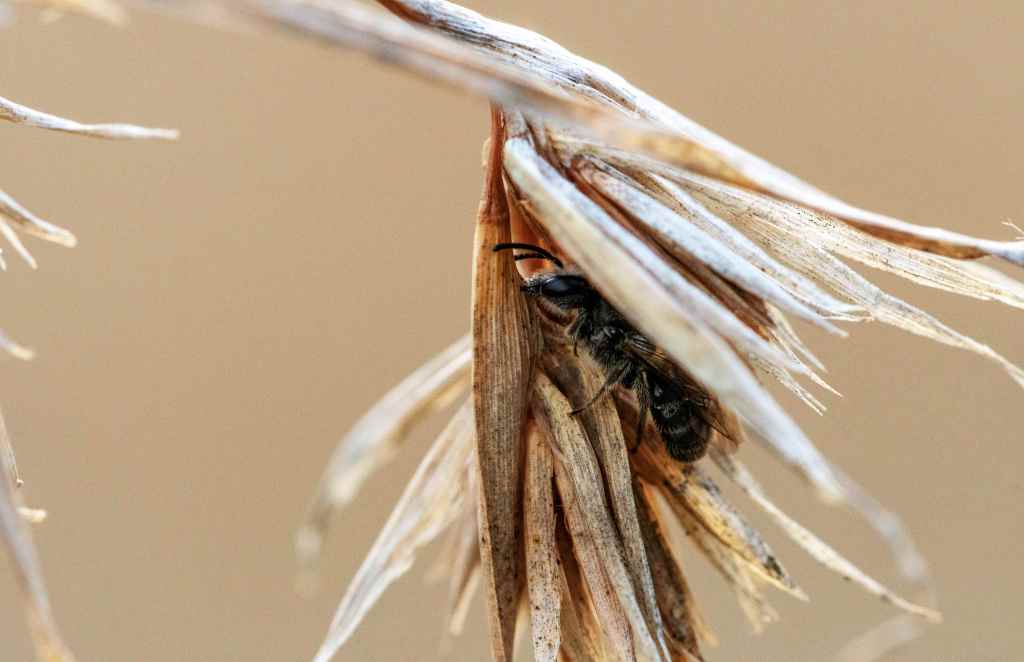
Halictad bees are also tiny. At least, these ones are. The first one has just emerged from a tiny Wahlenbergia, our native bluebell, and the second is roosting in some grass.
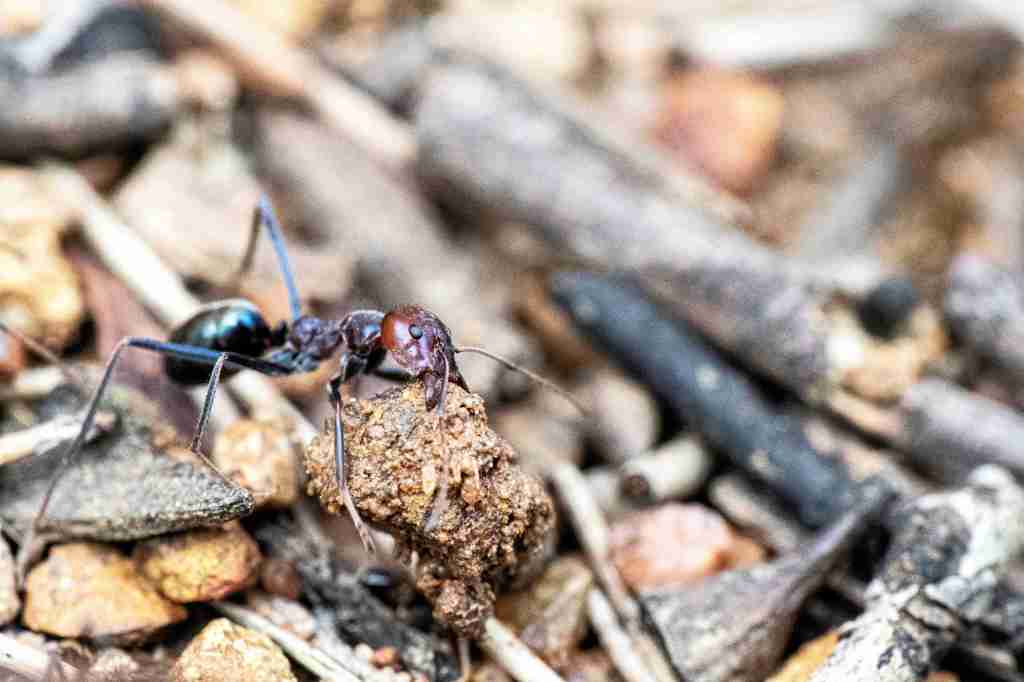
My TL tried to take some photos of meat ants launching their queens. But it was a bit hard to get them in focus. I was hollering in the background because the ants were biting me as they were scrambling up my jeans. Definitely had ants in me pants. We had to move away quickly. I thought I would have to drop my dacks on the track to get them out. Just imagine if other walkers had came across a man doing the same thing? He probably would have got into some serious trouble for being a flasher. Anyway, back to the photos – a meat ant pushing a lump of dirt downhill.
Meat Ant – Iridomyrmex purpureus
Speaking of beetles being eaten alive …. We know ants gotta eat, but my TL nevertheless rescued this beetle. The ants would not let that poor beetle go. My TL had a devil of a job freeing it. You have got to be joking if you think I am going anywhere near those ants.
Well, I can’t leave you traumatised so I will finish off with this lovely photo of a Yellow Admiral butterfly on a scribbly gum.
Yellow Admiral Butterfly – Vanessa itea
Thank you to Donna from Wind Kisses for coming up with this theme. It is probably the only subject that I can talk a lot about but don’t have to do any of the work to bring the images to you.
Now bugger off (Aussie slang for “Off you go.” No offense intended.)
Okay, a few words. Our cameras and the software can do magic these day to sharpen and lighten up soft photos taken in the gloom. I constantly debate with myself about using all this tech to massage the photo into what I’ve been told is the correct exposure. I confess that I did touch up this photo. Just a bit. There is no point in posting something that people can’t see, I chide myself. But I like dark photos where shapes and colours merge together.
As a new landcarer, every day is a learning experience for me. Today a group of us got stuck into some weeding down at our local park. It was a chilly morning but we were soon stripping off our layers when the autumn sun broke through the trees. There was so much to see and hear. It was wondrous and fun.
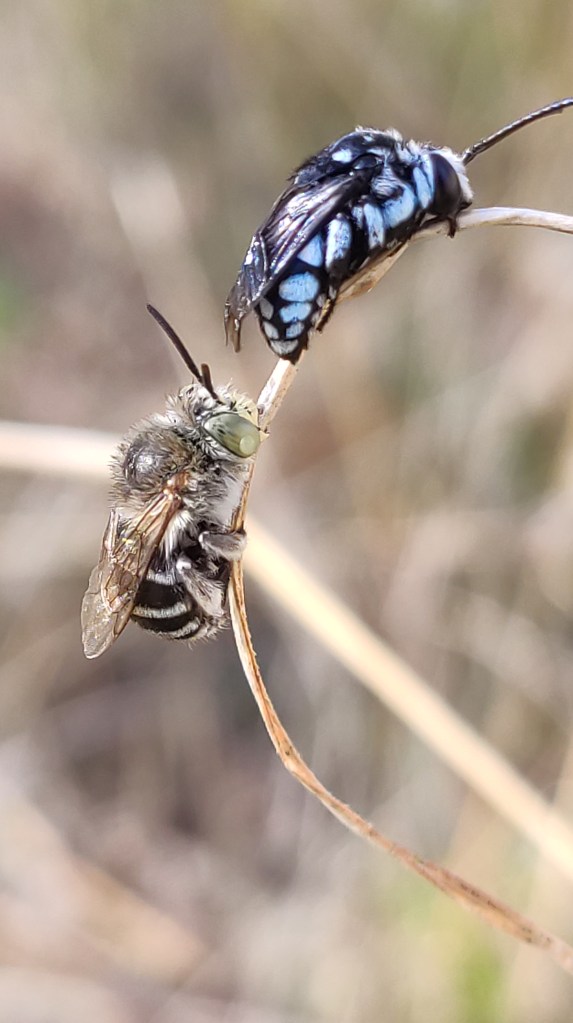
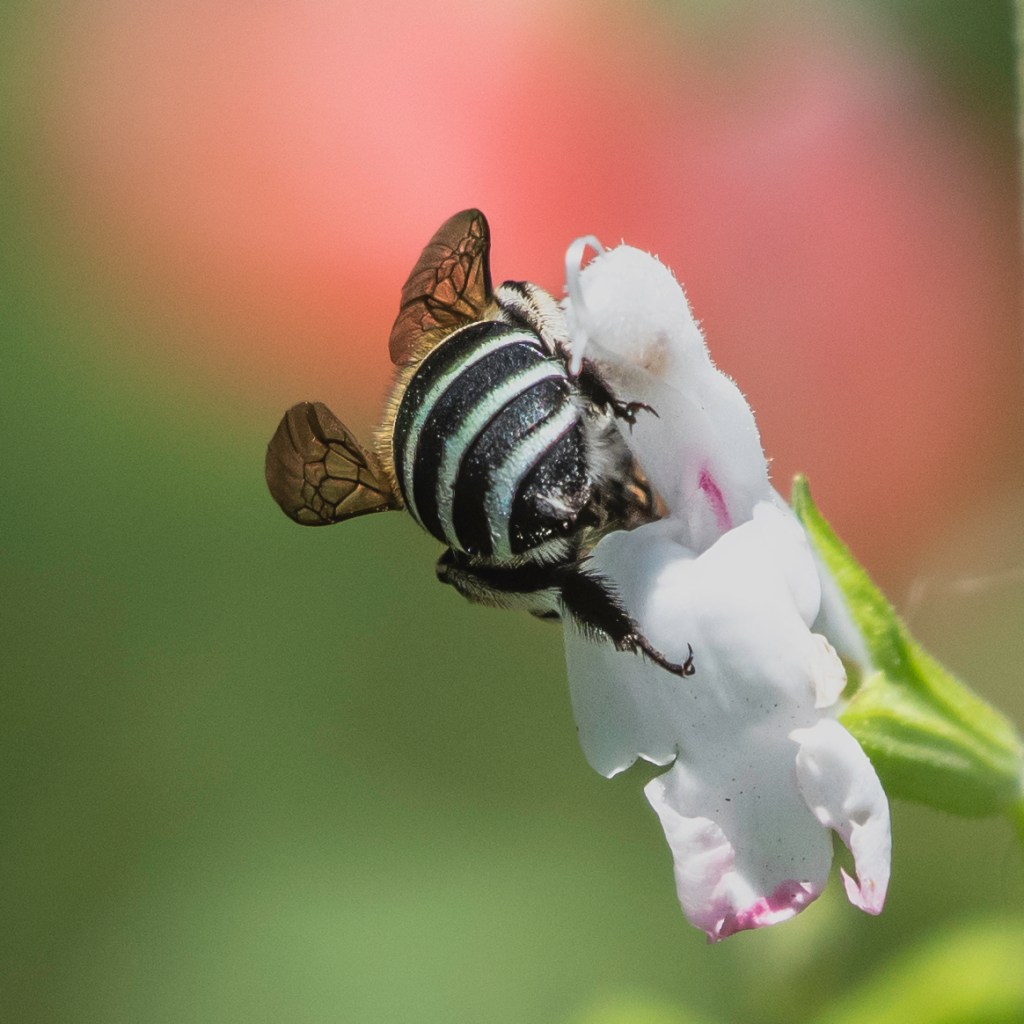
I’ve recently spoken to several park users who have noticed an increase in the number of butterflies and birds since our woodland began its transformation from mowed urban open space to wildlife sanctuary. Today’s high point was when my True Love encountered two native bees that we hadn’t seen before in the park – the blue-banded bee (Amegilla sp.) and the chequered cuckoo bee (Thyreus caeruleopunctatus). Of course, we have blue-banded bees in our own home garden because they love salvia, but I’ve never seen one at the park where thankfully there is no weedy escapee salvia in sight! Awesome. Then to top off the day, the discovery of not one, but two, chequered cuckoo bees was a delightful surprise because neither my TL or I had seen that species before. And they were all together. How cosy! Let’s have a look at them.
The BBBs are solitary bees. The female makes a burrow in soft soil (eg. earth bank) or sometimes soft mortar to lay her eggs (or maybe it is just one egg. I’m not sure). The cuckoo bee parasitises the nest of the BBB. Apparently, it is unusual for the BBBs to roost with cuckoo bees. Anyway, here they are just chilling out together on a a blade of grass as the day warms. I have it on reliable authority (thanks Canberra Nature Mapper experts) that the BBB in this photo is a male.
Bee your kindest self. I must remember that now that I’ve chopped off the less flattering part of this park care story.
What a little cutie. I’m referring to the Australian blue-banded bee. They’re always so welcome in our garden. However, to my horror, I discovered that they have a ferocious bite, especially when it latches on to the delicate skin between your toes. Unlike European bees, our native blue banded bees don’t die after they sting. Technically they don’t sting – they bite, and they can bite multiple times. Honestly, I thought I must have been bitten by a redback spider. It bloody hurt. Not that I have ever been bitten by a redback. I’ve been bitten by a young funnel web spider. Apparently funnel webs are less venomous when they are young, but don’t quote me on that. That bite wasn’t nearly as painful.
Anyway, it must have been horrifying for the little bee as well, finding itself lodged between the toes of some great lump. I ignored the initial discomfort at first but then it started to hurt like hell. I kicked off my sandal to investigate and saw something tumble into the grass. As I hunched down to try to ID it, on the off-chance I might have to call an ambulance, it rose before my eyes from the grass like a chopper from a James Bond movie, buzzing angrily in astonishment. “How dare you!”, it seemed to say. I am pretty deaf but that buzz rang loudly in my ears. No mistaking the message. Poor thing. I was so sorry for it and also very sorry for myself.
I have been feeling a tad too boring to be blogging lately. Digging weeds day after day makes for pretty dull conversation. Also, somehow I had gotten it into my head that the quiet byways that I used to frequent were now inundated by crowds of people enjoying “nature” and therefore to be avoided. How selfish of me, but as per usual, it was nothing like I thought.
Anyway, I went out today. I saw less than a handful of people. I even said hello. It didn’t kill me. It was actually kind of nice. I had forgotten about the autumn light. Better make the most of it – the light, the time, the quiet.
After a busy break doing the usual stuff, my True Love and I headed off to the Australian National Botanic Gardens (ANBG) for a relaxing New Year’s Eve stroll. To be frank, I find NYE rather a trial due to the inevitable illegal fireworks and a small dog who is terrified of them. I imagine it is not only small dogs that are terrified. The birds and animals at the ANBG get to hear and see the official fireworks show. At least that show is time-limited, unlike the unofficial ones which seem to go off all night.
White-winged Chough (Corcorax melanorhamphos) at ANBGNew Holland Honeyeater (Phylidonyris novaehollandiae) at ANBGRed-Browed Finch (Neochmia temporalis) at ANBG
This year I expected the firework shenanigans to be worse than usual because earlier pandemic restrictions seem to have caused more than the usual number of idiots to have slithered out of their holes. I asked my TL whether I should speak to those who had gone crackers but my TL suggested that would not be a good idea if I wanted to live til morning. So I didn’t. One friend in another city did tell her neighbours to fornicate with their illegal fireworks and lived to tell the tale. She may regret this next year when they let off even more.
As I keep saying over and over again, there are worse things than snakes, ladies and gentlemen.
By the way, after a two year break due to the pandemic, the ACT Herpetological Association in partnership with the ANBG, is again hosting Snakes Alive! from 9-15 January 2023. It is great fun for kids and adults alike. See here for details.
Eastern Bearded Dragon (Pogona barbata) at ANBG
Anyway, happy 2023, everyone. I hope it is a bloody good one.
Kind Regards. Tracy.
About the Photos The photos of the red-browed finch and the bearded dragon were taken by my True Love. All the other ones were snapped by me.
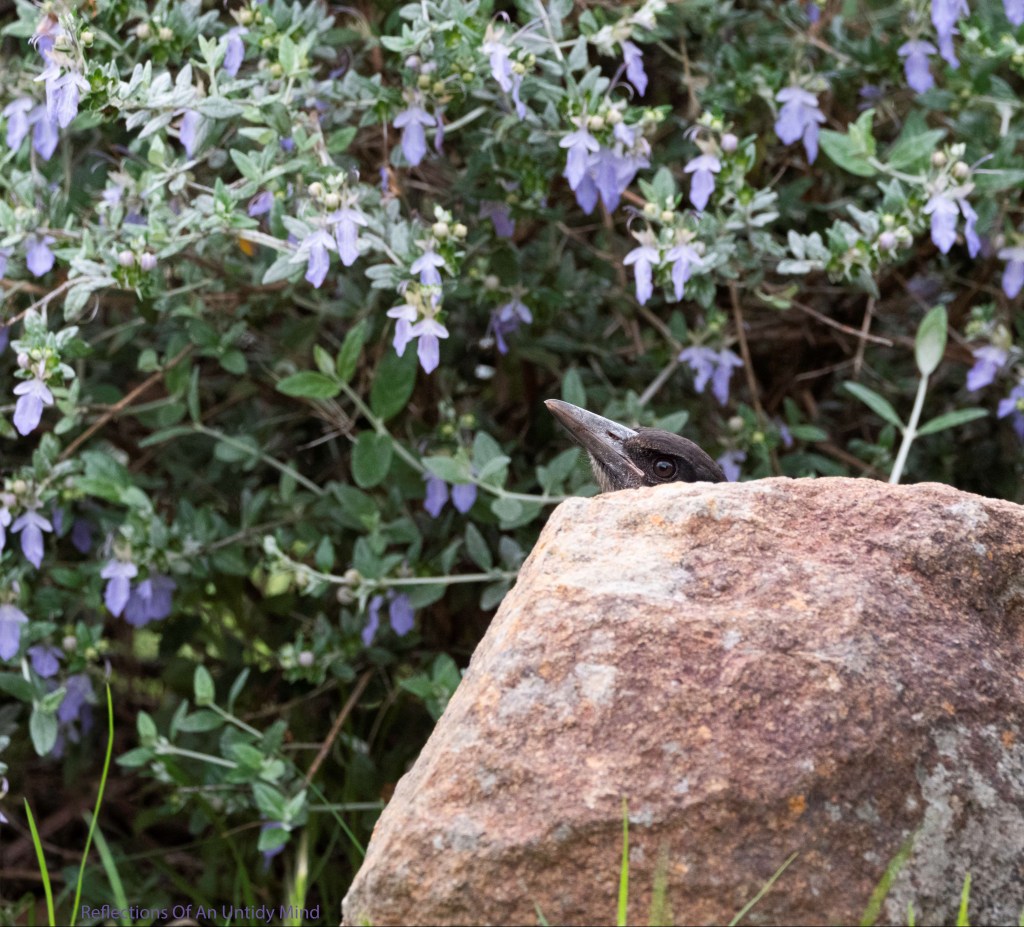
Let’s start with a couple of images of said magpie chick and his dad.
I am never one to let a snappy title get in the way of more wildlife photos. Here are another couple of bird shots from our local wetland.
And returning home, it’s the birthday girl – the wiley Ama. She threw up this morning, probably because of all that grassy hail she ate yesterday or perhaps to make room for birthday ice cream.
I hope you are all well, ladies and gentlemen. We’ve been getting a drenching in sunny Canberra (Australia), although not as much as a little further northwest where it is an absolute catastrophe.