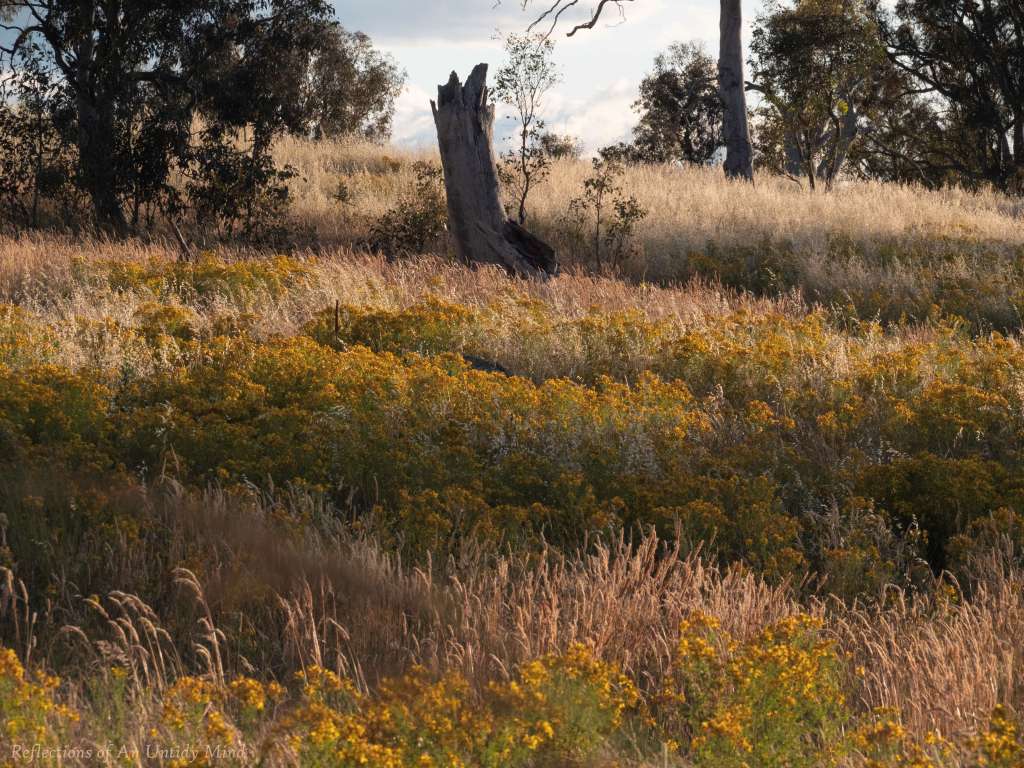
A part of our small, grassy-woodland urban park is being allowed to regenerate. For the humans participating in the project, this mostly involves assiduous weeding and a small amount of replanting, but most of the hard work is being done by the land itself. The birds and other wild creatures (ie. two skinks and some butterflies) are embracing the changes.
I like my spear grasses straight off the plant. From paddock to plate – Fast food – So fresh, so nutritious, so grand.
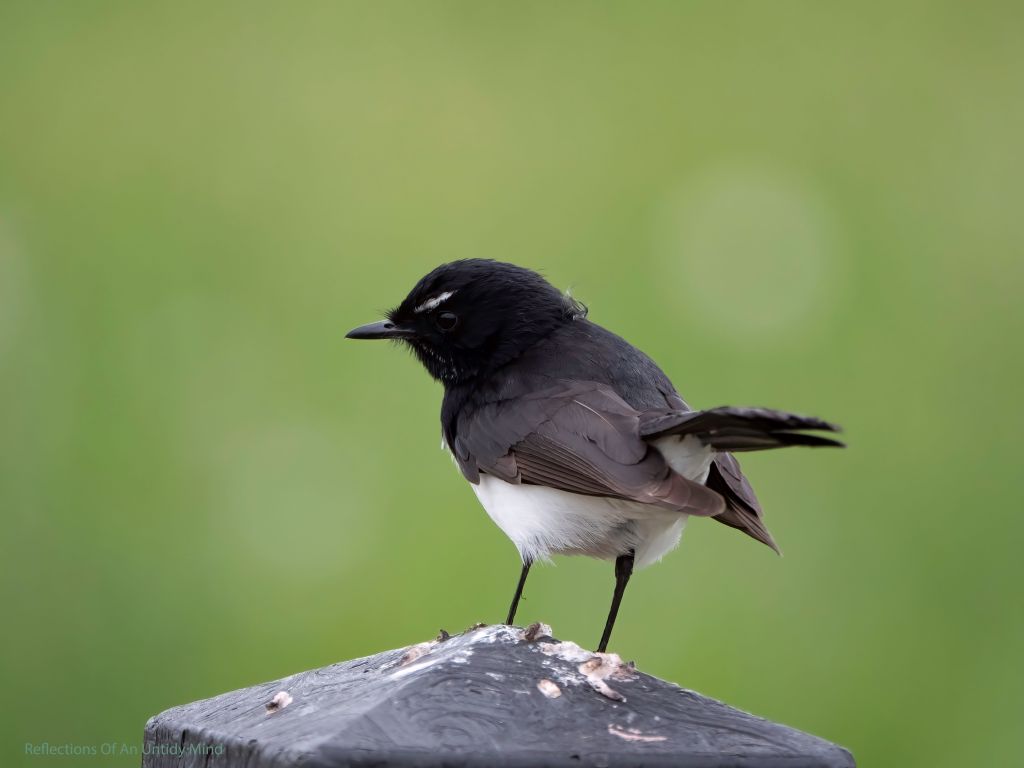
This is my place. This is my home. From this watchtower, I behold you on your knees, creating a space for us to live together and apart. My retreat from mankind’s constant intrusions.
Peace and quiet, ladies and gentlemen, peace and quiet.
After a busy break doing the usual stuff, my True Love and I headed off to the Australian National Botanic Gardens (ANBG) for a relaxing New Year’s Eve stroll. To be frank, I find NYE rather a trial due to the inevitable illegal fireworks and a small dog who is terrified of them. I imagine it is not only small dogs that are terrified. The birds and animals at the ANBG get to hear and see the official fireworks show. At least that show is time-limited, unlike the unofficial ones which seem to go off all night.
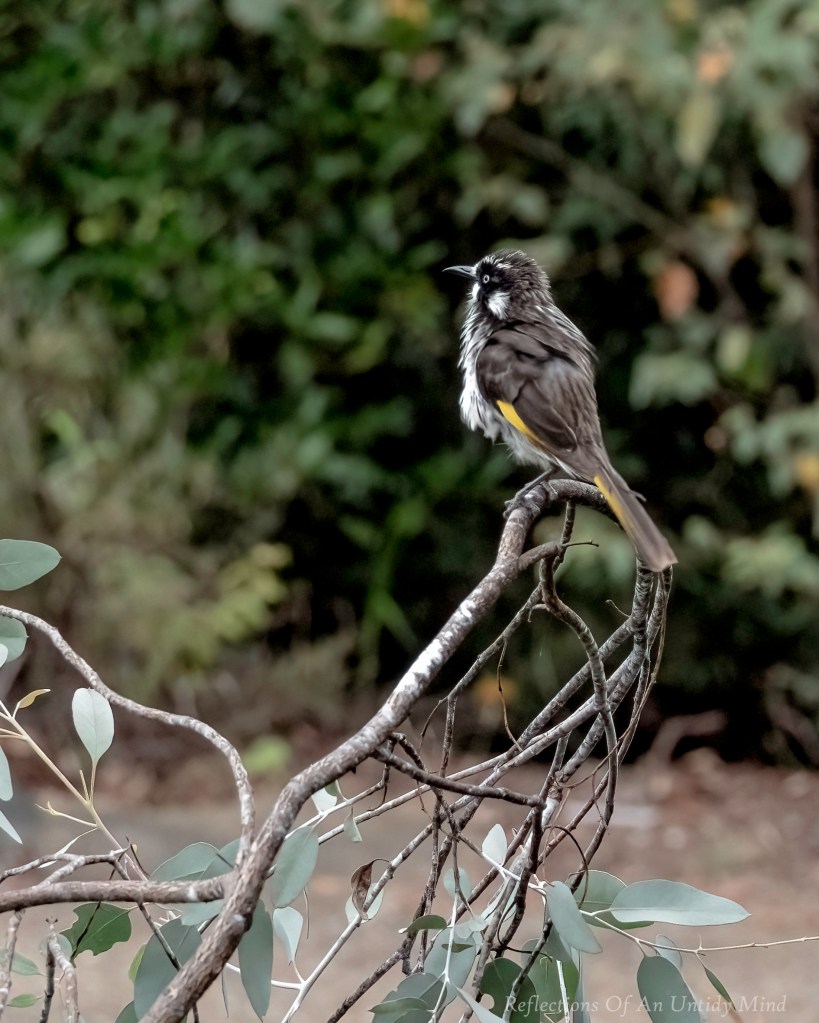
White-winged Chough (Corcorax melanorhamphos) at ANBGNew Holland Honeyeater (Phylidonyris novaehollandiae) at ANBGRed-Browed Finch (Neochmia temporalis) at ANBG
This year I expected the firework shenanigans to be worse than usual because earlier pandemic restrictions seem to have caused more than the usual number of idiots to have slithered out of their holes. I asked my TL whether I should speak to those who had gone crackers but my TL suggested that would not be a good idea if I wanted to live til morning. So I didn’t. One friend in another city did tell her neighbours to fornicate with their illegal fireworks and lived to tell the tale. She may regret this next year when they let off even more.
As I keep saying over and over again, there are worse things than snakes, ladies and gentlemen.
By the way, after a two year break due to the pandemic, the ACT Herpetological Association in partnership with the ANBG, is again hosting Snakes Alive! from 9-15 January 2023. It is great fun for kids and adults alike. See here for details.
Eastern Bearded Dragon (Pogona barbata) at ANBG
Anyway, happy 2023, everyone. I hope it is a bloody good one.
Kind Regards. Tracy.
About the Photos The photos of the red-browed finch and the bearded dragon were taken by my True Love. All the other ones were snapped by me.
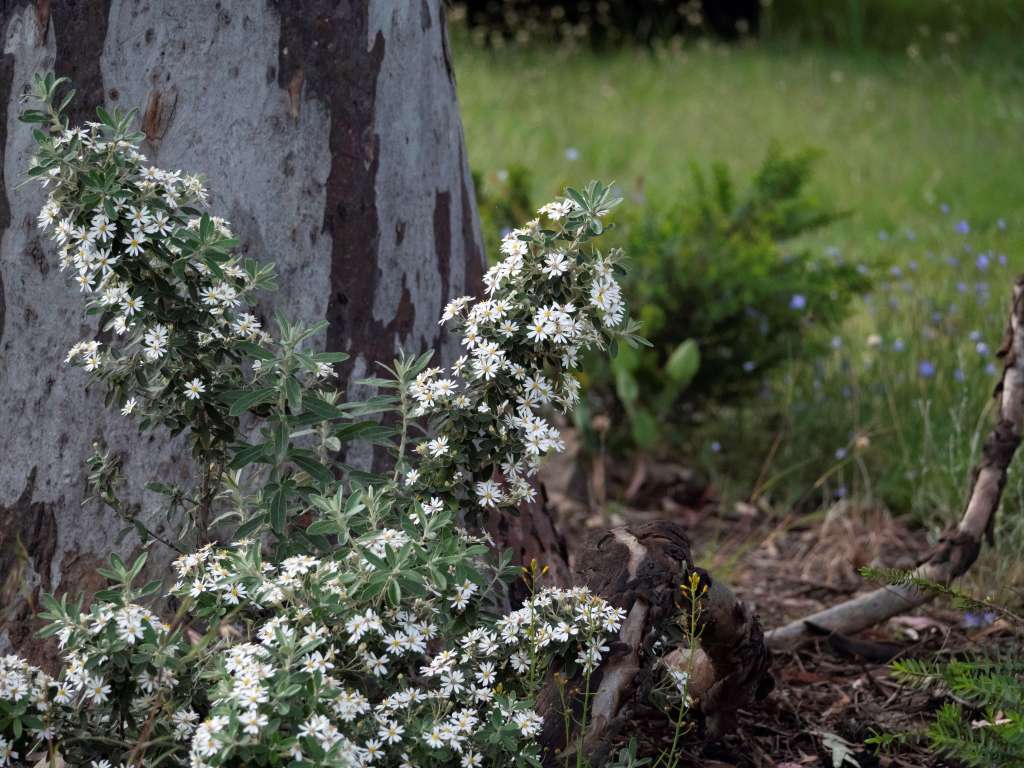
The blossom of the Olearia phlogopappa survives a small hailstorm, unlike the previous two years.
Stop for sustenance,
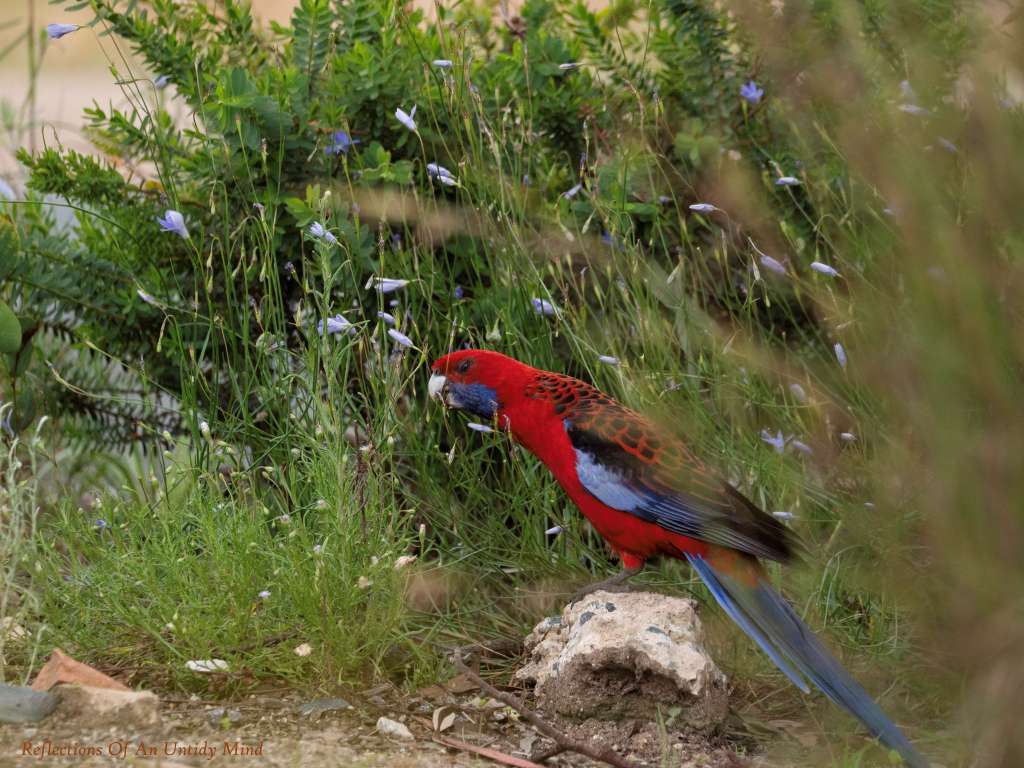
Crimson rosella eats the bluebells growing on my verge.
Speak, but also listen.
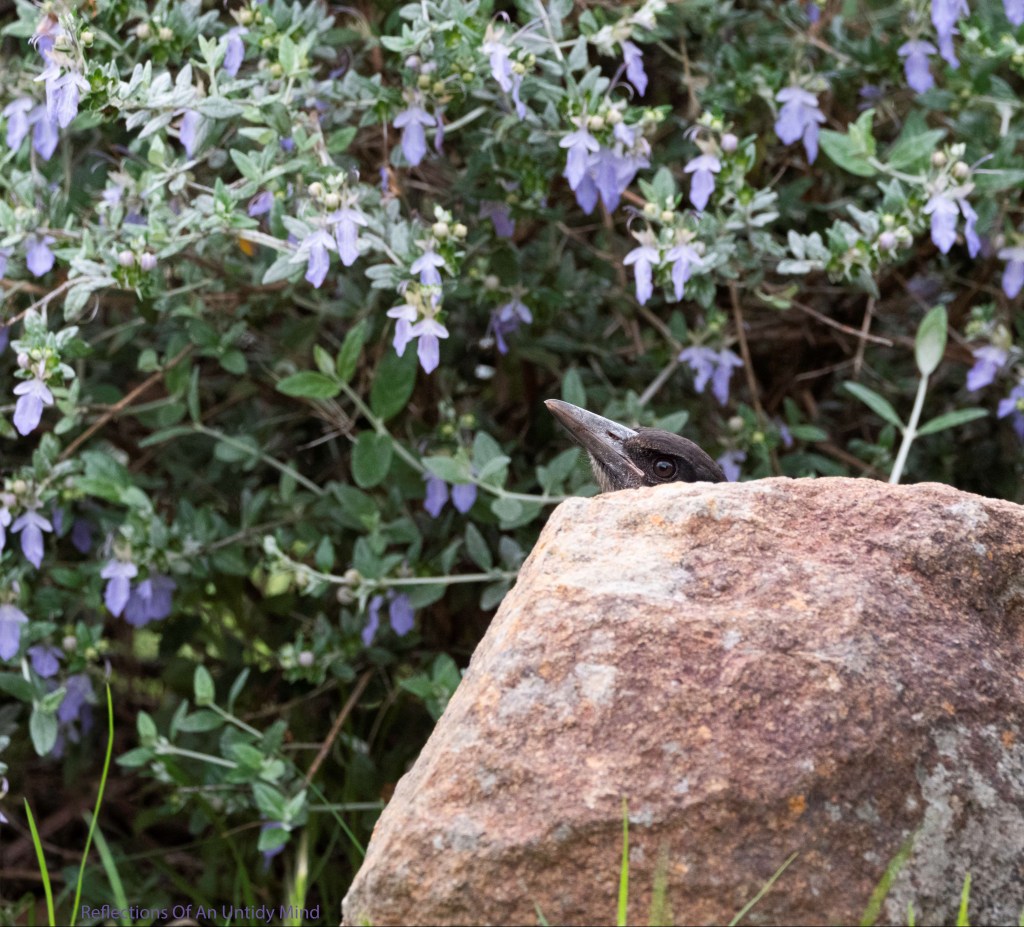
Currawong chicks
Your time will come to shine.
Daviesia mimosoides – my landcare group has planted two seedlings in the park. Hopefully they will survive and grow as beautiful as this one.
This is my last chance to participate in the Lens-Artists Photo Challenge for 2022. This week’s theme is Last Chance and the brief is to publish for the first time some favourite photos taken during 2022. All but one of the photos was taken in my garden or my local park. Many thanks to the Lens-Artists hosts for their hard work and thoughfulness, and also to you, dear Readers, for joining me here.
It’s official, ladies and gentlemen, I am now a landcarer. I join over 100,000 volunteers across Australia working on landcare projects that are focused on sustainable land management practices and environmental conservation. I’m also a newbie Canberra nature mapper. Better late than never, I guess. Over the last six months, I’ve teamed up with some of my neighbours to form a registered group to look after our community park. It is lucky that we had our own resident ecologist because, with his assistance, we identified something that needed protection. Even our ecologist was surprised.
My family has known for years that areas of the park had some lovely native grass – spear grasses (Austrostipa sp.) and kangaroo grass (Themeda triandra) – as well as some native grassland plants, clinging to the edges, or under, trees. We also had an inkling that if the native grasses were allowed to grow rather than be mown, they might out compete some of the weedy, exotic grasses. But who would believe us? Nothing to see here, right?
When the drought broke, the resident ecologist discovered more and more native woodland and grassland plants at the park, and I started to incorporate these plants into my verge garden. My neighbour had also seen many interesting looking plants popping up down the park and she talked to me about starting a park care group. So our little adventure began and soon we were joined on this journey by some other enthusiastic neighbours. We embarked on months of self-initiated environmental assessments, community engagement and government liaison.
It is fair to say that not everyone is on the same page. Myths of snakes in long grass, experience of devastating bushfires and differences in aesthetics, beget many different reactions. I certainly get it because that was me. Of course, I am “passionate” about conservation, as was pointed out to me, but it is knowledge, not passion, that motivates me, ladies and gentlemen. As a team, we did our homework (ie. the biodiversity surveys, etc) and the park woodland did the rest.
And the result? A small patch of the park has now been officially recognised as critically endangered box-gum grassy woodland. This is both horrifying and exciting. It is horrifying because there is so little box-gum grassy woodland left in eastern Australia due to urban development and unsympathetic agricultural practices. It is exciting because we now have the chance to work together – both government and local landcare volunteers – to ensure that this precious ecological community is cared for appropriately. Well, that’s my view anyway. I can’t speak for the government or the broader community.
So we’ve planted a few plants, not many, to shelter the small birds. We have also been weeding, weeding, weeding. It’s been wet so there are many weeds. Weeding has been a learning exercise in itself because we are no experts on what is and isn’t a weed. Thankfully there are a lot of resources, including the resident ecologist, to help us make those distinctions.
I haven’t had time to swan around taking photos. I tried to combine my photography and land care interests at one point but I ended up leaving my camera in the grass when I got distracted by some weeds. Don’t worry, it was still there when I realised my error. I do, however, encourage swanning around with a camera because images (plus the expert narrative that goes along with them) tell a story and the story can lead to understanding, and understanding can lead to action. So I haven’t completely given up.
Because the conservation patch is a grassy woodland, it has delivered, once left unmown, an outpouring of beautiful native grasses the likes of which I have never seen in our park. Let me show you.
Austrostipa, once clinging to the edges of trees, goes wild.Who wouldn’t want to live across from this meadow of kangaroo grass?
Like the rest of Australia, Canberra has a growing multicultural population. Although my ancestors arrived here in 18th century, I include myself in that multicultural group. This multiculturalism extends to our weeds, gardens and pastures. Our nature reserves, and the indigenous species that depend on them, cannot withstand the onslaught of these “threatening processes” unless we do nature differently.
Exotic wild oats, St John’s Wort and Yorkshire Fog grass in Kama Nature Reserve
I’ve got lots of ideas about “ecologically sustainable development” and probably not very original ones. Improved community education about environmental conservation needs to reflect where we are as a community, so tailoring nature “education” to Australia’s increasingly multicultural population, through programs and materials in languages other than English, could be really helpful. I would also love to see even more community and government initiatives to re-wild and connect our urban green spaces. Canberrans, the latter is already happening and you can join in now. Contact Landcare or the ACT government to find out how you can get involved. The work is intellectual; it is physical; it is communal and I love it. Don’t wait until you are over 50, like me, before you get your A into G. There’s a job that suits all abilities.
In closing, I offer my best wishes to all who celebrate the coming festive season and to those of you who do not. My hope for the new year is that you too may have access to a resident ecologist and/or team up with likeminded friends to turn your dreams into reality.
Take care, everyone. Don’t be too naughty. Maybe I’ll stop for photos.
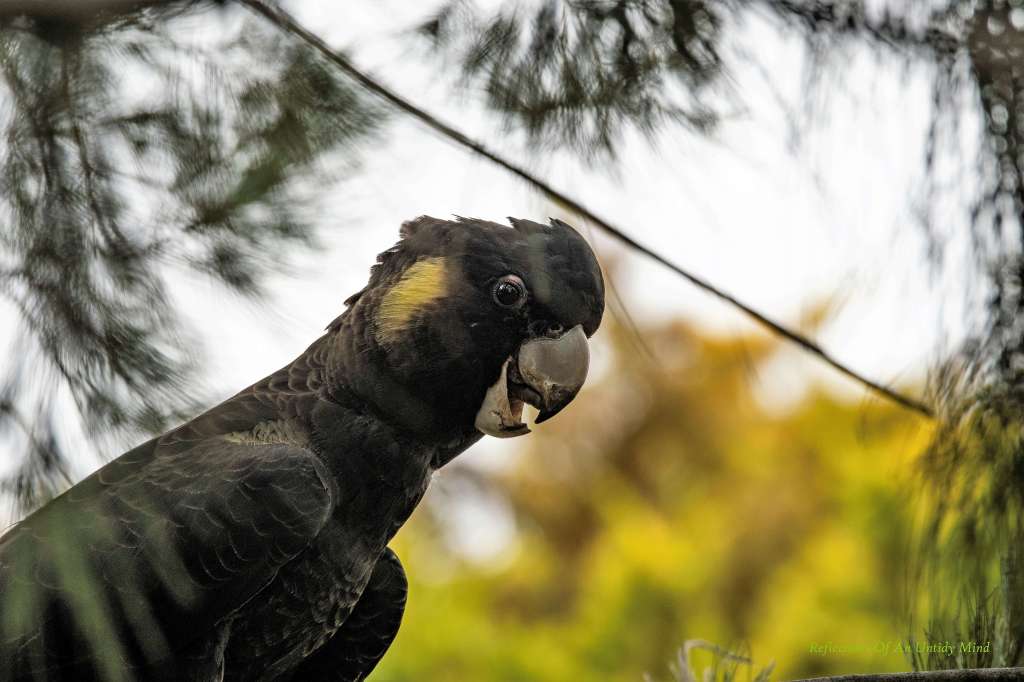
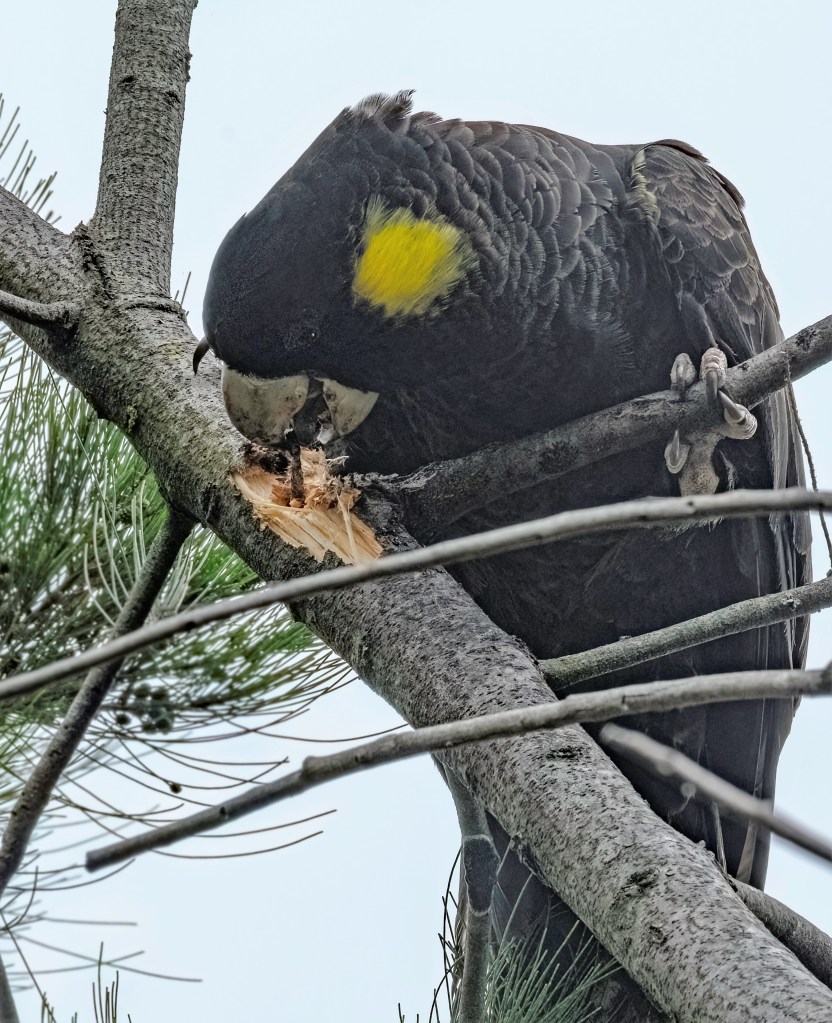
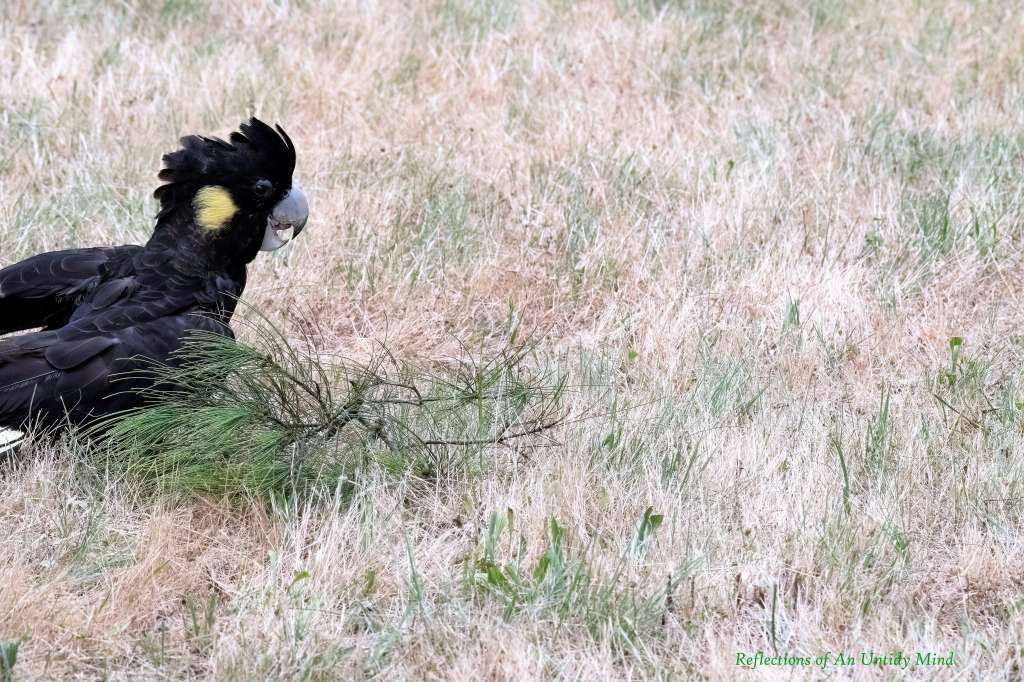
During the week about a dozen yellow-tailed black cockatoos visited our park. They were having a field day, chewing on branches and pulling out borers. My True Love snapped these photos. One of the young ones got caught up in a branch that it was chewing and it tumbled to the ground when the branch finally gave way. The youngster was unfazed by this. Check ’em out.
A photo and a poem about grass. Somehow it got a bit dark but it’s no metaphor.
En Garde If I drive my finger onto your thorns, would I fall asleep, supine forevermore? Or would I draw bonded blood in awe? Nurse my pain in living thrall, paying my dues to your magnificence.
Possibly the spectacular Lomandra longifolia, but I’m only guessing.
Let’s start with a couple of images of said magpie chick and his dad.
I am never one to let a snappy title get in the way of more wildlife photos. Here are another couple of bird shots from our local wetland.
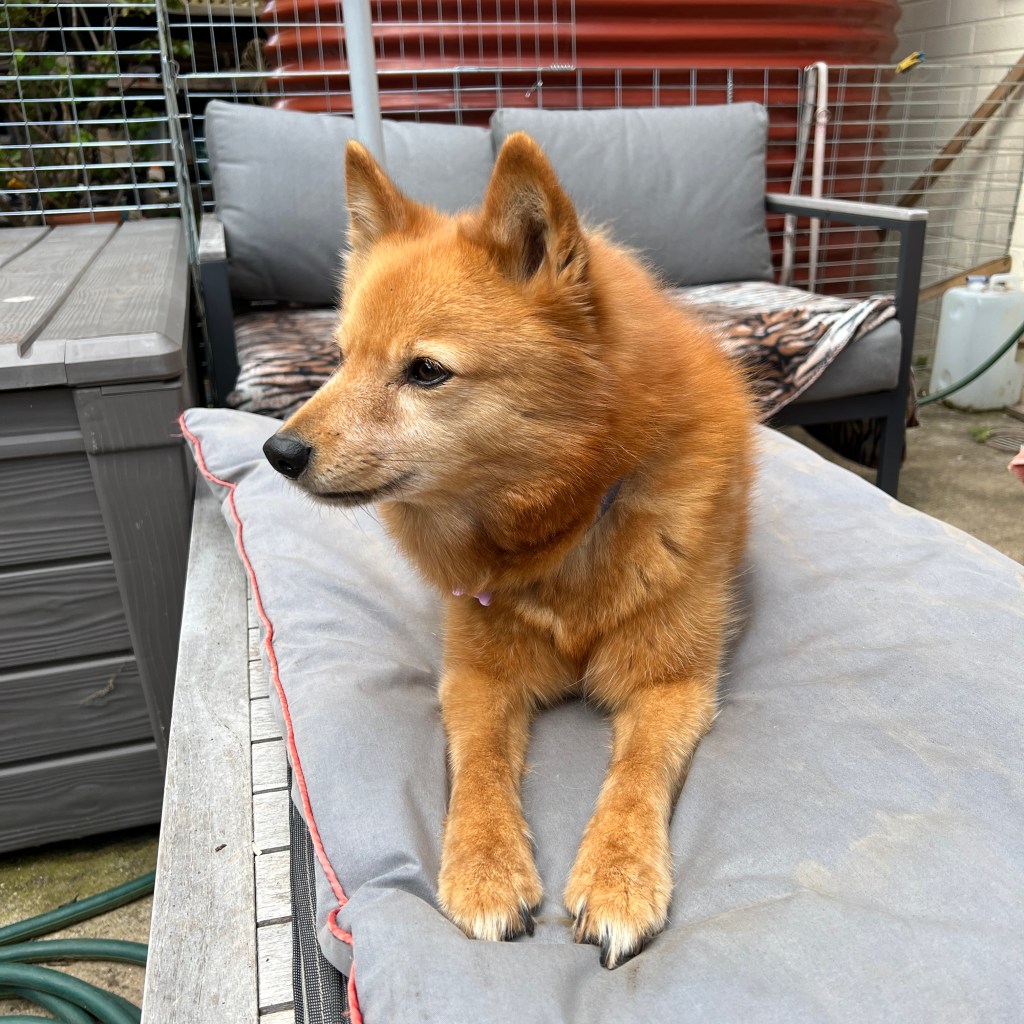
And returning home, it’s the birthday girl – the wiley Ama. She threw up this morning, probably because of all that grassy hail she ate yesterday or perhaps to make room for birthday ice cream.
I hope you are all well, ladies and gentlemen. We’ve been getting a drenching in sunny Canberra (Australia), although not as much as a little further northwest where it is an absolute catastrophe.
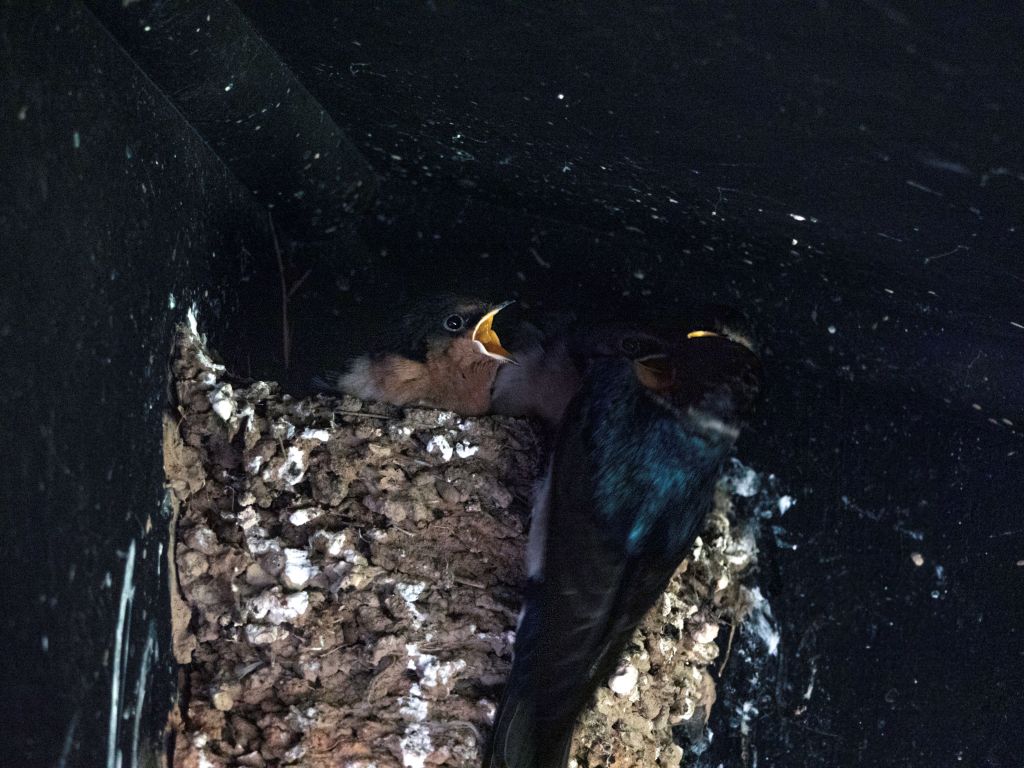
Kind of busy, kind of wet here, ladies and gentlemen. A couple of weeks ago I visited one of Canberra’s wetlands, which is pretty much everywhere here these days. I’d been told that there were plenty of brown snakes in that area and to watch my step, a bit hard to do when there are so many other things to look at. Anyway, I went into one of the bird hides and all of sudden there was this almighty racket outside. I raced outside expecting to see a snake snacking on a nest of baby birds.
But I neither saw or heard anything unusual. How strange. So I went back into the bird hide and all hell broke loose. There were swallows squawking and flying up to my face. It was then that I realised that I was the snake.
They gave me the evil eye.
And plotted their next move under cover of darkness.
Great gobs agape.
Until I slithered silently away.
Gruesome. Not a creature stirred on this wet and windy Halloween night.
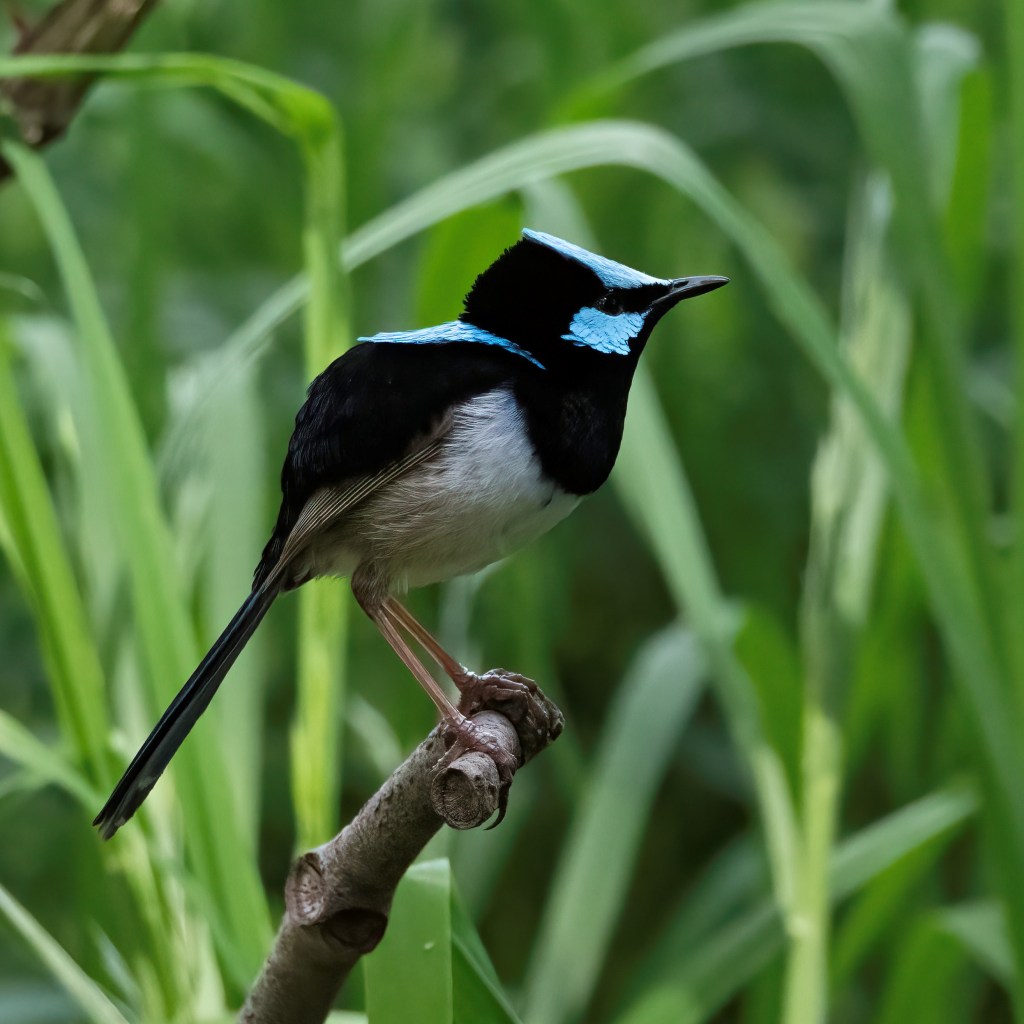
Romeo, Gigolo, Maestro. On the platform, he pauses, a picture of concentration. Ready for a grand performance. Ready for his paramour and Superb Wren ovulation.
Superb Blue Wren
The wrens have been getting frisky. It is what they do.