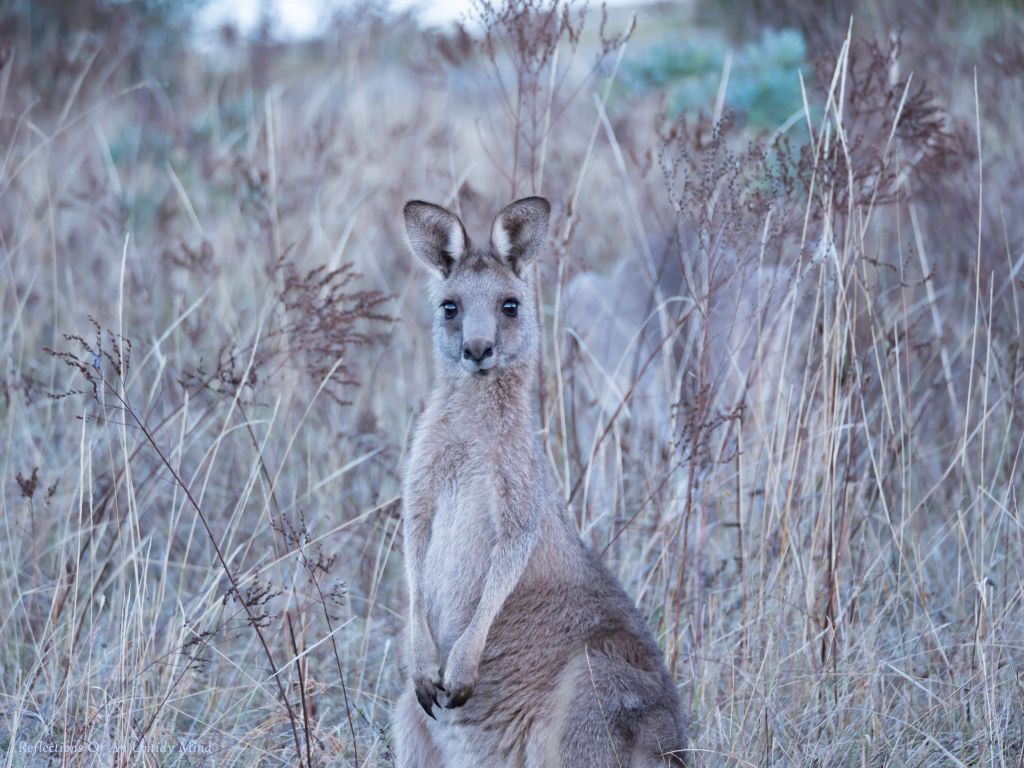
Our big community park day event is over. Our team worked so hard on the event. I didn’t take a single photo. We had quite a few kids show up. They really got into fishing out the water bugs, insect hunting and planting (plants, not insects). I gave a little speech. I have a phobia about public speaking so consequently I remember nothing of what I said. I think I may have said something about birds or plants …. Who doesn’t love wildflowers?
No need for further Saturday house inspections. My son has found a small house and will be moving in shortly. Apparently the seller preferred to sell to a first-home buyer rather than an investor. There are still some kind people in this world. We are so excited for our son. The house is lovely. I think he will be very happy there. It is within walking distance so there are plans for the dogs to visit regularly and perhaps stay over for a few days at a time …. My son remained super calm through the whole stressful process.
Announcement to Shoppers. I went to the local hardware store. There was a public announcement in store asking shoppers not to be rude or aggressive to staff. It seems rudeness and aggression is a thing now. People are mostly kind to our park volunteers but not all. Those unkind people must be so miserable.
Strange Weather. It rained for a few days so we didn’t get to see the Southern Aurora. We are still waiting for the first frost of the year.
I am so proud of everyone who made our park day such a success. I am so proud of our park. I am so proud of my son – his kindness and calmness. He was an exemplary buyer. Kindness makes the world a better place. The sun has returned. We may get a frost soon.
Canberra, Australia – Turns out we have our fair share of tools.
I downed gardening tools the other day to go for a short walk with my love. I’ve spent a lot of time looking down lately at the garden so it was a nice change to look up.
March got a little merry when I met up with Mary. Hairy Mary, aka Anthela varia, mistook me for a tree. It crawled up the inside of my trouser leg. It was a good photo opportunity. No nudity involved. Check it out.
Many of my readers know that I have been focussing on some landcare activities at my local park over the last year. I have met some wonderful people doing that, but every now and then, such as when people continue to illegally dump their garden and other household waste in the park, or when they pull out our plants, or they ignore our greetings, it is dispiriting. I am actually shocked by the mean and petty behaviour we have encountered. I would be really embarrassed if I have behaved like that. Anyway, if I have few words to say here on this space, that is the reason why.
So my sanity saving strategy is just to plug away, pick up their rubbish, plant our government-approved plants and complete the government-approved weeding. And hope like hell that the culprits’ dicks rot off. One can only hope.
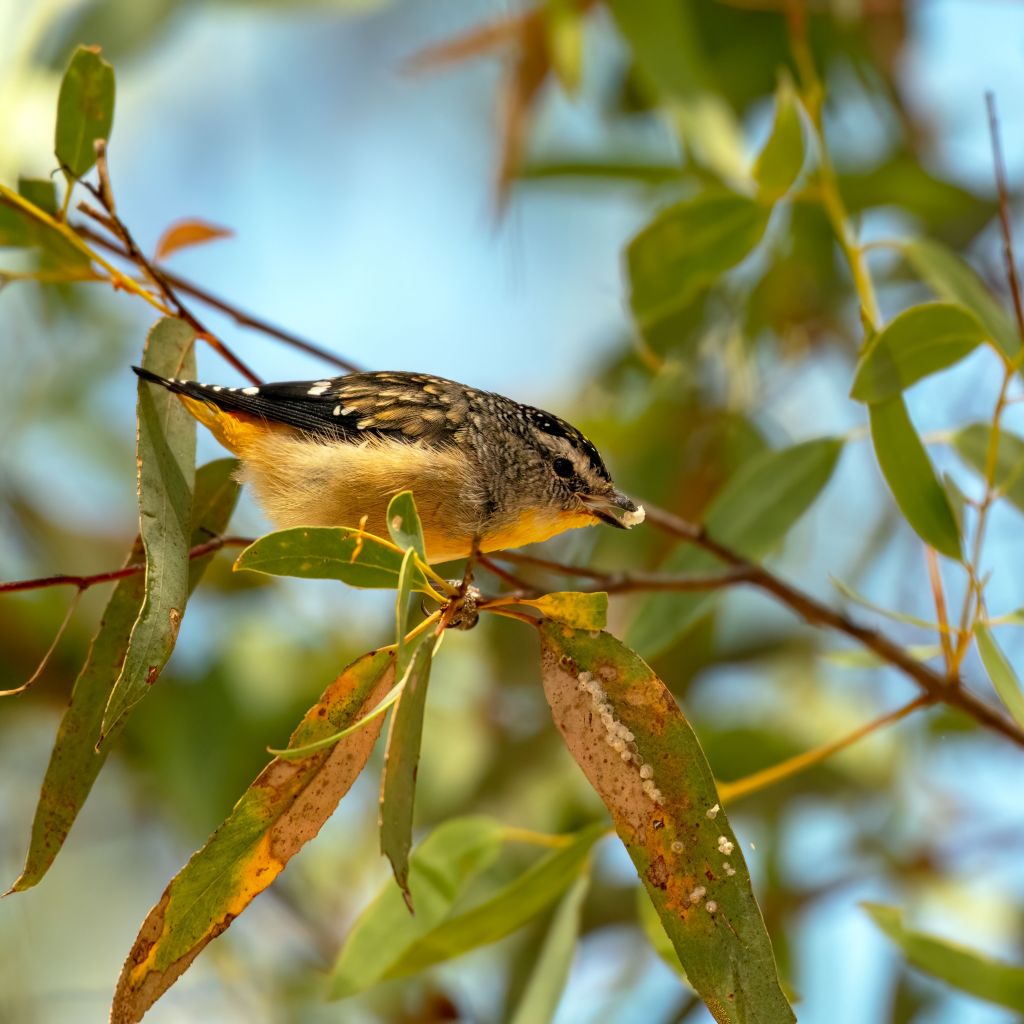
Now, where was I? The small woodland birds have returned from their summer homes in the hills. Their migration through our woodland is proving unexpectedly challenging due to the increased presence of larger predators attracted by the increase in insect numbers. [L-R Grey Fantail chick, Spotted Pardalote]
I have learnt that there is a subtlety to an Australian autumn. How have I not appreciated this quite so much before?
Boisduval’s Autumn Moth waited for the cold front to arrive before she emerged.
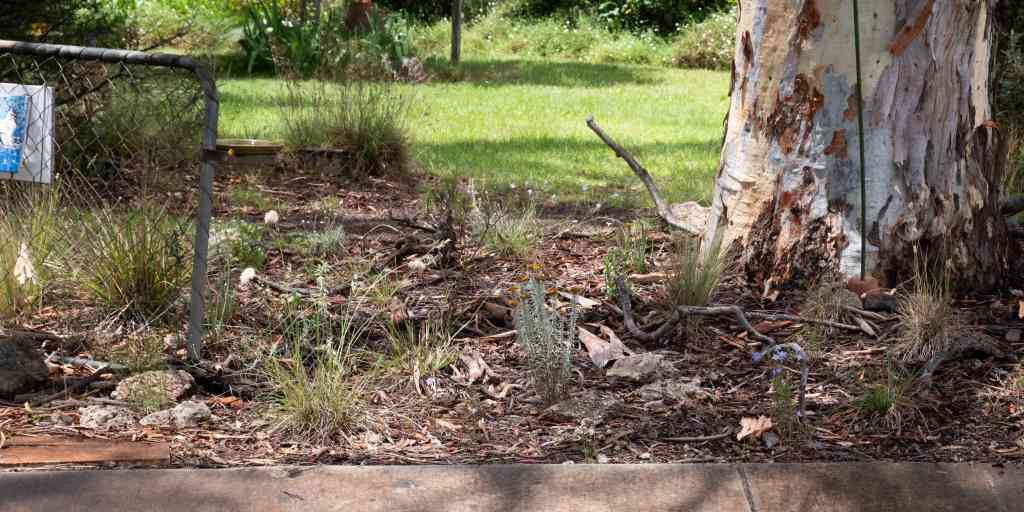
My ever evolving verge garden has faced a number of challenges in the last 18 months. The weather has been temperamental – overly wet or overly dry. Consequently some plants have rotted and some have fried. I also have one of those eucalypts that are known for being allelopathic to plants growing underneath them. I have recently replaced some of the moisture-happy plants with more dry tolerant plants. Hence, it rained. Rather a lot. Unsurprisingly the plants that are doing best are the unobtrusive ones that are local to our area that can still be found hiding in some of our urban green spaces. What do you think? Is my verge looking more Australian bush-like?
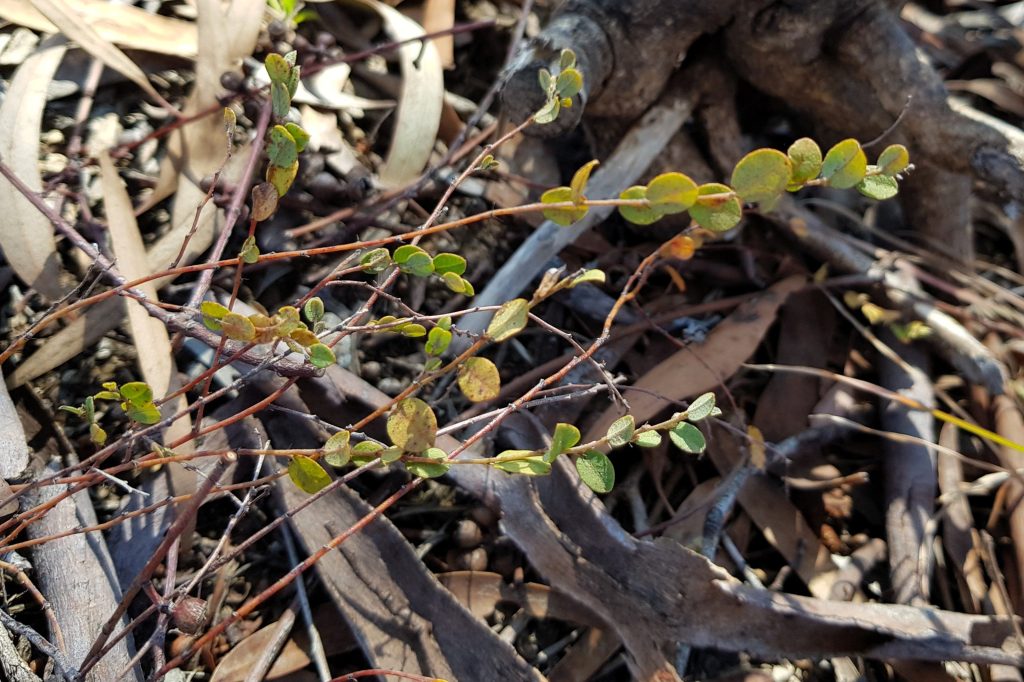
In order of appearance below – The Glycine clandestina (Twining Glycine) has been a star performer in this rather harsh environment. It delicately weaves its way between sticks and leaves. It is so delicate and unobtrusive that the Brittle gum barely even notices that it is there. Another scrambler is Einadia nutans (Climbing Saltbush). It loves the sunny spot I found for it. I love how it is climbing its way through the Themeda triandra (Kangaroo grass). I bought three Bossiaea (possibly the prostrata variety) but only one has survived. It was too hot when I planted them or maybe they are difficult to get started? I hope it survives because I love the muted orange and olive tones among the meatier brown of the fallen leaf litter.
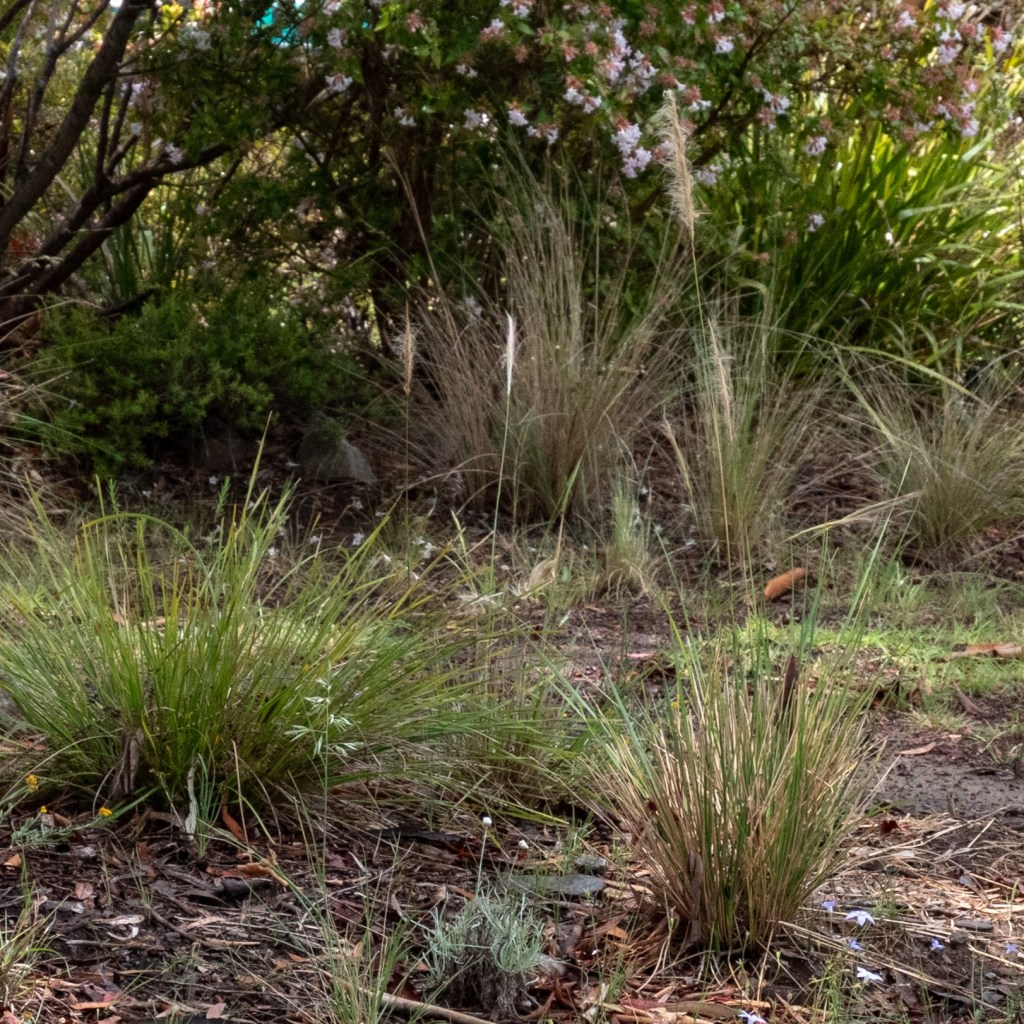
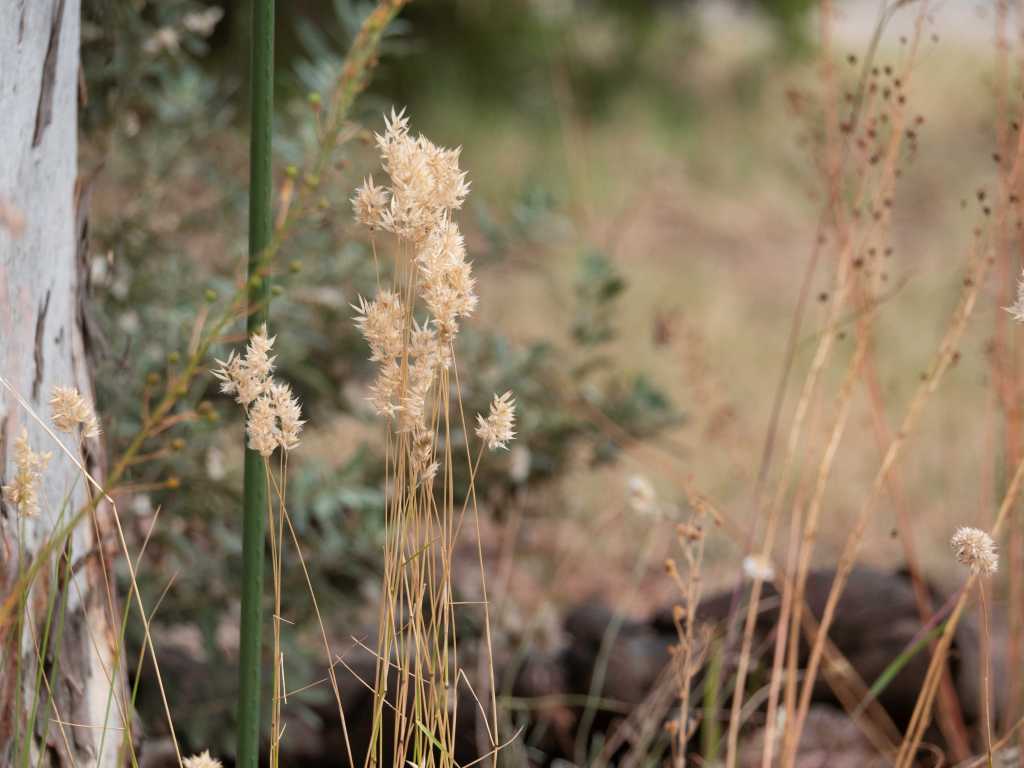
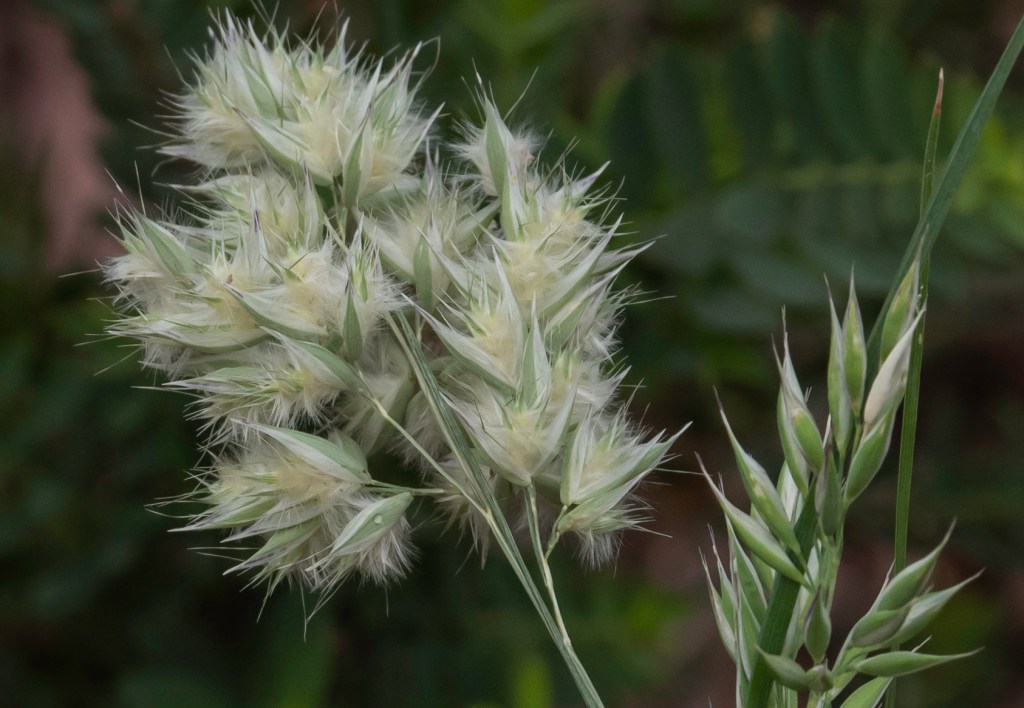
I fell in love with the Dichelachne crinita (Long-haired plume grass) growing down at our nearby park, so I planted some on the verge. It likes water so I sprinkle it from time to time but it seems reasonably adapted to both wet and dry conditions. I have also incorporated plantings of Wahlenbergia stricta (Tall Bluebell). My verge plantings will provide seed for our neighbourhood park restoration project.
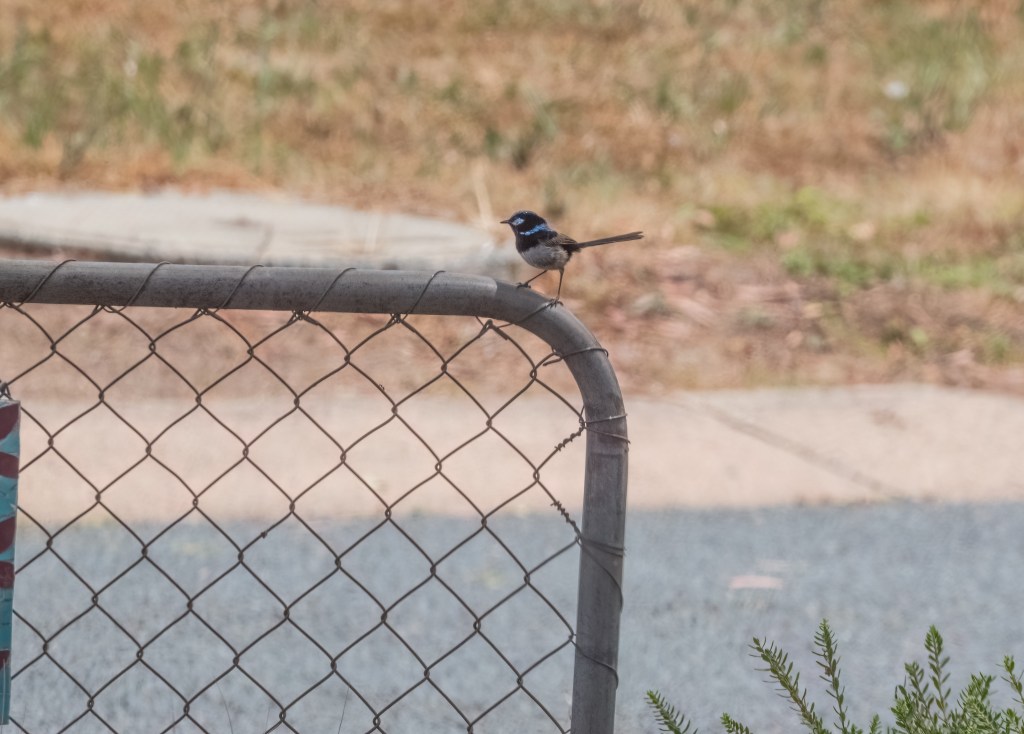
And finally, one last photo. We had a family of Superb Fairy Wrens visit us for the last year. This year they made it to our front yard. We have also seen them venture to the edge of the park. We hope that one day they will be just as comfortable in the small thicket of shrubs our landcare group is establishing for them there. Plant some dense shrub cover and native grasses, invite the insects in, and the little birds will come.
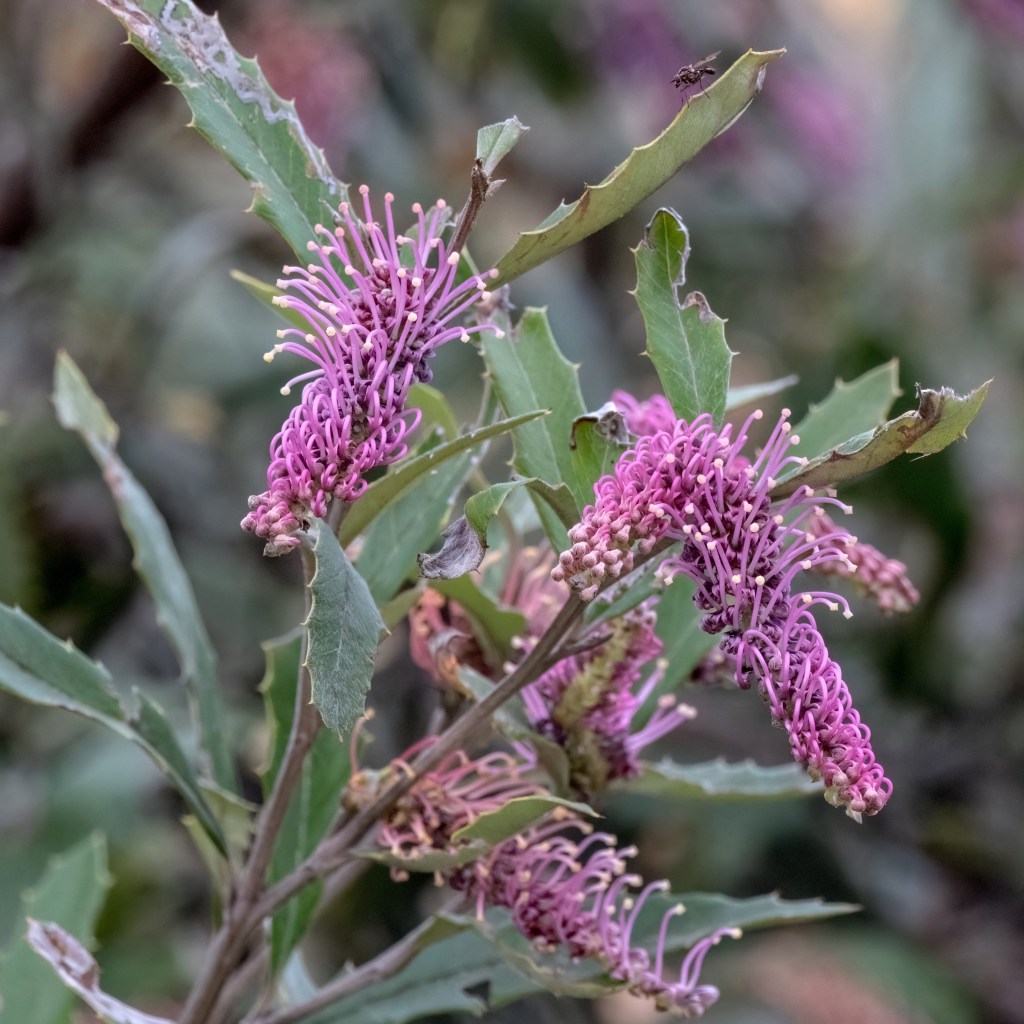
This is a test, perhaps of my patience and perseverance. It seems there has been a software update somehow, somewhere, so I can no longer load photos that are true to the colour that I shot them in. I’ve tried the fixes but they aren’t working. So my workaround is to over-saturate my photos in Photoshop and then re-edit the de-saturated photos in the Windows photo app. Technology!! Anyway, this will do. I now look forward to seeing how this photo looks on my various devices.
Life goes on. Yes, I am still here. Hope you are too.
As a new landcarer, every day is a learning experience for me. Today a group of us got stuck into some weeding down at our local park. It was a chilly morning but we were soon stripping off our layers when the autumn sun broke through the trees. There was so much to see and hear. It was wondrous and fun.
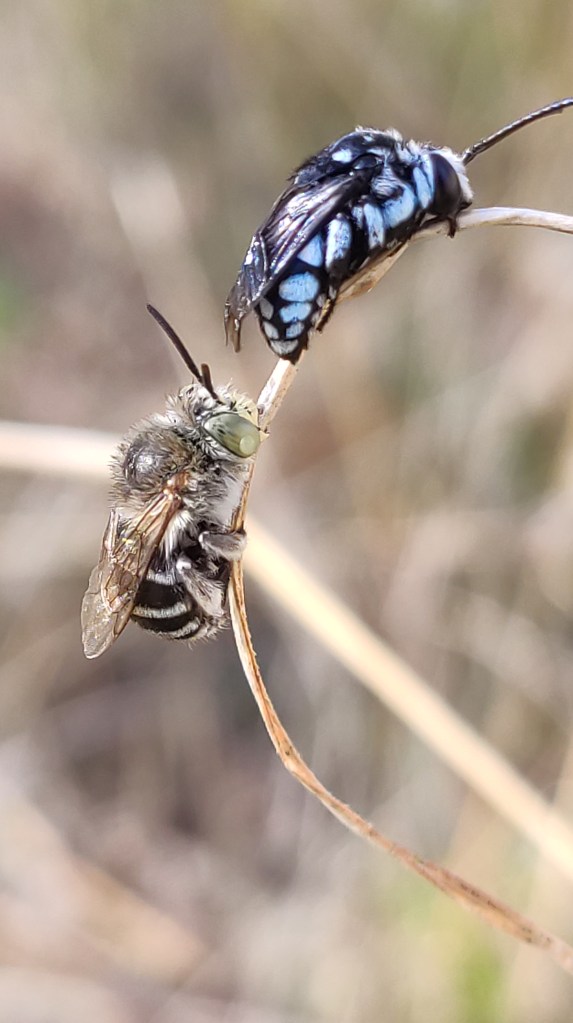
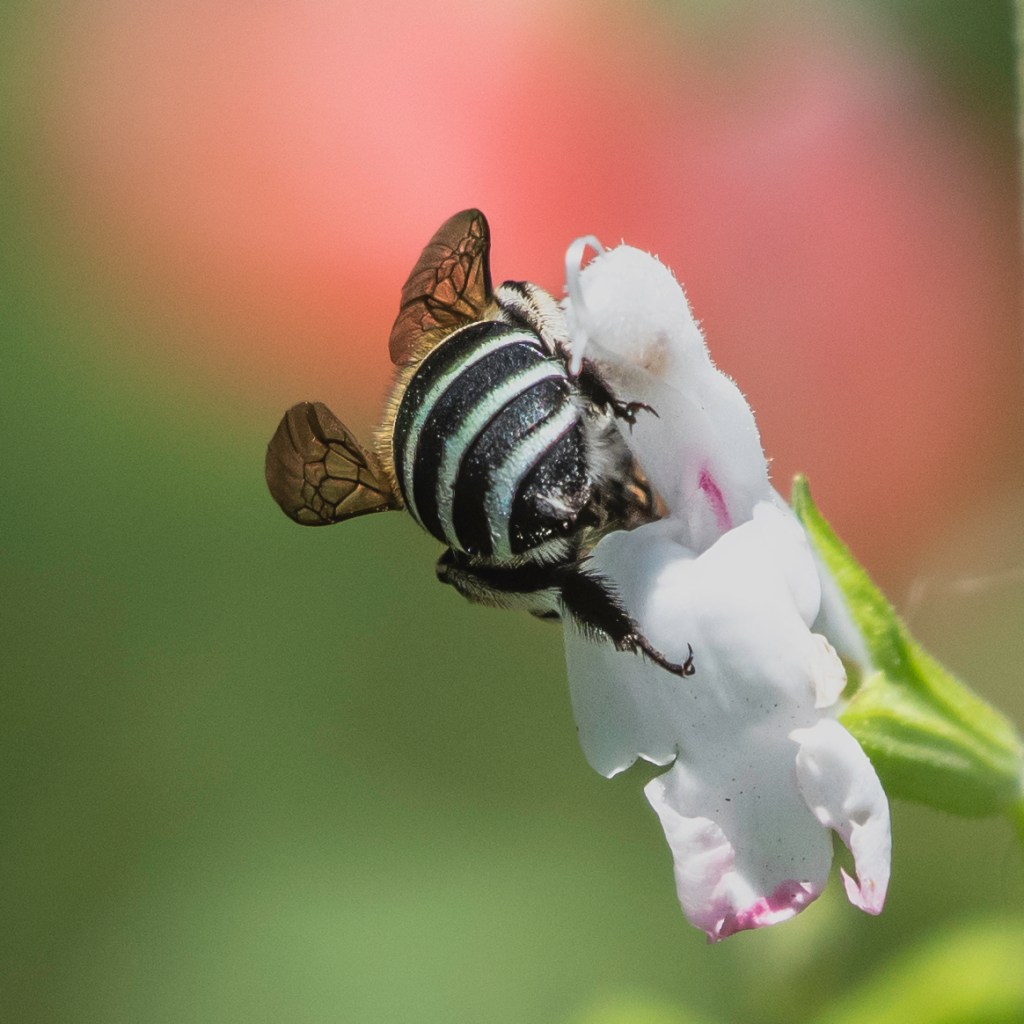
I’ve recently spoken to several park users who have noticed an increase in the number of butterflies and birds since our woodland began its transformation from mowed urban open space to wildlife sanctuary. Today’s high point was when my True Love encountered two native bees that we hadn’t seen before in the park – the blue-banded bee (Amegilla sp.) and the chequered cuckoo bee (Thyreus caeruleopunctatus). Of course, we have blue-banded bees in our own home garden because they love salvia, but I’ve never seen one at the park where thankfully there is no weedy escapee salvia in sight! Awesome. Then to top off the day, the discovery of not one, but two, chequered cuckoo bees was a delightful surprise because neither my TL or I had seen that species before. And they were all together. How cosy! Let’s have a look at them.
The BBBs are solitary bees. The female makes a burrow in soft soil (eg. earth bank) or sometimes soft mortar to lay her eggs (or maybe it is just one egg. I’m not sure). The cuckoo bee parasitises the nest of the BBB. Apparently, it is unusual for the BBBs to roost with cuckoo bees. Anyway, here they are just chilling out together on a a blade of grass as the day warms. I have it on reliable authority (thanks Canberra Nature Mapper experts) that the BBB in this photo is a male.
Bee your kindest self. I must remember that now that I’ve chopped off the less flattering part of this park care story.
What a little cutie. I’m referring to the Australian blue-banded bee. They’re always so welcome in our garden. However, to my horror, I discovered that they have a ferocious bite, especially when it latches on to the delicate skin between your toes. Unlike European bees, our native blue banded bees don’t die after they sting. Technically they don’t sting – they bite, and they can bite multiple times. Honestly, I thought I must have been bitten by a redback spider. It bloody hurt. Not that I have ever been bitten by a redback. I’ve been bitten by a young funnel web spider. Apparently funnel webs are less venomous when they are young, but don’t quote me on that. That bite wasn’t nearly as painful.
Anyway, it must have been horrifying for the little bee as well, finding itself lodged between the toes of some great lump. I ignored the initial discomfort at first but then it started to hurt like hell. I kicked off my sandal to investigate and saw something tumble into the grass. As I hunched down to try to ID it, on the off-chance I might have to call an ambulance, it rose before my eyes from the grass like a chopper from a James Bond movie, buzzing angrily in astonishment. “How dare you!”, it seemed to say. I am pretty deaf but that buzz rang loudly in my ears. No mistaking the message. Poor thing. I was so sorry for it and also very sorry for myself.
Is a nondescript plant unworthy of the lingering gaze? Must the ugly duckling metamorphise into that beautiful swan? Does a light shine with none to see it, invisible when eyes are closed?
The winter woodland keeps its secrets. Echo chambers climb from forest floor until – tendril – summer’s fertile heat provides the desiccant, the bluffer and ephemera of nature’s final call.
Clematis microphylla in seed, Australian National Botanic Gardens
I read a recent disparaging comment about the lovely Australian native climber, Clematis microphylla. Perhaps you are yet to discover it or if you have, perhaps you have been underwhelmed? Be patient, dear Readers, and look again.
By popular request (ie. again only one person), I return to the new verge garden which is in summer stasis. In other words, I haven’t had time to tend it. However, I have been taking note. I have a much better sense of the water, sun and soil requirements of particular plants. On the whole, I have chosen wisely, except perhaps for some rescue plants, which have died almost the moment they were planted.
The aim of this garden is to create a grassy woodland in miniature, using local flora. Or at least that is the aim now so we might come across plants that don’t quite fit that objective. Let’s get on with it.
On the subject of kangaroo grass (Themeda triandra), I have learnt that it is slow to get going compared to other native grasses. I am impatient for the grasses to fill out and provide protection for the small forbs that I planted between them. By then, we shall no doubt be in drought again.
Meanwhile, the seed heads of the wallaby grasses (Rytidosperma carphoides and bipartitum) jiggle freely, unrepressed, in the drying summer breeze.
The dusty daisy bush (Olearia phlogopappa) flowered prolifically this year. Perhaps reflecting an increase in the insect population on the verge (certainly the ants work diligently every day), there appeared to be a 100% success rate in the number of flowers that were pollinated. The seed heads formed delicate tufts on the bush that were even prettier than the flowers themselves. This particular bush is normally found in forests at higher elevations. I didn’t know this when I bought this plant. In fact, I didn’t know much at all. When I discovered its preferred habitat, I consoled myself with the fact that I live in a frost hollow so perhaps it would do well. This got me thinking about micro-climates and saving our endangered species.
There has been much general discussion about the need to adapt to the changing climate and planting more species that normally grow in hotter, drier regions. That makes intuitive sense but logic tells me there is a difference between climate and weather. Global average temperatures are trending up but we can also expect more extreme weather, both hot and cold, so we shouldn’t write-off our plants that live on the margins just yet. Perhaps many more of our precious, endangered ecological communities can thrive if we restore them to health and ensure the micro-climate we establish around them supports their continuing existence, Our cities and our gardens must play their part. Well, that’s my opinion, but like I said, I know nothing.
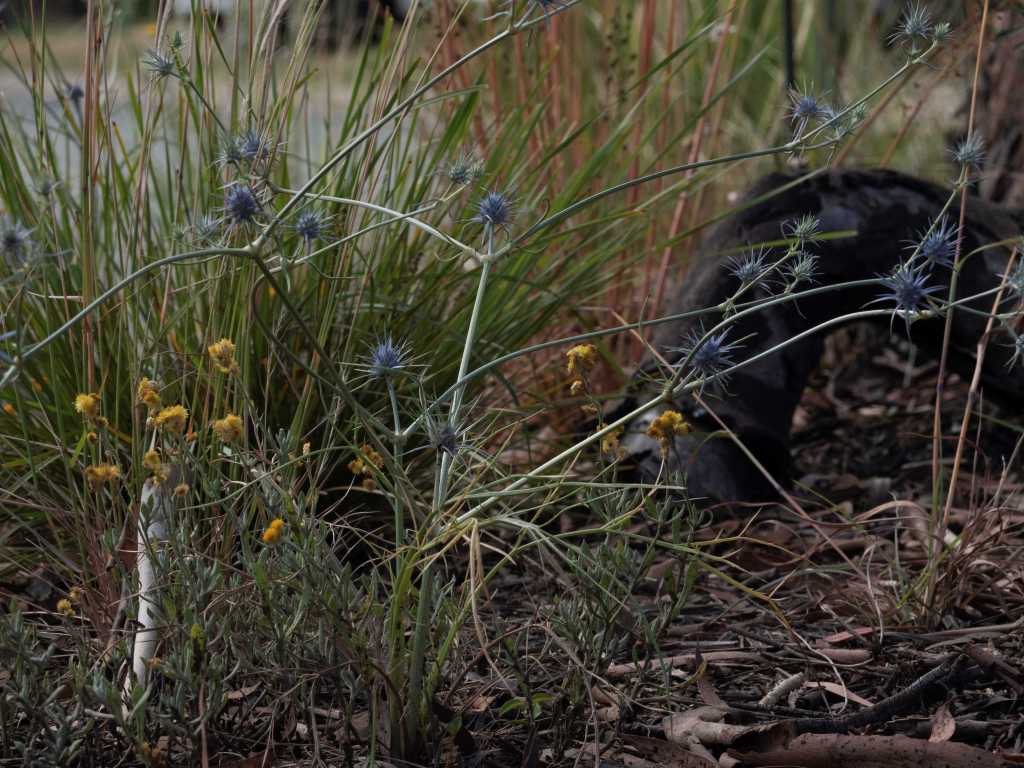
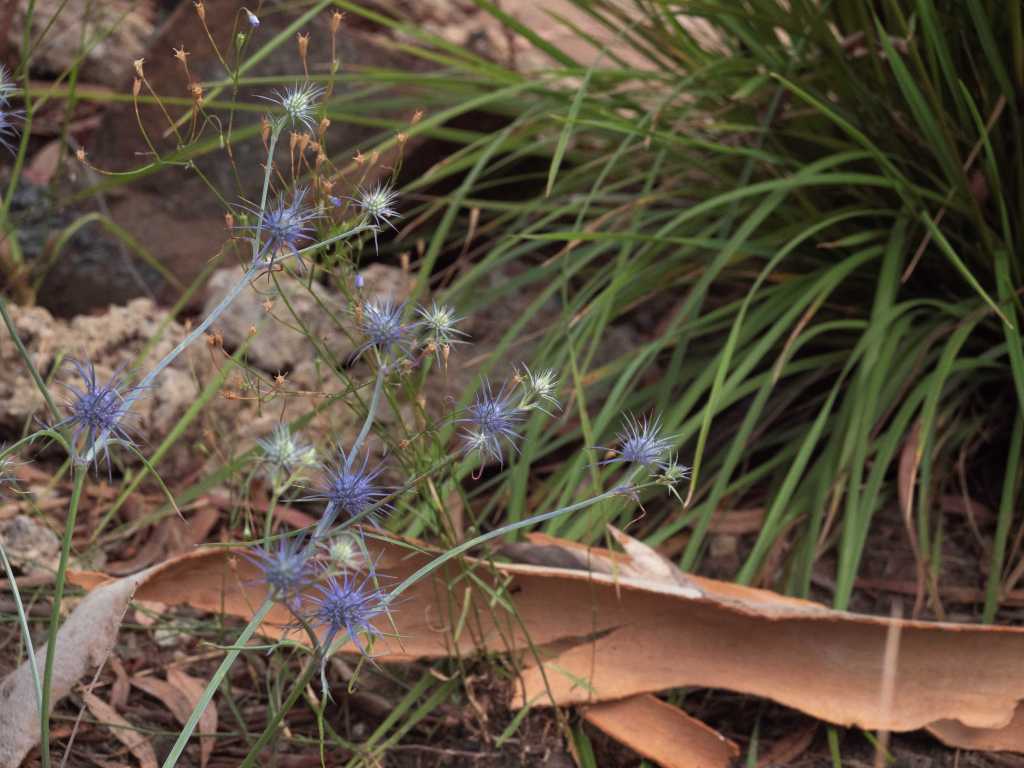
Not everything is in stasis on the verge. It is now time for the blue devils (Erygium ovinum) to shine. It is definitely their year, with Canberra’s nature reserves awash with dramatic metallic blue.
I can’t get enough of them so I have planted them liberally on my verge.
I’ve also planted some less conspicuous woodland plants, including this climbing saltbush (Einadia nutans). Its red berries are miniscule. Apparently, they flower in autumn and fruit from December to March. We occasionally see them at our park but they never seem to be vigorous or fruit profusely. I guess that reflects the mowing regimes for urban spaces. A shame really.
The lemon beauty heads (Calocephalus citreus) are another verge experiment. They look so vigorous and appealing in photos on the internet. So I planted a few and watered them in. And kept watering them. As you do. But they didn’t do well. Just in the nick of time, I learnt that I had to stop watering them. I am hopeful they will now do well in this hot part of the verge.
Since we have a dry forest side of our verge garden, we decided to plant a small shrub that typically grows in the eucalypt forest on the slopes of Canberra’s Black Mountain. Room was made for it when I removed an impulse purchase. I am much happier with this lovely slender riceflower (Pimelea linifolia).
Finally, let’s take a moment to visit the garden bed of death which forms the front boundary of my property. It is called the garden bed of death because nothing grew there until I stuck a few tough native grevilleas and grasses there. I also planted this lovely violet plant. Not that I’ve seen it for years as it was hidden by an exotic that I recently dug out. I got such a lovely surprise when I uncovered it this year. I think it is a kunzea, but not one that is native to Canberra. What do you think? Suggestions welcome.
Well, I will stop there lest it be winter before I actually publish this bloomin’ post.
A part of our small, grassy-woodland urban park is being allowed to regenerate. For the humans participating in the project, this mostly involves assiduous weeding and a small amount of replanting, but most of the hard work is being done by the land itself. The birds and other wild creatures (ie. two skinks and some butterflies) are embracing the changes.
I like my spear grasses straight off the plant. From paddock to plate – Fast food – So fresh, so nutritious, so grand.
This is my place. This is my home. From this watchtower, I behold you on your knees, creating a space for us to live together and apart. My retreat from mankind’s constant intrusions.
Peace and quiet, ladies and gentlemen, peace and quiet.