Being Authentic Is Hard Work

It’s official, ladies and gentlemen, I am now a landcarer. I join over 100,000 volunteers across Australia working on landcare projects that are focused on sustainable land management practices and environmental conservation. I’m also a newbie Canberra nature mapper. Better late than never, I guess. Over the last six months, I’ve teamed up with some of my neighbours to form a registered group to look after our community park. It is lucky that we had our own resident ecologist because, with his assistance, we identified something that needed protection. Even our ecologist was surprised.

My family has known for years that areas of the park had some lovely native grass – spear grasses (Austrostipa sp.) and kangaroo grass (Themeda triandra) – as well as some native grassland plants, clinging to the edges, or under, trees. We also had an inkling that if the native grasses were allowed to grow rather than be mown, they might out compete some of the weedy, exotic grasses. But who would believe us? Nothing to see here, right?

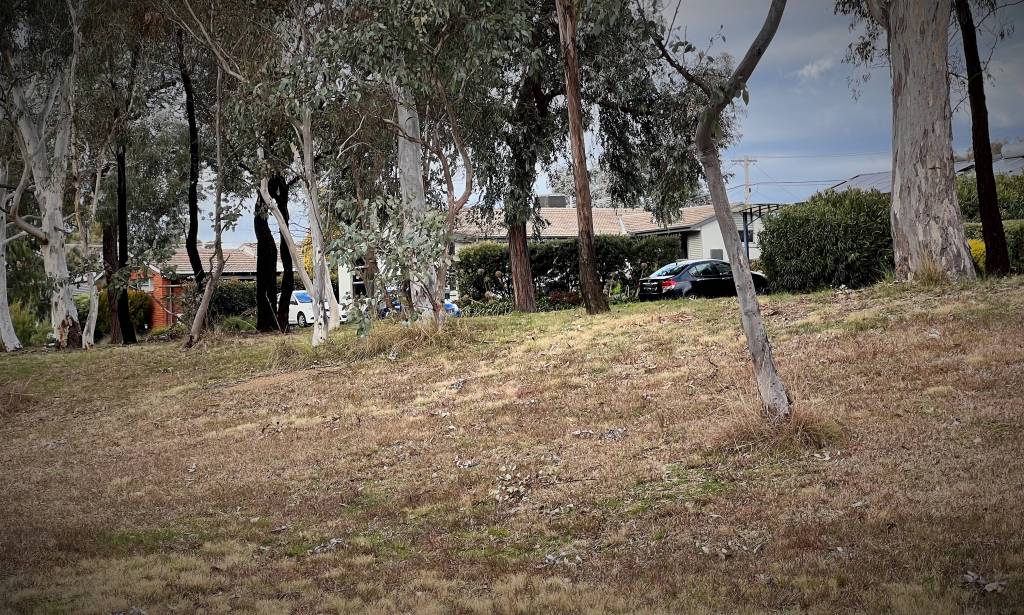
When the drought broke, the resident ecologist discovered more and more native woodland and grassland plants at the park, and I started to incorporate these plants into my verge garden. My neighbour had also seen many interesting looking plants popping up down the park and she talked to me about starting a park care group. So our little adventure began and soon we were joined on this journey by some other enthusiastic neighbours. We embarked on months of self-initiated environmental assessments, community engagement and government liaison.

It is fair to say that not everyone is on the same page. Myths of snakes in long grass, experience of devastating bushfires and differences in aesthetics, beget many different reactions. I certainly get it because that was me. Of course, I am “passionate” about conservation, as was pointed out to me, but it is knowledge, not passion, that motivates me, ladies and gentlemen. As a team, we did our homework (ie. the biodiversity surveys, etc) and the park woodland did the rest.

And the result? A small patch of the park has now been officially recognised as critically endangered box-gum grassy woodland. This is both horrifying and exciting. It is horrifying because there is so little box-gum grassy woodland left in eastern Australia due to urban development and unsympathetic agricultural practices. It is exciting because we now have the chance to work together – both government and local landcare volunteers – to ensure that this precious ecological community is cared for appropriately. Well, that’s my view anyway. I can’t speak for the government or the broader community.

So we’ve planted a few plants, not many, to shelter the small birds. We have also been weeding, weeding, weeding. It’s been wet so there are many weeds. Weeding has been a learning exercise in itself because we are no experts on what is and isn’t a weed. Thankfully there are a lot of resources, including the resident ecologist, to help us make those distinctions.

I haven’t had time to swan around taking photos. I tried to combine my photography and land care interests at one point but I ended up leaving my camera in the grass when I got distracted by some weeds. Don’t worry, it was still there when I realised my error. I do, however, encourage swanning around with a camera because images (plus the expert narrative that goes along with them) tell a story and the story can lead to understanding, and understanding can lead to action. So I haven’t completely given up.

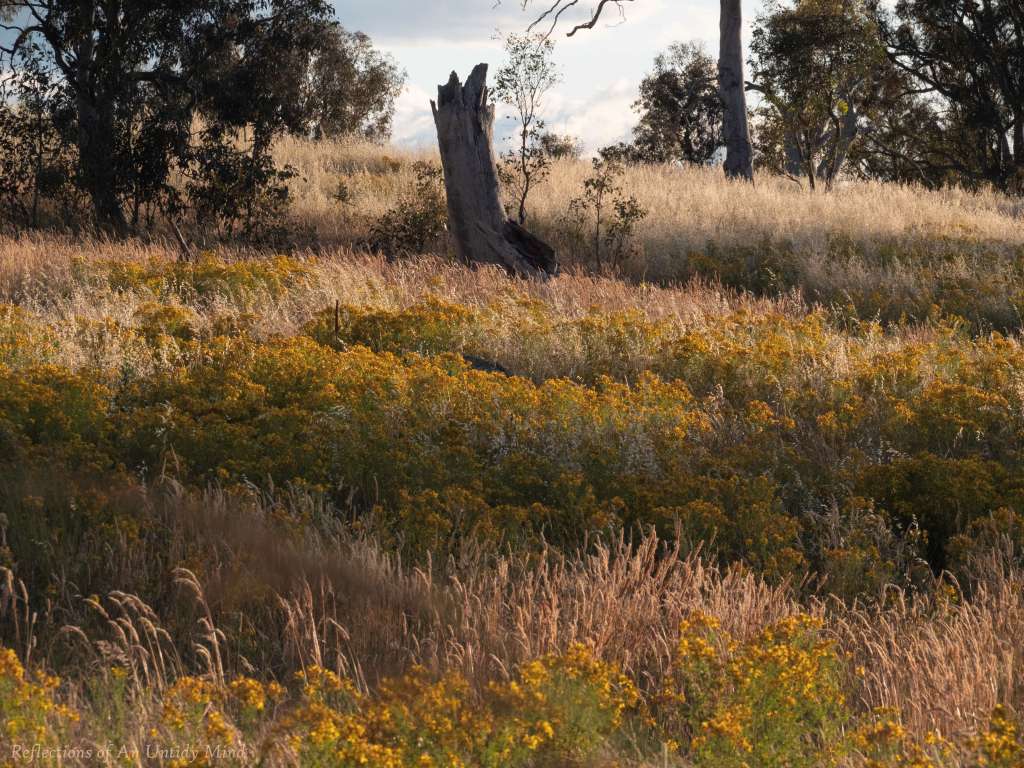
Because the conservation patch is a grassy woodland, it has delivered, once left unmown, an outpouring of beautiful native grasses the likes of which I have never seen in our park. Let me show you.

Like the rest of Australia, Canberra has a growing multicultural population. Although my ancestors arrived here in 18th century, I include myself in that multicultural group. This multiculturalism extends to our weeds, gardens and pastures. Our nature reserves, and the indigenous species that depend on them, cannot withstand the onslaught of these “threatening processes” unless we do nature differently.
Exotic wild oats, St John’s Wort and Yorkshire Fog grass in Kama Nature Reserve

I’ve got lots of ideas about “ecologically sustainable development” and probably not very original ones. Improved community education about environmental conservation needs to reflect where we are as a community, so tailoring nature “education” to Australia’s increasingly multicultural population, through programs and materials in languages other than English, could be really helpful. I would also love to see even more community and government initiatives to re-wild and connect our urban green spaces. Canberrans, the latter is already happening and you can join in now. Contact Landcare or the ACT government to find out how you can get involved. The work is intellectual; it is physical; it is communal and I love it. Don’t wait until you are over 50, like me, before you get your A into G. There’s a job that suits all abilities.

In closing, I offer my best wishes to all who celebrate the coming festive season and to those of you who do not. My hope for the new year is that you too may have access to a resident ecologist and/or team up with likeminded friends to turn your dreams into reality.

Take care, everyone. Don’t be too naughty. Maybe I’ll stop for photos.

Kind Regards.
Tracy

Macro Monday

A photo and a poem about grass. Somehow it got a bit dark but it’s no metaphor.

En Garde
If I drive my finger onto your thorns,
would I fall asleep,
supine forevermore?
Or would I draw bonded blood in awe?
Nurse my pain in living thrall, paying my
dues to your magnificence.

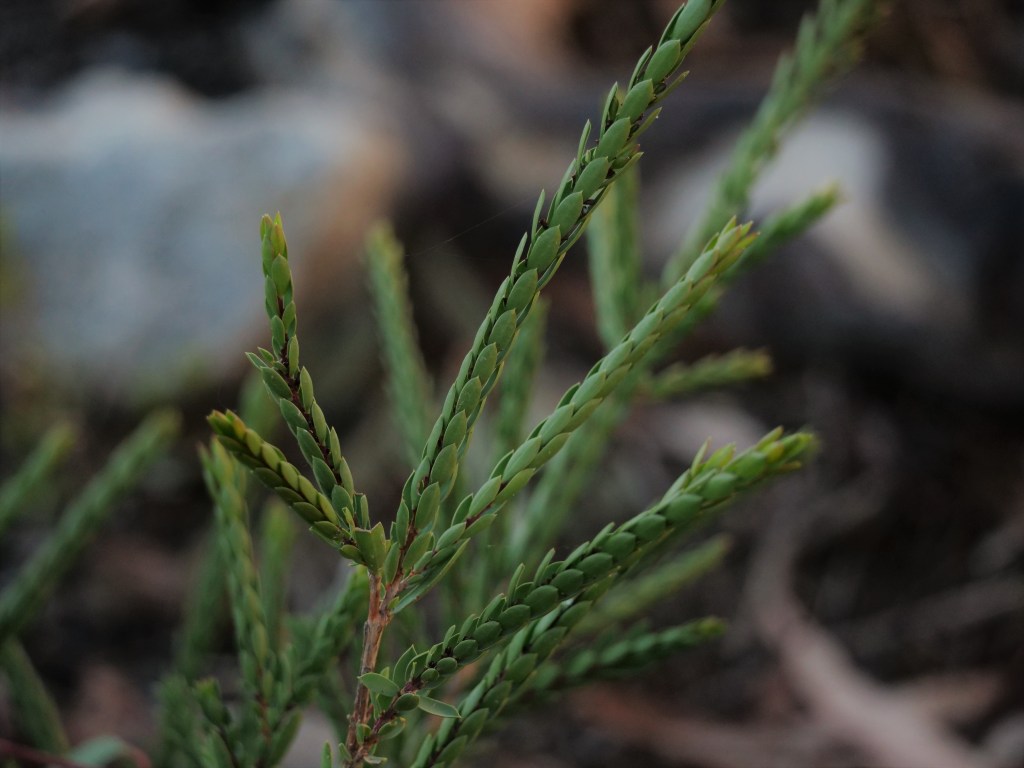
Possibly the spectacular Lomandra longifolia, but I’m only guessing.

Kind Regards
Tracy.

Lens-Artists – Opposites

I am busy, busy, busy but I want to stay calm, calm, calm, so I have elected busy and calm as my sub-theme for the Lens-Artists Photo Challenge – Opposites.

Inspired by lens artists across the world, I have joined a botanical photography group. How weird (for me) is that? In order to kill two birds with one stone, so to speak, I have chosen photos that I have taken for that group to share with you.

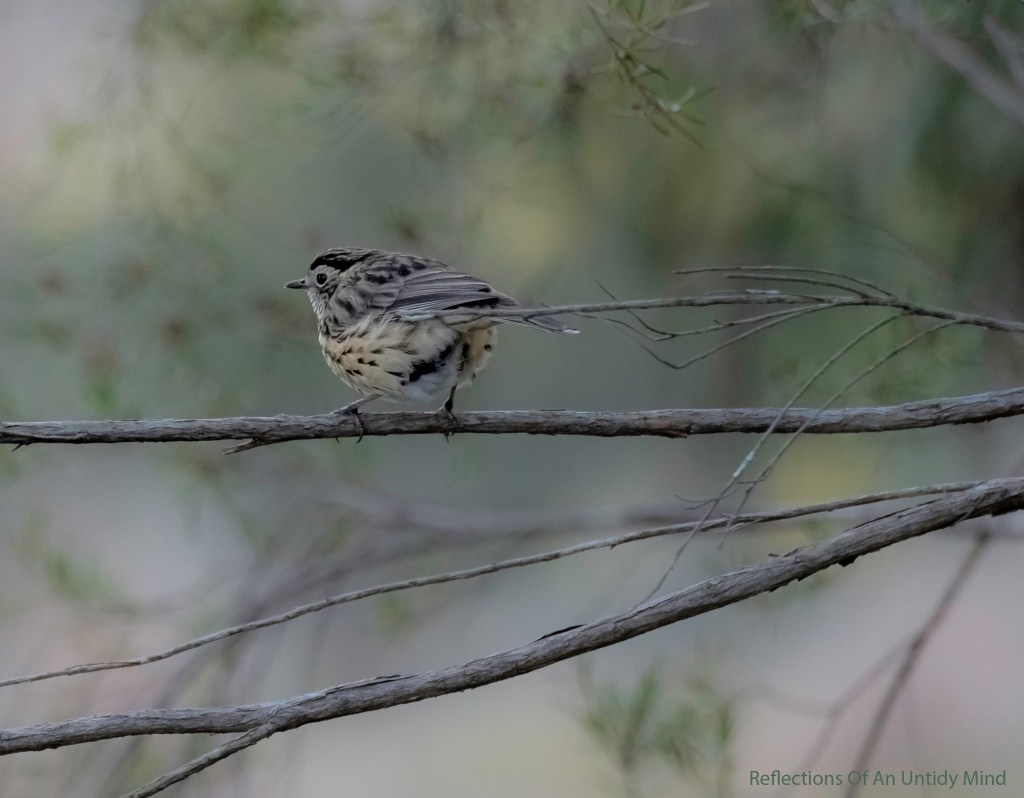
Here are some busy little birds – firstly, a busy photo of a silvereye getting a dusting of wattle pollen, and secondly, a speckled warbler in a more serene green. We also have a front and back view as an added contrast.

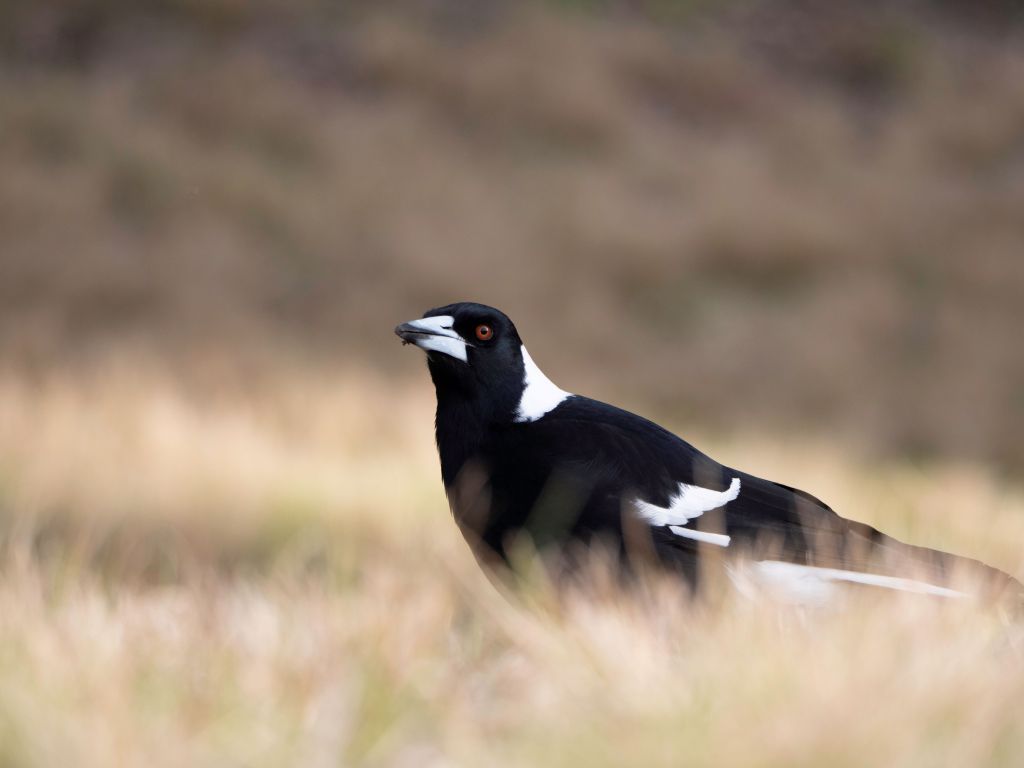
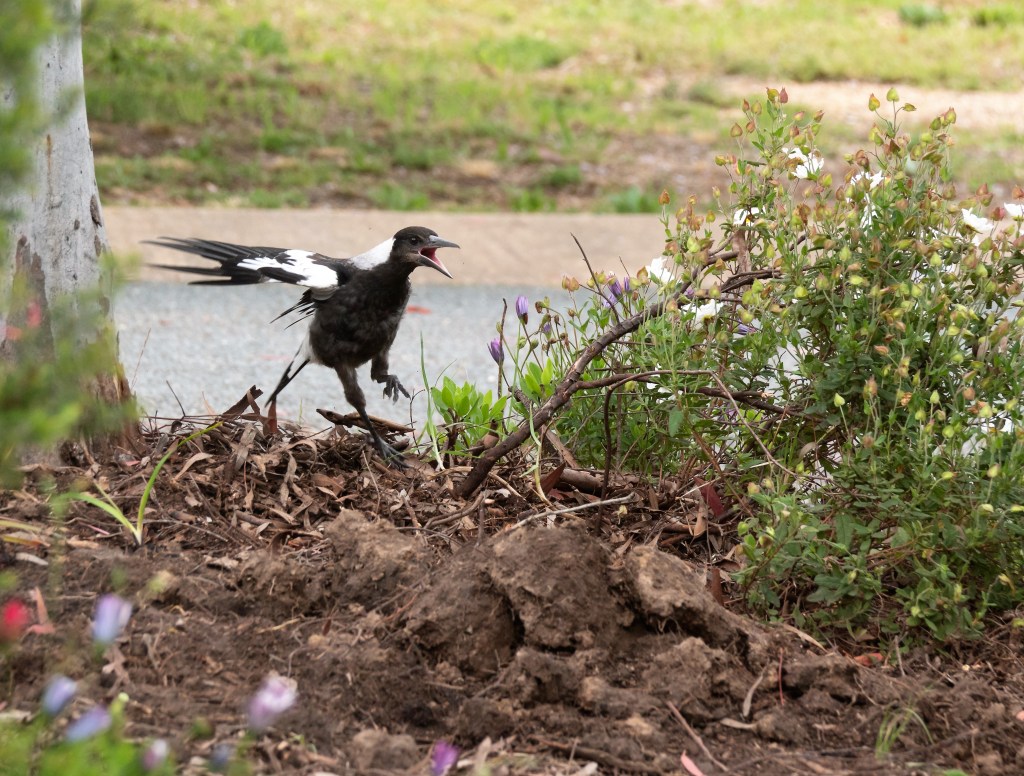
Sticking with the busy bird theme because it is spring in Australia, here is another busy photo, this time of a New Holland honeyeater. It was quick but I was quicker snapping its photo in this native mistletoe (probably Amyema miquelii, but I am no expert). Mr Magpie is always good for a photo. “Hope you’ve got my best side,” he says. It is a harmonious contrast, don’t you think?

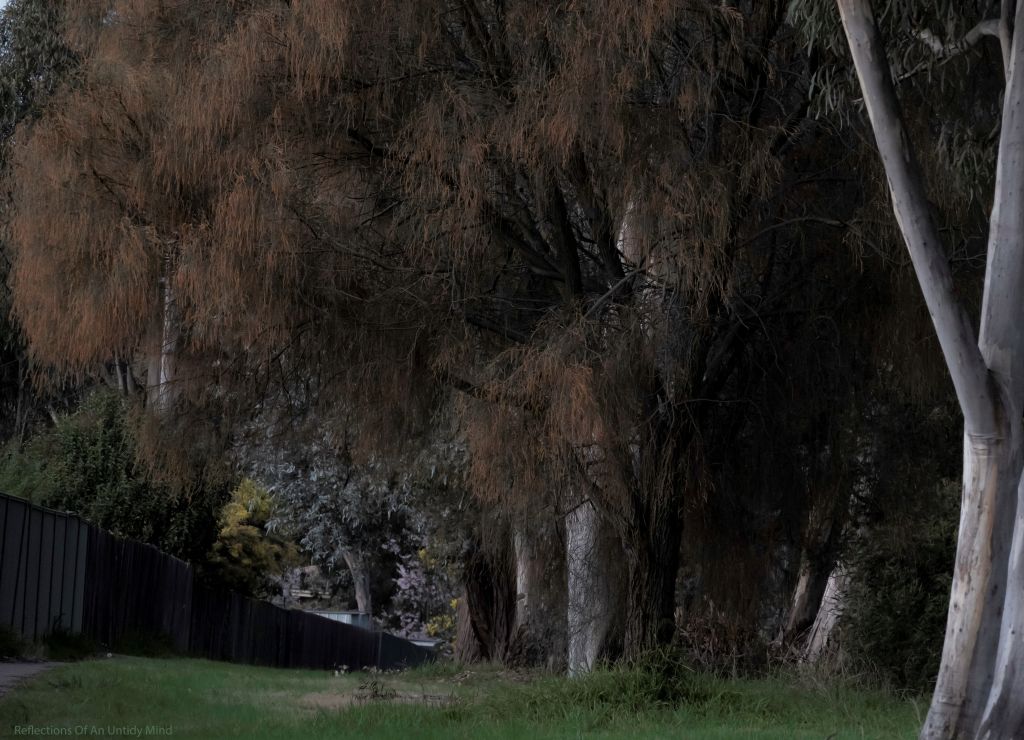
Moving on to all things botanical, a beautiful sheoak (possibly Allocasuarina verticillata) caught and held my attention. The coppery flowers stood out in the fading light. Bucolic, eh? Contrast the woodland veiled in copper with a single stem of this nodding blue lily (Stypandra glauca) set in silver. Pure harmony in opposites.

That’s my lot for this week, ladies and gentlemen.

I’ll leave you with this quote by yours truly, “Stay calm, stay strong and negotiate.” That’s pretty good. Someone must have said that before.

Kind Regards.
Tracy.

PS. They are all my photos. I have to be a grown-up and take my own photos, rather than my True Love’s photos, to the photography group.

Little Eagles

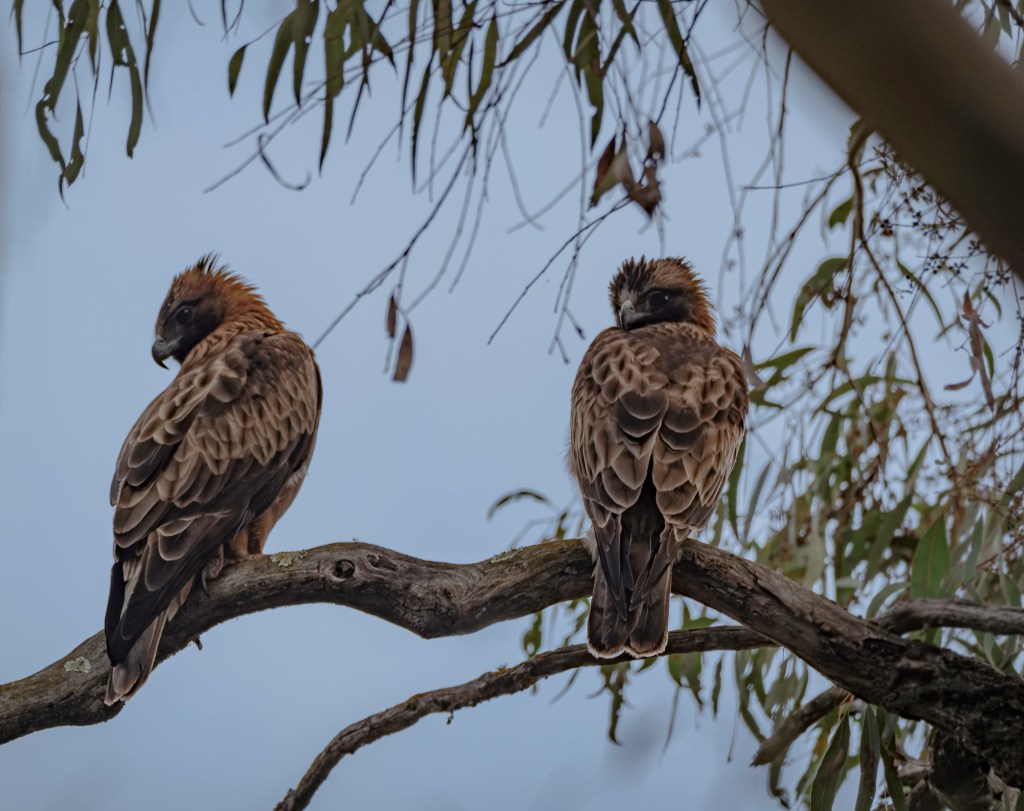
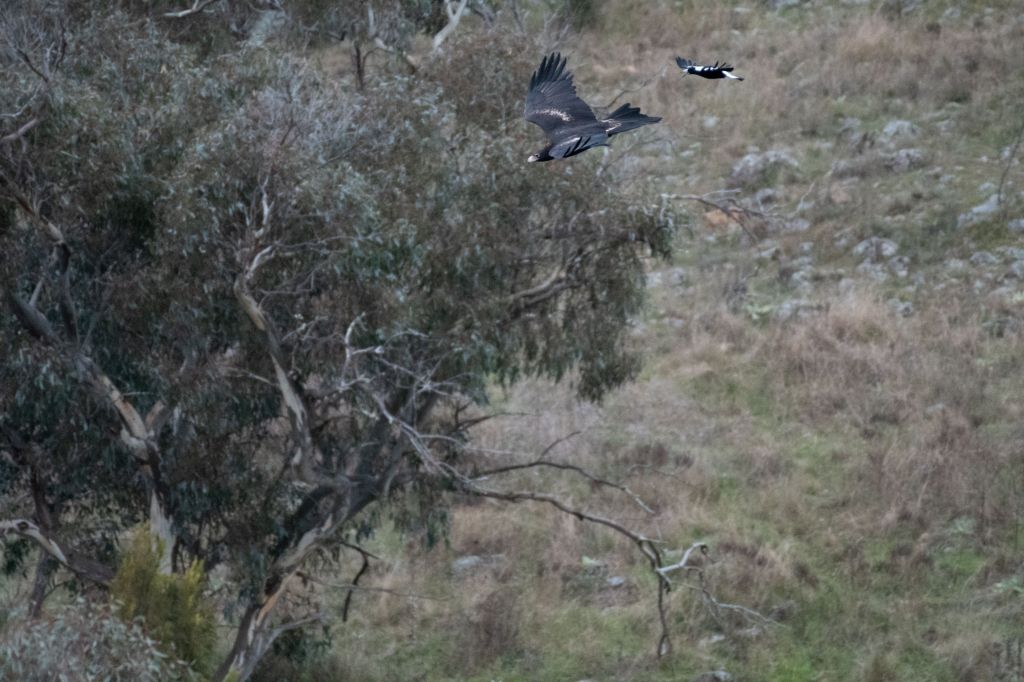
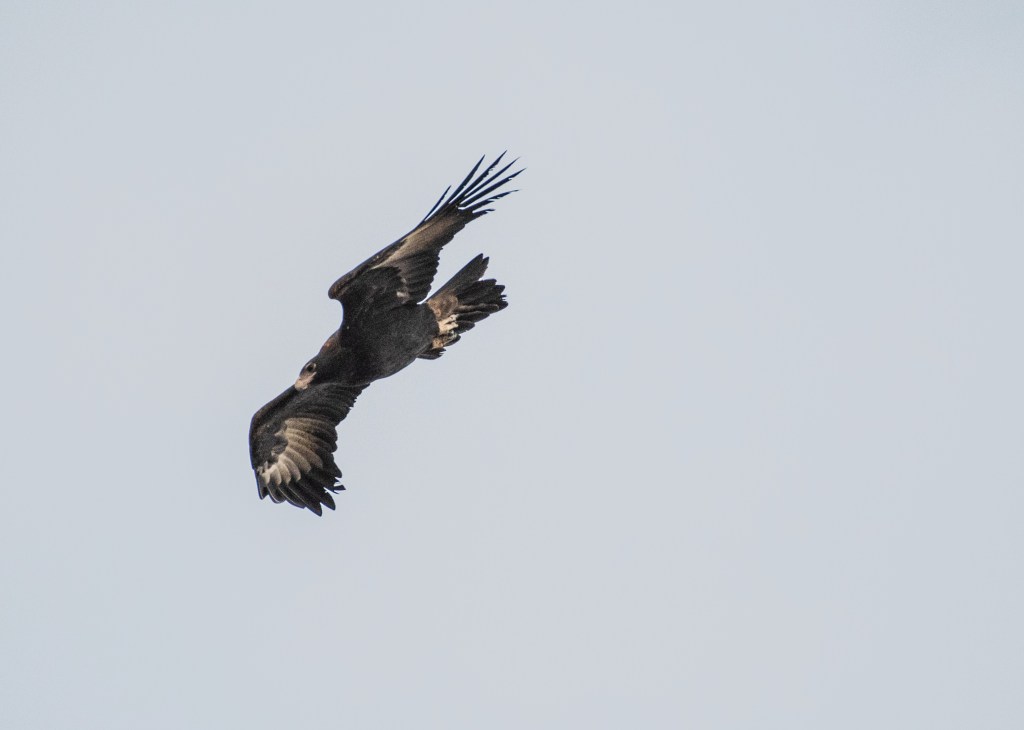
The highlight of our week so far was seeing a pair of dark morph Little Eagles (Hieraaetus morphnoides). Little eagles are listed as vulnerable in Canberra.

We have only ever glimpsed them flying high above us. We were therefore particularly excited to see two (!!) together in a tree. They looked very cute and fluffy so we thought they must be fledglings but information online indicates they don’t start breeding until the end of August in our area. Perhaps then, the two are a breeding pair? It was hard to tell because it was another overcast day and once again the light was fading fast (story of our lives).

So with much Photoshop ado, here are the lovely pair.

They did not take their eyes off us. The first photo was taken by my True Love and the second by me. A truly excellent day for all its gloominess.

Kind Regards.
Tracy.

Lens Artists – Motion

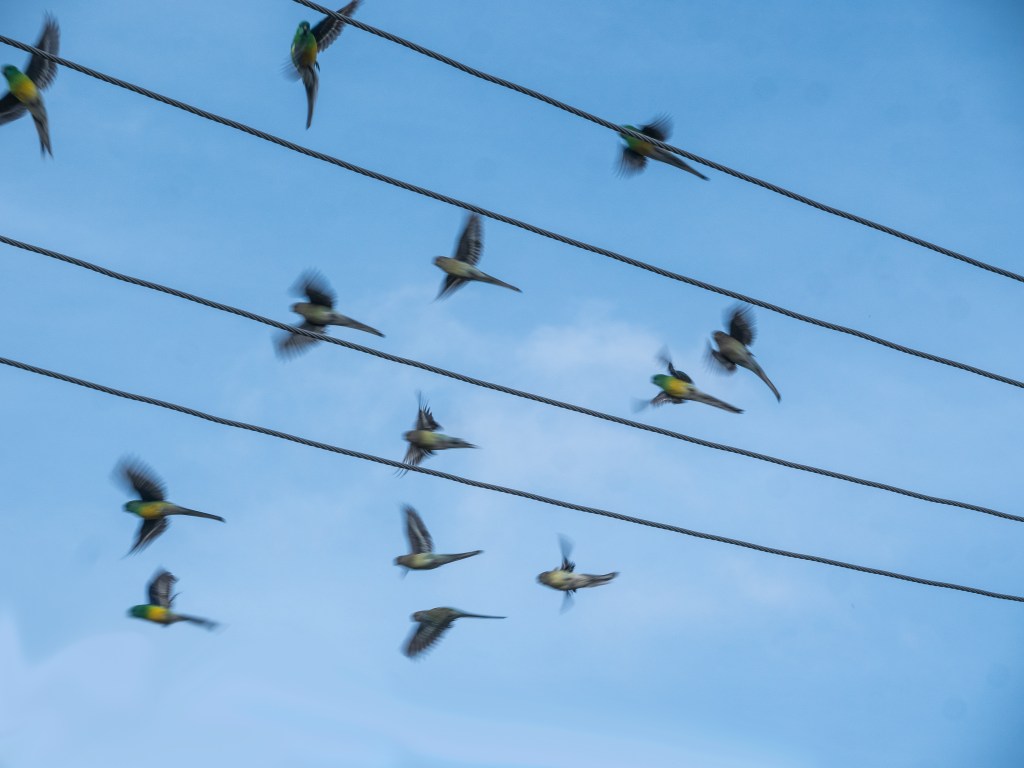
I just happened to have a couple of motion shots that I haven’t published and one that I have. Only three photos, so I thought I would slip in a poem or three. Enjoy.

Strong is mother’s instinct to provide.
Strong is the instinct to survive.
Run along, hungry bird.
Run to mummy.

Showers came in repeated waves
in front of frigid wind.
On the pinnacle, leaves jostled
for attention, but no one saw or heard.

The air shimmers with your power.
The future is green energy.
It won’t hurt you.

Patti, who is back from her holiday, is hosting the Lens-Artists Photo Challenge this week. The theme for the challenge is Motion. Click on the link here to view Patti’s wonderfully creative photos and to discover how other Lens Artists have interpreted this theme.

Take care, everyone.

Kind Regards.
Tracy.

Quick question. Is it acceptable to mix my tenses as I did in that second poem? Okay, I fixed it because it bothered me but it lacks something now. It will do.

Lens-Artists: Summer Vibes

It’s July so you know what that means. July is when the dedicated, hard-working hosts of the incredibly popular Lens-Artists Photo Challenge take a well earned break from their hosting duties and co-opt five guest hosts to take on this important responsibility. This week, Andre from My Blog – solaner is hosting the challenge and he has invited us to feel the summer vibe. It’s winter here in the Southern Hemisphere but I will try.

Read more

The Stories They Tell

Welcome to my regular Friday song/tune day, ladies and gentlemen, where I pick a piece of music that reflects my mood or the times, to share with you.

It’s already Saturday here and I haven’t published my Friday Song yet. Better late than never, eh? This week I could tell you about all the stupid spending that went on under the last government, and that we now have nothing “nation building” to show for it. I could also tell you how this has left the new national government in a pretty pickle having to cancel important programs that ensure people sick with Covid don’t have to go into work in order to keep a roof over their heads. Yeah, tricky. It is especially tricky when you have inherited a huge budget deficit due to a lot of expenditure that hasn’t exactly been the best value for money for the country, and now have a huge budget deficit/ big credit card bill, at the same time as interest rates are going through the roof (lotta roofs in this thought bubble). And if you are not collecting enough taxes to pay that debt down because everybody, including the rich people, must have a tax cut – and in order for prospective governing parties to win an election – then those debt levels are only going to increase, adding to the burden on existing and future taxpayers, those few that are still remaining that is (including those casual but essential workers sick with Covid), and I’m not talking about the rich people here. I could tell you about all of that, but I won’t.

Read more

Lens-Artists – Doubling Up

It’s July so you know what that means. July is when the dedicated, hard-working hosts of the incredibly popular Lens-Artists Photo Challenge take a well earned break from their hosting duties and co-opt five guest hosts to take on this important responsibility. This week, Jez from Photos with Jez, is hosting the challenge and he has invited us to share in his addiction for reflections and has dared us to see double.

Read more

The Changing Seasons – June 2022

June in Canberra (the Australian Capital Territory) – Winter officially begins. It has been the coldest start to winter since 1964. Opening the house to the elements due to household Covid infections made June a particularly cold month. Life on the outside was better even if it was freezing. The sun came out occasionally and reminded us that winter days in Canberra can be glorious. Here are the highlights, largely courtesy of my True Love who took photos before and after his Covid infection. The poor man still seems very unwell to me but he takes beautiful photos nevertheless.

It snowed on the ranges in the period after my TL’s surgery and prior to his Covid infection. It was bleak but we were happy, happy, happy.*


The majesty.*


Then life got more complicated so I snatched a few moments in the garden.
My Eutaxia obovata (egg and bacon plant) that I planted last year clenched its leaves to conserve heat.


The galahs were contemplative.


The sun popped out and so did my TL and Pimelea physodes.* Lucky for us.


The Eastern spinebill chimed its arrival and stopped to freshen up.*


The prodigal Golden Whistler returned.*


The sun called me and I was off. T-shirt weather, baby!
The brittle gums (E. mannifera) up the hill were celebrating too.


The Eucalyptus cinerea were covered in galls. Something should eat those.


By this time (3 hours later), I wished I had packed my jumper.


Finally, one last photo for my neighbour, J, who is home with Covid. You had visitors today. They seemed to be gnawing on your tree rather than eating the seeds.


Anyway, back to the Covid situation. Canberra seems to have the highest rate per 100,000 people than any other Australian state or territory (NY Times tracks this stuff but maybe their data is wrong). Perhaps the number of infections is only now catching up with the rest of the country? On the other hand, there are now 122 people with Covid in our public hospital. That’s 122 people with Covid in a public hospital system that has somewhere between 600 to 670 public hospital beds and a huge number of hospital staff off sick. At the same time, elective surgeries in the public hospital system have been cancelled again. By my rough calculation, 15-20% of our public hospital beds are being occupied by people with Covid, as they should be if those people need hospital care. These stresses on the system do not seem to merit a “business as usual” approach. Furthermore, several patients and staff in the cancer ward have also caught Covid on the ward. I understand that staff, patients and visitors are required to have a RAT test to enter those highly sensitive areas. If our experience with the uselessness of the RATs is anything to go by, then that does seem like a Covid breach waiting to happen. That’s my opinion.

Anyway, anyway, I send my best wishes to my neighbour, J, for a speedy recovery. Ditto, my friend, Martha, in the States. My TL is none too well and he is in his third week post onset of his infection. Who knows what July will bring? Hopefully, cake. And a few sunny days. And good health. Especially good health.

This is my response to The Changing Seasons photo challenge, jointly hosted by Ju-Lyn (Touring My Backyard) and Brian (Bushboys World). Click on the links provided to check out Ju-Lyn and Brian’s challenge and create some memories by joining in.

But enough of me, how was your June? I hope you found a space for things that make you happy and keep you sane.

Take care, everyone. Stay safe, be kind and be you.
Kind Regards.
Tracy.

*Photos preceded by an asterix were taken by my True Love.

Backyard Bandits

Ladies and gentlemen, we have a new night vision camera. We occasionally get bats eating our figs in the backyard. We will be ready to capture them on camera next summer should they decide to pay us a visit. Of course, they are not the only animals that help themselves to our produce at the night market. Here is a taste of our backyard fauna.

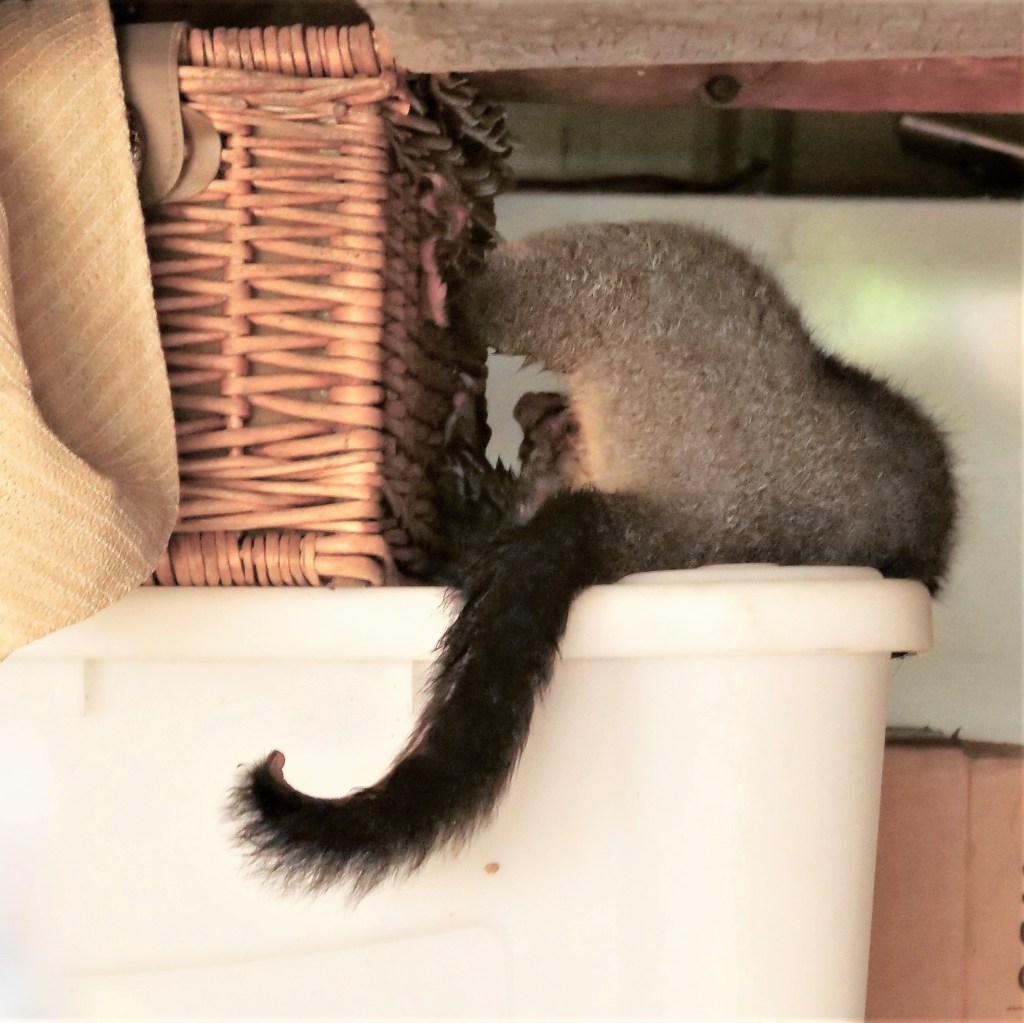
The brushtail possums are frequent, noisy visitors. Normally, there is a furore after sunset when the possum exits our garage/shed. The dogs go crazy. However, I didn’t really expect the possum to stop by at 2am in the morning.

This photo was taken a couple of years ago. My neighbour has a much better shed but the possums prefer to slum it with us.

Mr Possum, that is not your best angle.

The rodents have been a huge problem over the last few years. We have caught quite a few in a snap trap that my True Love designed. The trap is placed in what is effectively a tunnel. This is the culling method that is preferred by the (Australian) Royal Society for the Prevention of Cruelty to Animals (see here). Unfortunately, the rats are very canny and after a successful night trapping, the trap must remain unset for several weeks until the rodents get hungry enough to try their luck again.

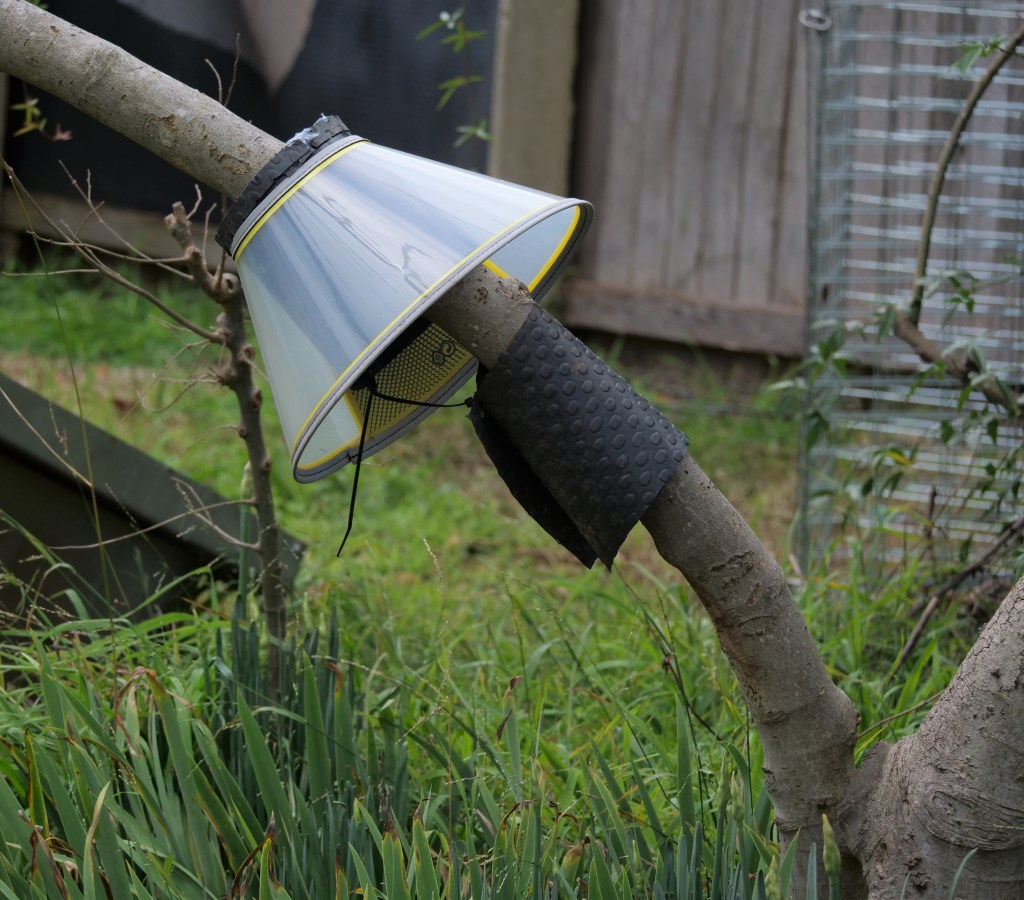
Our fig tree fruited prolifically this year, but it seemed none but the rodents would enjoy the fruit. We tried collaring the tree with an Elizabethan dog collar to prevent the rodents ascent. It worked.

Here is a short clip of one of the little bastards. As yet, we have not worked out a way to keep them from our tomatoes.

Anyway, I hope you enjoyed this glimpse of the backyard antics. Perhaps we will set up the camera in our banksia rose hedge. It appeared to shimmy with movement this afternoon.

Thanks for joining me.
Kind Regards.
Tracy.