The Changing Seasons – April 2019

Take me to the April sun in Canberra (pronounced Canbra).  In the words of George Eliot:

“Delicious autumn! My very soul is wedded to it, and if I were a bird I would fly about the earth seeking the successive autumns.”

Daylight savings has ended. so we sleep in another hour.

sleeping

Read more

The Changing Seasons – March 2019

Dear Readers, can you believe that it is already March?  So here I am, commencing my second year of The Changing Seasons challenge.  I’m feeling battered this month, like an incumbent government that is falling in the polls even though the economy is performing well.  Don’t the punters know that they have never had it so good?  I suppose that is because we don’t live in an economy; we live in a society, and there has been a fair bit of societal ugliness going round.  So yep, although I want to crawl under a rock or hide in my own little “Canberra bubble” (sorry. in joke), March was mostly good for me.

So, let’s get started. Read more

Return To Cooler Nights

The return to cooler nights and mornings heralds the turn of season.  Autumn is upon us.  The little birds, silver-eyes, are enjoying the cool mornings and evenings as they zip through the garden.  Some even stop off for a bite to eat.  Hey, little bird, that’s my fig! Read more

The Changing Seasons – February (Part 2)

My February Changing Seasons post will be divided into two parts.  Part 1 contains the serious environmental message.  Part 2 is more lighthearted.

This post contains images that may distress some viewers. Read more

Animal Farm

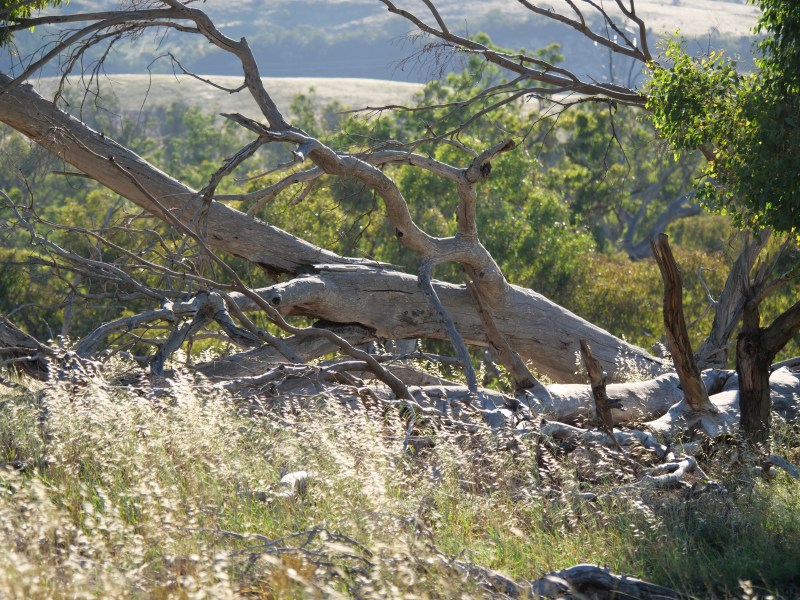
Once upon a time, yellow box and red gum grassy woodlands stretched from Toowoomba to Victoria (Australia), providing a continuous wildlife corridor 100-150 kilometres in width and 1,500 km in length.  Since colonisation, vast swathes of grassy woodland have been cleared for agriculture.  Now there may be as little as 1-5 percent remaining. most of which has been modified in some way by grazing.  Many birds and animals have become trapped in isolated communities, reducing valuable genetic diversity and leaving them vulnerable to threats of local habitat loss.  It is not surprising then, that yellow box and red gum grassy woodlands have been declared a critically endangered ecological community. Read more

Strange Aquatic Creatures

Today’s post will introduce two very strange aquatic creatures found at one of Canberra’s nature reserves — the first, one very odd looking duck, and the second, quite duck-like.

Australia’s musk duck looks half-fish, half duck.  It must be the oddest looking duck I’ve ever come across.  It is so named because it is very smelly, emitting a musky smell from scent glands on its rump.  Musk ducks spend most of their time in the water.  They even sleep on the water.  They can fly, but launching from the water or ground is hard work, so they do so infrequently.  When fleeing predators, they choose a watery escape rather than take to the wing.   Read more

Camouflage Or Sabotage?

Today I have some clandestine photos to share with you, dear Readers.  Provided on a need-to-know basis.  Nudge, nudge, wink, wink.  The subjects are well camouflaged.

I recently went on a short walk with my son for the purpose of some online activity.  Suddenly I heard the unmistakable sound of a bird of prey.  “What was that?” I exclaimed.  “Oh yeah,” my son said, “two sparrow-hawks nest in those pine trees over there.”  To say I was indignant, Ladies and Gentlemen, was a total understatement.  I demanded to know why this information had been withheld from me.  Was the information top-secret, only to be disclosed to those who ‘need-to-know’?  Well, no.  He just forgot.  Can you really believe that? Read more

The Changing Seasons – December 2018

It is a bit late for my December Changing Seasons post, but better late than never.

I think I am glad to see the back of December.  It was such a hot, steamy month.  Nevertheless, a month of storms meant it was very productive in the garden.  Hence, we had many visitors of the feathered kind. Read more

All Care And No Responsibility

There has been rather a bird deficit of late on this blog, so it is time for a couple of bird photos.  The Ragtag Daily Prompt is host, so it seems only fitting that I feature a cuckoo in today’s post.  Cuckoos lay their eggs in the nests of other bird species, leaving the host to do all the hard work raising the young.

On a recent trip to Tidbinbilla (a nature reserve outside of Canberra), I spotted a couple of Fan-tailed Cuckoos.  The Fan-tailed Cuckoo is an attractive little bird which lives in woodland and forests. Read more

Purple Swamphen

Today I had the pleasure of reading about the African Swamphen on the De Wets Wild blog.  If you haven’t checked out the De Wets Wild blog, you really should.  Dries and his family travel to the many wilderness areas of South Africa to bring us beautiful photos of the flora and fauna of each place they visit.  Anyway, the African Swamphen (Porphyrio madagascariensis) is a sub-species of the Purple Swamphen.  The Purple Swamphen has a wide distribution across the globe, including Australia.

At Dries’ request, I’m posting a few photos I took recently of the Purple Swamphens in my area. Read more