Spreading The Word On African Love Grass

Who knew that watching the grass grow and grow was so interesting?

I’ve written a thousand blog posts in my mind over the last couple of months. I’m usually down the park at the time undertaking landcare activities (aka weeding). One of our team members described me as indefatigable. Sure, I can spend five or six hours weeding in oppressive heat but I don’t feel indefatigable. I feel exhausted. Many a time I have just wanted to lie down under a tree and have a sleep. The ants would like that. I think anxious would be a better term to describe me rather than indefatigable. 

The hot, humid conditions and the shutdown over the Christmas break has led to an even greater explosion of African Love Grass (Eragrostis curvula) across Canberra (Australia). African Love Grass consumes all other grasses in its path and is highly flammable. So yeah, I am focussed on weeding as much of it out as quickly as I can so that the native grasses can provide it with some competition, improve biodiversity and mitigate fire risk. I’m not doing this alone by any means. Do you think I want to kill myself? Fortunately, our urban park has also been designated a conservation zone because it contains a patch of critically endangered box gum grassy woodland and hence a native grass-friendly mowing program has recently been established for it. Without that change to the mowing regime, there would be no hope of containing that Love Grass.

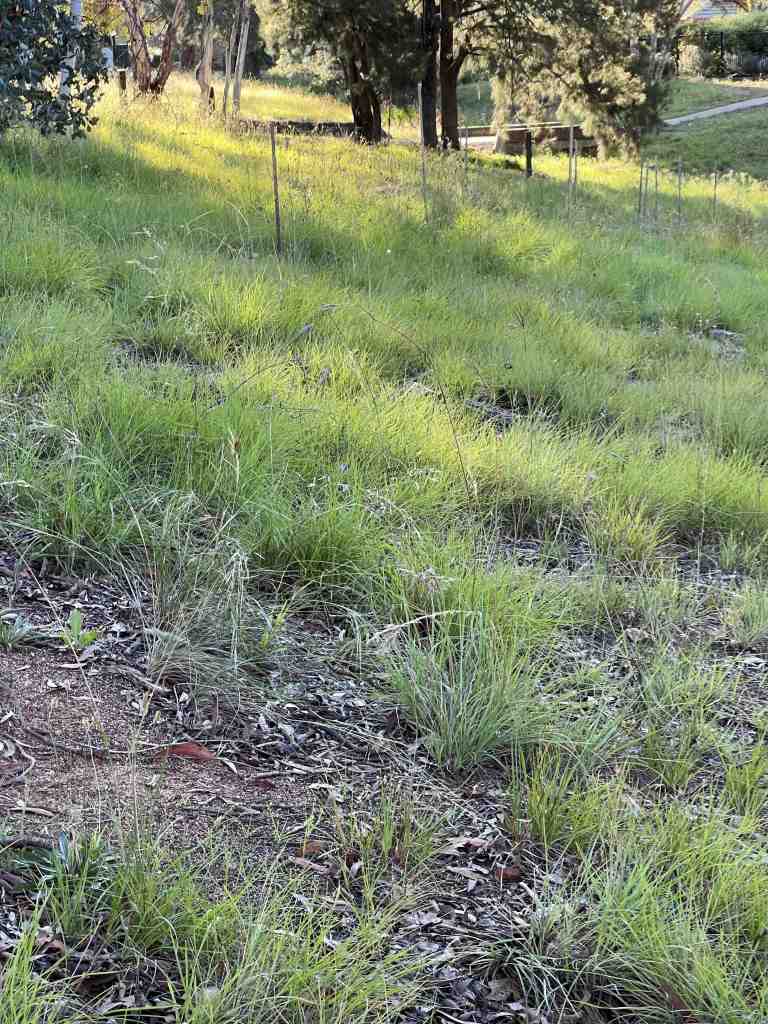
Australian native grasses are touted as a way of mitigating the fire risk of African Love Grass. A patch of Themeda triandra (below) holds the moisture in the ground. It can compete against Africa Love Grass in sunny aspects given a modified mowing program and some TLC. This patch took much weeding and new mowing arrangements to bring it back to match fitness. Themeda triandra is native to Australia, Asia and the Pacific.
African Love Grass is not a fan of shade. In the shade, our lovely weeping grass (Microlaena stipoides) can put a break on it and other tall, weedy exotic grasses.
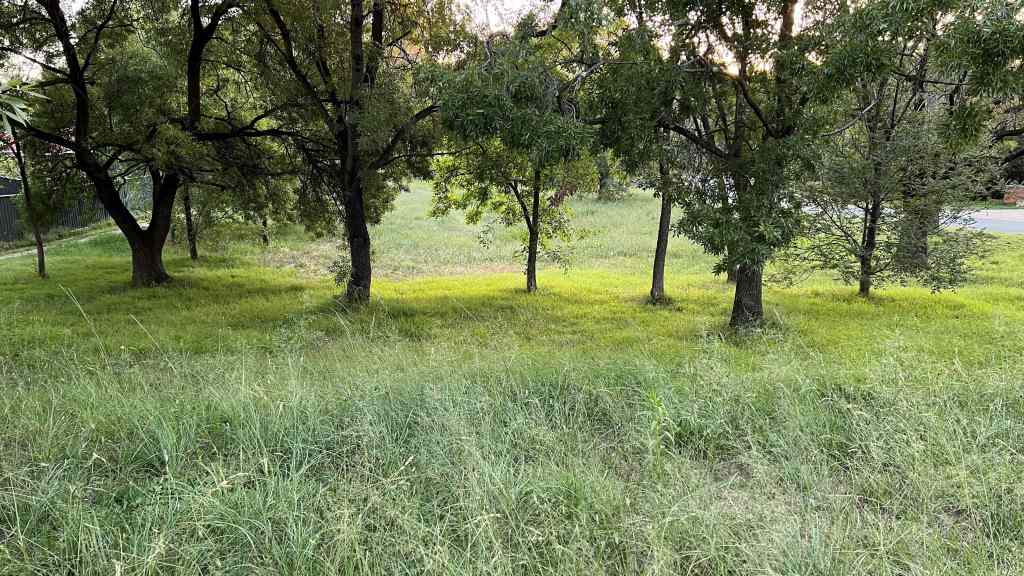
Microlaena growing under a stand of deciduous trees is flanked by African Love Grass.

Microlaena under a eucalypt in one of Canberra’s nature reserves. 
Not mown, except by kangaroos, completely surrounded by exotic weeds.

Unfortunately, the general population doesn’t appreciate the distinction between native grass and weedy grasses like African Love Grass (ALG), Chilean needle grass and serrated tussock. Except for the Rural Fire Service, who would know this stuff? I certainly didn’t know until I started my landcare activities. Moreover, what government is going to admit to the fire hazard in the heart of our city?  There is no asset protection when ALG is allowed to grow unchecked across Canberra. That’s my personal view. Our local government must indeed be worried. When hot dry winds are predicted, one can hear the constant buzz of municipal lawn mowers racing to slash the grass across the city. But mowing in those conditions can also be a hazard. Late last year, one of our landcare members saw a mowing crew trying to stamp out a grass fire started by their mower on a hot and windy day. Scary. Thankfully the fire was on a median strip.

It must a real conundrum for the government on how best to educate people about the fire mitigating properties of native grasses without encouraging lunatic fire bugs to take advantage of our city’s vulnerability. It would be a brave government that would try that. Instead, governments and oppositions exhort the benefits of increased mowing even though this is to the detriment of any native grasses that might be just hanging in there. Nuance and politics don’t go together. I feel their pain. It is really not practical or economic to massively scale up the sort of weed reduction and rehabilitation efforts that many of Canberra’s landcare teams are undertaking. Nevertheless, call it biodiversity protection, call it landcare, call it what you will, educating people about our local grassland assets and their care can benefit us all by at least starting a conversation on what can be achieved with community support. At the very least, people may be more inclined to mow their ALG infested yards.

Native grasses re-establishing under eucalypts. We have our eye on the African Love Grass beyond the conservation bollard. It will take time to get there but get there, we will.

Thanks for reading this far. I have to rush out now. Bit more ALG to pull out before it gets too warm. Plus, we have identified a second remnant woodland in our suburb and it too needs care. I’ll leave you with this presentation from the Bredbo Rural Fire Service. They know their grass and they know fires. Best we do too.

Kind Regards.
Tracy.
Hidden In the Rushes

I am posting this again in memory of my mum’s dog, Ashie.  He died today from a serious illness.  There is only one line and photo in this poem-ish photo-essay that relates to him, but it sums up this beautiful dog so well, at least in my opinion.  Farewell, lovely boy.  You will be missed.

***

When our family ventures out to our beautiful natural areas, we go slowly, for it is only then that nature’s hidden treasures are revealed.  We take out, what we carry in.  We tread lightly and with care.  There may be no houses, but we are nevertheless going into someone else’s home.  This is what we taught our children from a very young age.

Let’s see who is home today – in the rushes.

moorhen2

The little family is well camouflaged.  It is a Dusky Moorhen with her chick.  

moorhenchick

The chick leaves the safety of its nest, but mum is not too far away.

swan2

The black swan and her signets weren’t expecting visitors.

swanb

But all is calm, so peace is soon restored.

Ashy

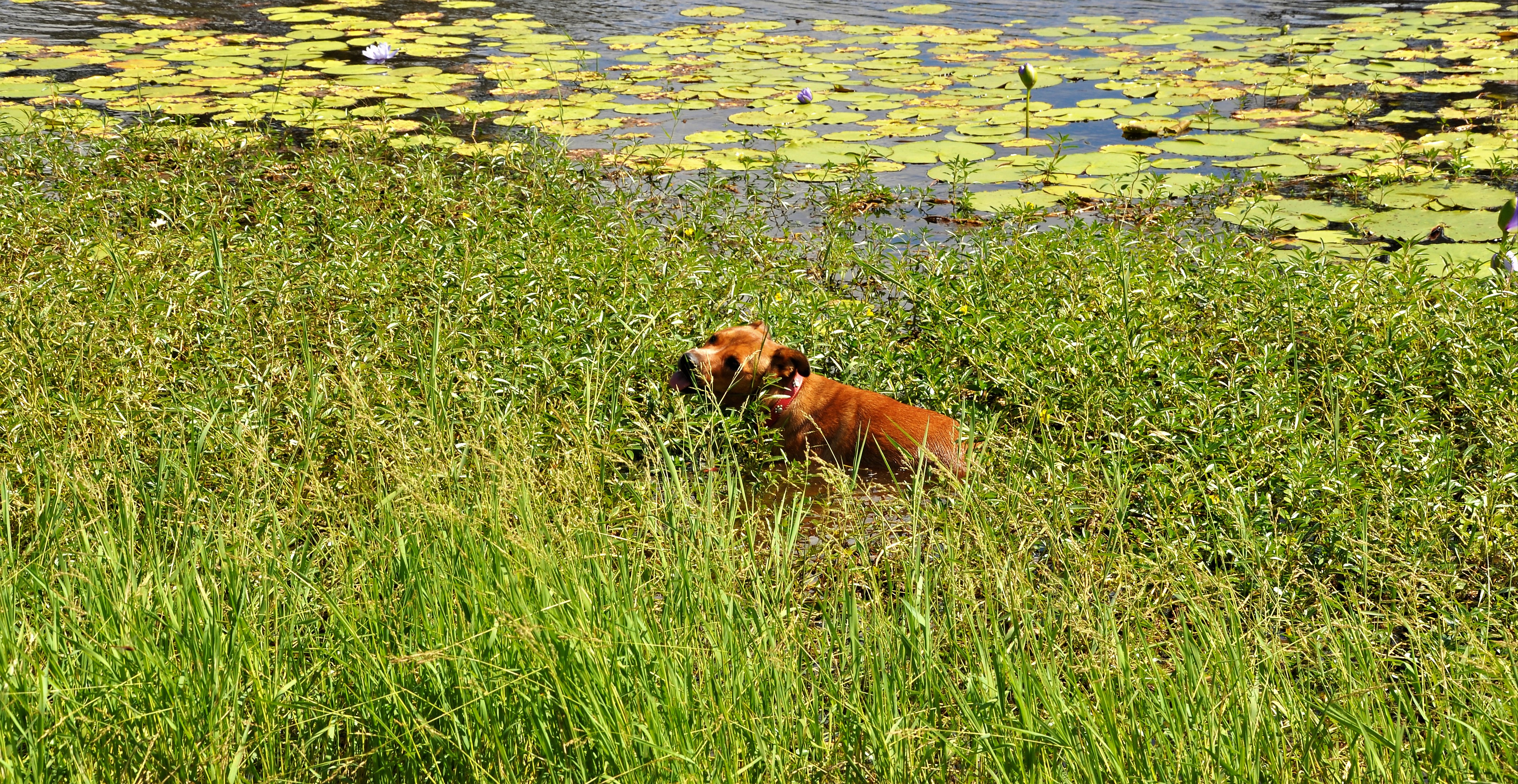
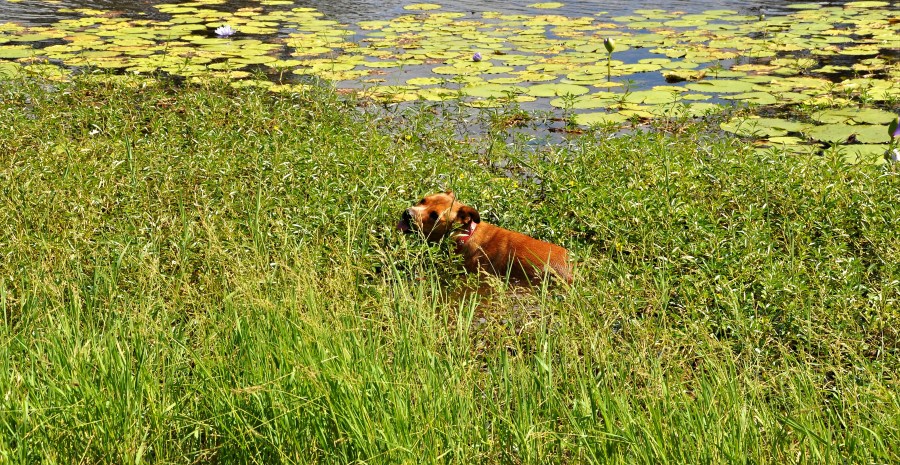
Come out of there, Ash, and leave those ducks alone.  Ash is a farm dog.  He knows to not hurt the wildlife.

No comments necessary.

First published in 2018

When Am I Too Much For This Place?

This week’s theme for the Lens Artists Photo Challenge is Sanctuary.  I’m not sure what more can be said about this topic that I haven’t said already, so I’ve decided to re-post my earlier discussion/photos on this subject.  At that time, I said that I didn’t feel safe anywhere.  That is not quite true.  I do feel safe with my family.  Thank goodness for that because in these days of Covid and being confined to home (provided you are lucky enough to have one of those), there are many people fearful of the ones they should be able to trust the most.

WordPress (and now the Lens-Artists Challenge) has asked us to explore what it means to find your place in the world.  Where’s your safe space?  Where do you go when you need to feel inspired or cheered up?  Do you prefer the city over a small town?  I have to admit I find this an incredibly difficult challenge because I feel very ambivalent about my place in the world.  I don’t feel safe, or comforted, or any of the things that WordPress has asked us to explore.  I feel that I am possibly too much, that we are too much.  However, I am here.  I live in a wonderful place and I’m grateful for that.  The issue of whether I, and we, can live sustainably is a complex one.

Read more

Corvid-2020 Weekly Challenge #10

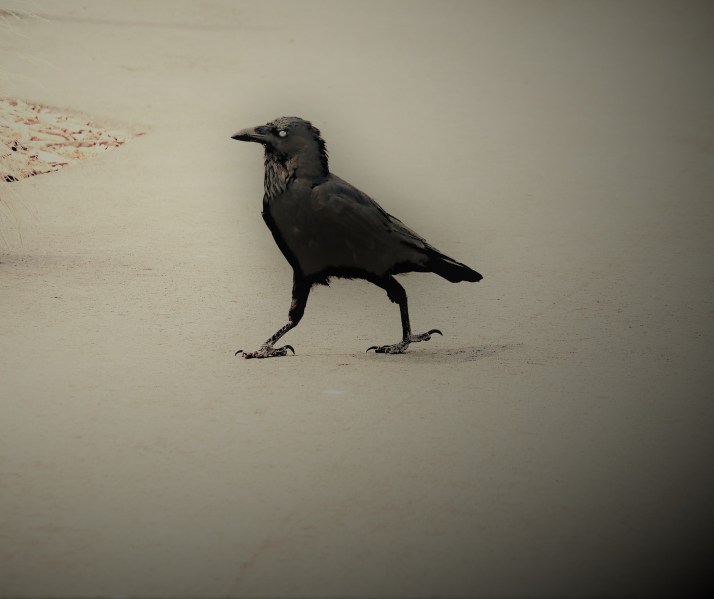
Welcome to Week 10 of my Corvid-2020 Weekly Challenge.  Corvids are birds belonging to the Corvidae family, encompassing ravens, crows, magpies, jays and nutcrackers.  So peruse your corvid photo, poetry, music and story archives and join the challenge.

You can participate in the Corvid-2020 Weekly Challenge by creating a pingback to this post (my pingback approval settings are set up for manual approval, so it may take a little while for your pingback to appear) and/or by leaving a hyperlink to your submission in the comments.   Tag your post Corvid-2020 or C20WC.  I really do hope you will join in.

My turn now. Read more

The Future Is Ours

I am not a curious person, ladies and gentlemen, so it is well that I ended up sharing my life with my True Love and that we had two lovely, inquisitive boys.  It is a truism, but without them, I would be the lesser.

mating dragon flies

There is much to be learnt from the curiosity of children. Read more

Gone Batty

Greetings, ladies and gentlemen.  Welcome to my regular Friday song/tune day, where I pick a piece of music that reflects my mood or the times, to share with you.

I don’t know whether the bushfire smoke is getting to me, or whether I’m just going a bit batty, or maybe both.  Either way, I sure don’t feel well.  Depending on the way the wind is blowing, my True Love and I will nip outside for a breath of fetid air.  On one of our brief walks, we saw a tiny colony of flying foxes (fruit bats) with what looked like several babies clinging to them.  Flying foxes have been having a tough time of it over the last few years.  They have been dying in their thousands from heat stress during increasingly frequent heatwaves.  I can relate.  I think I might drop off my perch too if I don’t get air-conditioning.  Seriously though, it is a real problem. Read more

How Deep?

It is time for my Friday song post.  Where did the week go?  I’m relaxed and comfortable (in-joke, a little Aussie humour) at the seaside.  However, at the back of my mind, there is still this ominous foreboding that we are in too deep.  It’s a feeling that Australian singer-songwriter, Richard Clapton, writes so well about in his song, Deep Water.  So I thought it should be my Friday pick. Read more

What’s Your Beef?

Would it surprise you to learn, ladies and gentlemen, that Australia has the highest rate of deforestation in the developed world and that, although direct comparisons cannot be made. rates of land-clearing are on a par with Brazil?  Land-clearing is accelerating the growth in Australia’s carbon emissions. Read more

The Choice

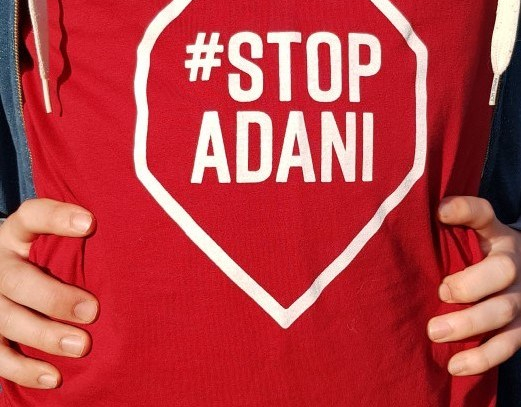
Australia — Stop Adani.  No coal.

So often novelist, Richard Flanagan, speaks for me on matters close to my heart.  He is spot on when he says the fight to stop the Adani Carmichael mine is not just about Adani.  (Read Richard Flanagan’s speech to the Stop Adani rally by clicking on the above link.)

The Adani mine infrastructure is needed to make other prospective mines in Galilee basin viable.  Political power broker, Clive Palmer, also has mining interests in the Galilee basin.  Mr Palmer’s political party, United Australia Party. has just signed a deal to direct preferences to the Liberal and National parties.  The tag line for the United Australia Party is “Make Australia Great”.  Seriously!  In addition, the family of Matt Canavan, the Minister for Resources in the Morrison Government, also has interests in the Australian coal industry.

Several years ago, I attended an event where the Australian Council of Trade Unions had an information and merchandise stand.  They were selling T-Shirts advocating for wind power.  I remarked to the woman on the stand that there was an inconsistency between what she was selling and the views of then leader of the Australian Workers Union (AWU), who was concerned about the how the shift to renewable energy would affect his members.  She said to me that the AWU does not represent the views of her union or the union movement as a whole.  The Construction, Forestry, Mining and Energy Union (rivals to the AWU), has recently been applying pressure to the Australian Labor Party to support the Carmichael mine.  It should be noted that the PM-in-waiting, Mr Bill Shorten, was once head of the AWU.

Do I need to remind Mr Shorten and his party that the AWU and the CFMEU do not represent the views of the entire Australian labor movement?  Voters, if you come across representatives of the ALP door-knocking, remind them of this and send them a strong message that the Adani coal mine must be stopped and our environmental legislation amended immediately to ensure that the carbon footprint impact of projects is taken into account.  Carbon neutrality must be a minimum for project approval. Read more