A couple of photos so that long time readers will know that I am still alive. I want to say something, anything, but more and more, I am silent, assuaging my conscience by tending my garden.
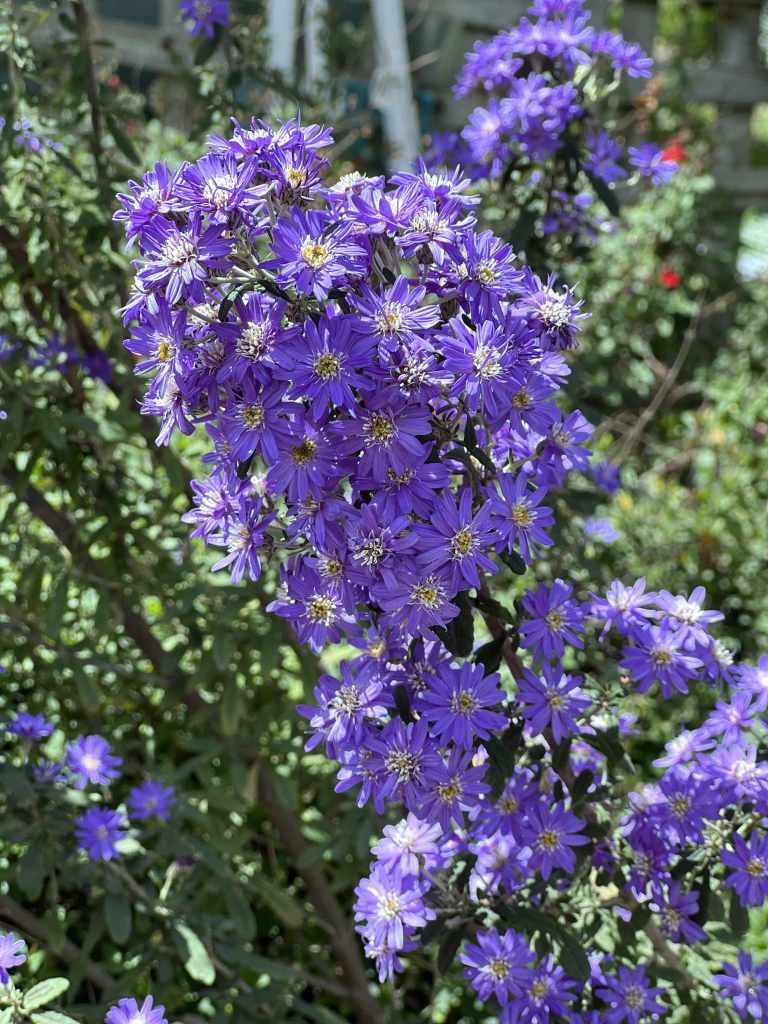
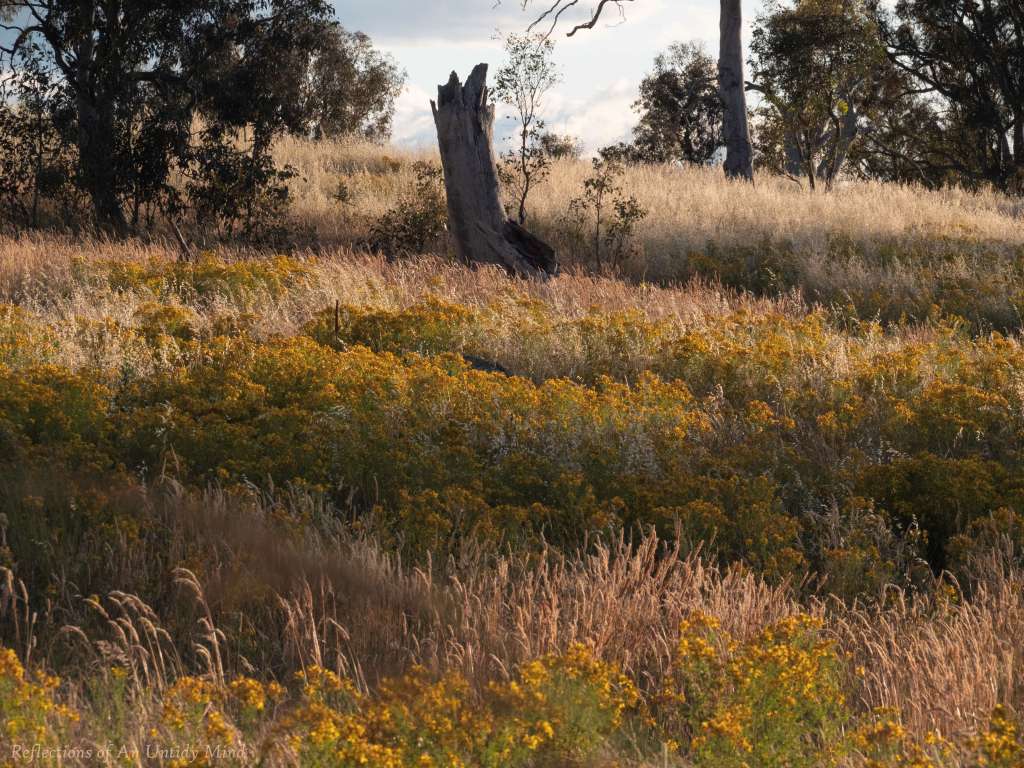
Alpine Daisy Bush (Olearia phlogopappa mauve form)
The daisy bush is a mass of flowers this year but there are few insects about. We expect to see more now that we have had a few drops of rain.
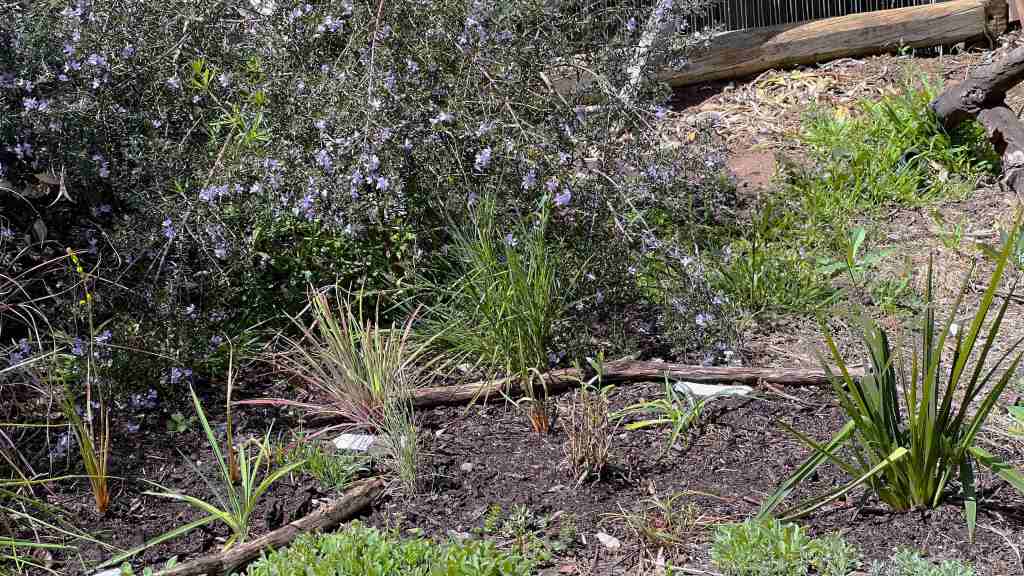
Bulbine Lily
Gardening in the backyard has been on hold for the last two years. During this time, the bulbine lilies and the weeds have been multiplying gaily.
Back garden gets a reno.
I thought we might try to grow some of the native plants we have been trying to establish in the front yard in the back garden too. The soil is much better because it is has been left to go to weeds. The thick green patch at the bottom of the photo is an exotic cud weed. The work is strenuous and maybe a little mind-numbing, er, I mean, relaxing.
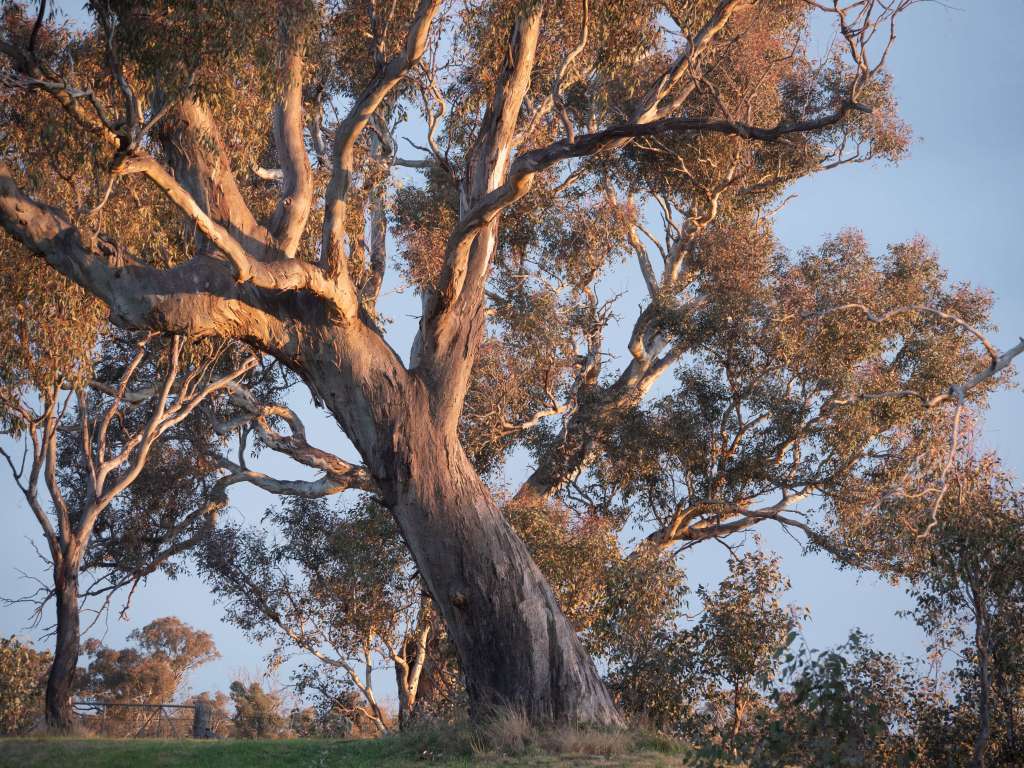
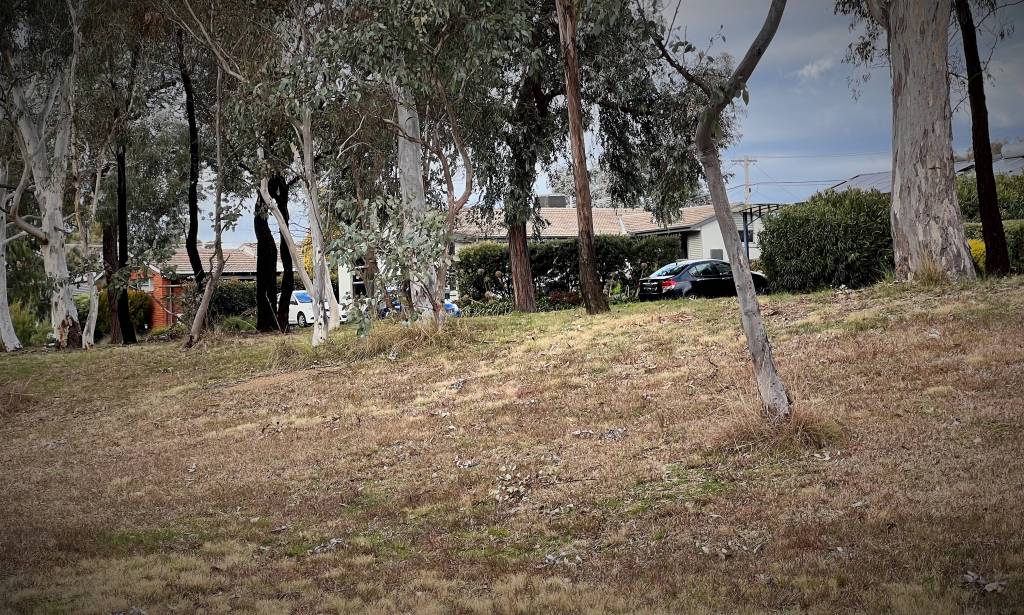
I’ve also started a campaign on face plough to save some big remnant eucalypts in my local area that are going to be cut down to make way for progress, er, I mean, for a road. I have all of 7 followers. A pointless exercise. Globally we are on track for a catastrophic 2.5c degrees warming and species extinction, but at least we will have good roads (until some disaster destroys them). Aren’t I a little ray of sunshine?
Below – one of the trees that may be cut down. I posted it first here in 2021. I knew blogging would come in handy one day.
Almost a quarter of a century ago, I asked someone why our emissions reduction target was so low. Emissions were increasing. That was the point. I had better stop there or I will start to sound self-righteous and, as you know, words are cheap but also powerful, which perfectly sums up many of life’s conundrums.
Well, better get back to my plants. As they say in the classics, “Have a good day.”
Who knew that watching the grass grow and grow was so interesting?
I’ve written a thousand blog posts in my mind over the last couple of months. I’m usually down the park at the time undertaking landcare activities (aka weeding). One of our team members described me as indefatigable. Sure, I can spend five or six hours weeding in oppressive heat but I don’t feel indefatigable. I feel exhausted. Many a time I have just wanted to lie down under a tree and have a sleep. The ants would like that. I think anxious would be a better term to describe me rather than indefatigable.
The hot, humid conditions and the shutdown over the Christmas break has led to an even greater explosion of African Love Grass (Eragrostiscurvula) across Canberra (Australia). African Love Grass consumes all other grasses in its path and is highly flammable. So yeah, I am focussed on weeding as much of it out as quickly as I can so that the native grasses can provide it with some competition, improve biodiversity and mitigate fire risk. I’m not doing this alone by any means. Do you think I want to kill myself? Fortunately, our urban park has also been designated a conservation zone because it contains a patch of critically endangered box gum grassy woodland and hence a native grass-friendly mowing program has recently been established for it. Without that change to the mowing regime, there would be no hope of containing that Love Grass.
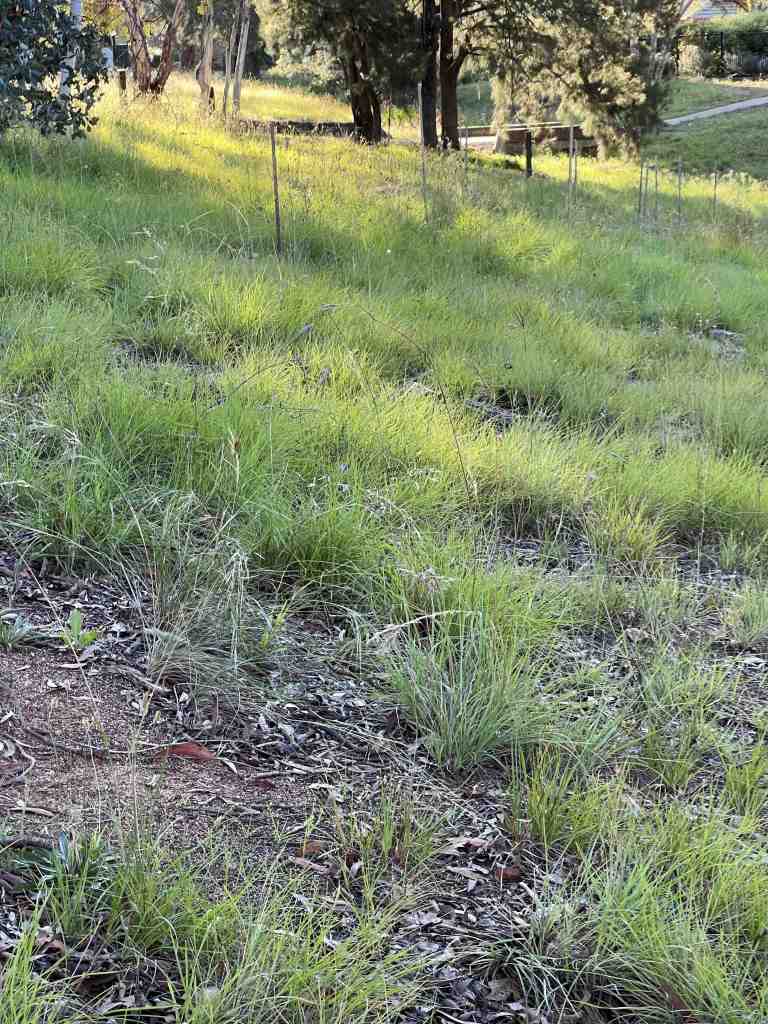
Australian native grasses are touted as a way of mitigating the fire risk of African Love Grass. A patch of Themeda triandra (below) holds the moisture in the ground. It can compete against Africa Love Grass in sunny aspects given a modified mowing program and some TLC. This patch took much weeding and new mowing arrangements to bring it back to match fitness. Themeda triandra is native to Australia, Asia and the Pacific.
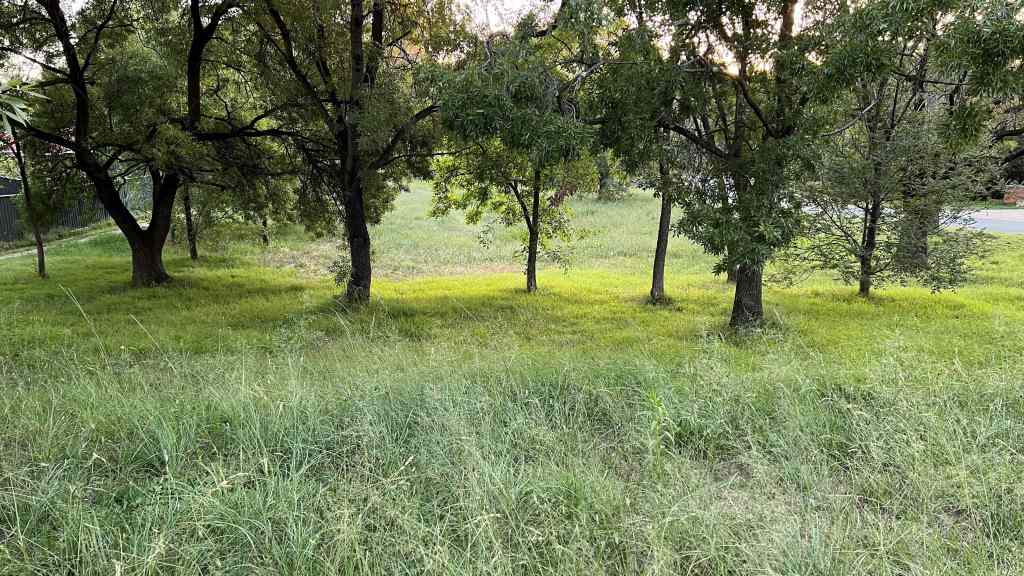
African Love Grass is not a fan of shade. In the shade, our lovely weeping grass (Microlaena stipoides) can put a break on it and other tall, weedy exotic grasses.
Microlaena growing under a stand of deciduous trees is flanked by African Love Grass.Microlaena under a eucalypt in one of Canberra’s nature reserves. Not mown, except by kangaroos, completely surrounded by exotic weeds.
Unfortunately, the general population doesn’t appreciate the distinction between native grass and weedy grasses like African Love Grass (ALG), Chilean needle grass and serrated tussock. Except for the Rural Fire Service, who would know this stuff? I certainly didn’t know until I started my landcare activities. Moreover, what government is going to admit to the fire hazard in the heart of our city? There is no asset protection when ALG is allowed to grow unchecked across Canberra. That’s my personal view. Our local government must indeed be worried. When hot dry winds are predicted, one can hear the constant buzz of municipal lawn mowers racing to slash the grass across the city. But mowing in those conditions can also be a hazard. Late last year, one of our landcare members saw a mowing crew trying to stamp out a grass fire started by their mower on a hot and windy day. Scary. Thankfully the fire was on a median strip.
It must a real conundrum for the government on how best to educate people about the fire mitigating properties of native grasses without encouraging lunatic fire bugs to take advantage of our city’s vulnerability. It would be a brave government that would try that. Instead, governments and oppositions exhort the benefits of increased mowing even though this is to the detriment of any native grasses that might be just hanging in there. Nuance and politics don’t go together. I feel their pain. It is really not practical or economic to massively scale up the sort of weed reduction and rehabilitation efforts that many of Canberra’s landcare teams are undertaking. Nevertheless, call it biodiversity protection, call it landcare, call it what you will, educating people about our local grassland assets and their care can benefit us all by at least starting a conversation on what can be achieved with community support. At the very least, people may be more inclined to mow their ALG infested yards.
Native grasses re-establishing under eucalypts. We have our eye on the African Love Grass beyond the conservation bollard. It will take time to get there but get there, we will.
Thanks for reading this far. I have to rush out now. Bit more ALG to pull out before it gets too warm. Plus, we have identified a second remnant woodland in our suburb and it too needs care. I’ll leave you with this presentation from the Bredbo Rural Fire Service. They know their grass and they know fires. Best we do too.
It’s official, ladies and gentlemen, I am now a landcarer. I join over 100,000 volunteers across Australia working on landcare projects that are focused on sustainable land management practices and environmental conservation. I’m also a newbie Canberra nature mapper. Better late than never, I guess. Over the last six months, I’ve teamed up with some of my neighbours to form a registered group to look after our community park. It is lucky that we had our own resident ecologist because, with his assistance, we identified something that needed protection. Even our ecologist was surprised.
My family has known for years that areas of the park had some lovely native grass – spear grasses (Austrostipa sp.) and kangaroo grass (Themeda triandra) – as well as some native grassland plants, clinging to the edges, or under, trees. We also had an inkling that if the native grasses were allowed to grow rather than be mown, they might out compete some of the weedy, exotic grasses. But who would believe us? Nothing to see here, right?
When the drought broke, the resident ecologist discovered more and more native woodland and grassland plants at the park, and I started to incorporate these plants into my verge garden. My neighbour had also seen many interesting looking plants popping up down the park and she talked to me about starting a park care group. So our little adventure began and soon we were joined on this journey by some other enthusiastic neighbours. We embarked on months of self-initiated environmental assessments, community engagement and government liaison.
It is fair to say that not everyone is on the same page. Myths of snakes in long grass, experience of devastating bushfires and differences in aesthetics, beget many different reactions. I certainly get it because that was me. Of course, I am “passionate” about conservation, as was pointed out to me, but it is knowledge, not passion, that motivates me, ladies and gentlemen. As a team, we did our homework (ie. the biodiversity surveys, etc) and the park woodland did the rest.
And the result? A small patch of the park has now been officially recognised as critically endangered box-gum grassy woodland. This is both horrifying and exciting. It is horrifying because there is so little box-gum grassy woodland left in eastern Australia due to urban development and unsympathetic agricultural practices. It is exciting because we now have the chance to work together – both government and local landcare volunteers – to ensure that this precious ecological community is cared for appropriately. Well, that’s my view anyway. I can’t speak for the government or the broader community.
So we’ve planted a few plants, not many, to shelter the small birds. We have also been weeding, weeding, weeding. It’s been wet so there are many weeds. Weeding has been a learning exercise in itself because we are no experts on what is and isn’t a weed. Thankfully there are a lot of resources, including the resident ecologist, to help us make those distinctions.
I haven’t had time to swan around taking photos. I tried to combine my photography and land care interests at one point but I ended up leaving my camera in the grass when I got distracted by some weeds. Don’t worry, it was still there when I realised my error. I do, however, encourage swanning around with a camera because images (plus the expert narrative that goes along with them) tell a story and the story can lead to understanding, and understanding can lead to action. So I haven’t completely given up.
Because the conservation patch is a grassy woodland, it has delivered, once left unmown, an outpouring of beautiful native grasses the likes of which I have never seen in our park. Let me show you.
Austrostipa, once clinging to the edges of trees, goes wild.Who wouldn’t want to live across from this meadow of kangaroo grass?
Like the rest of Australia, Canberra has a growing multicultural population. Although my ancestors arrived here in 18th century, I include myself in that multicultural group. This multiculturalism extends to our weeds, gardens and pastures. Our nature reserves, and the indigenous species that depend on them, cannot withstand the onslaught of these “threatening processes” unless we do nature differently.
Exotic wild oats, St John’s Wort and Yorkshire Fog grass in Kama Nature Reserve
I’ve got lots of ideas about “ecologically sustainable development” and probably not very original ones. Improved community education about environmental conservation needs to reflect where we are as a community, so tailoring nature “education” to Australia’s increasingly multicultural population, through programs and materials in languages other than English, could be really helpful. I would also love to see even more community and government initiatives to re-wild and connect our urban green spaces. Canberrans, the latter is already happening and you can join in now. Contact Landcare or the ACT government to find out how you can get involved. The work is intellectual; it is physical; it is communal and I love it. Don’t wait until you are over 50, like me, before you get your A into G. There’s a job that suits all abilities.
In closing, I offer my best wishes to all who celebrate the coming festive season and to those of you who do not. My hope for the new year is that you too may have access to a resident ecologist and/or team up with likeminded friends to turn your dreams into reality.
Take care, everyone. Don’t be too naughty. Maybe I’ll stop for photos.
Welcome to my somewhat infrequent Friday song/tune day, ladies and gentlemen, where I pick a piece of music that reflects my mood or the times, to share with you.
A world without compassion is a world without hope. My heart grieves for those in Pakistan who have been affected by devastating floods, and I stand with all those in other countries who are facing crippling water shortages. The wealthy, powerful and corrupt may cushion themselves against these catastrophes but ultimately everyone, and everything, will pay a high price for their collective crimes against humanity.
Today I’ve chosen a song, Nobody Knows the Trouble I’ve Seen, performed by Paul Robeson. Mr Robeson was a great humanist and advocate for change.
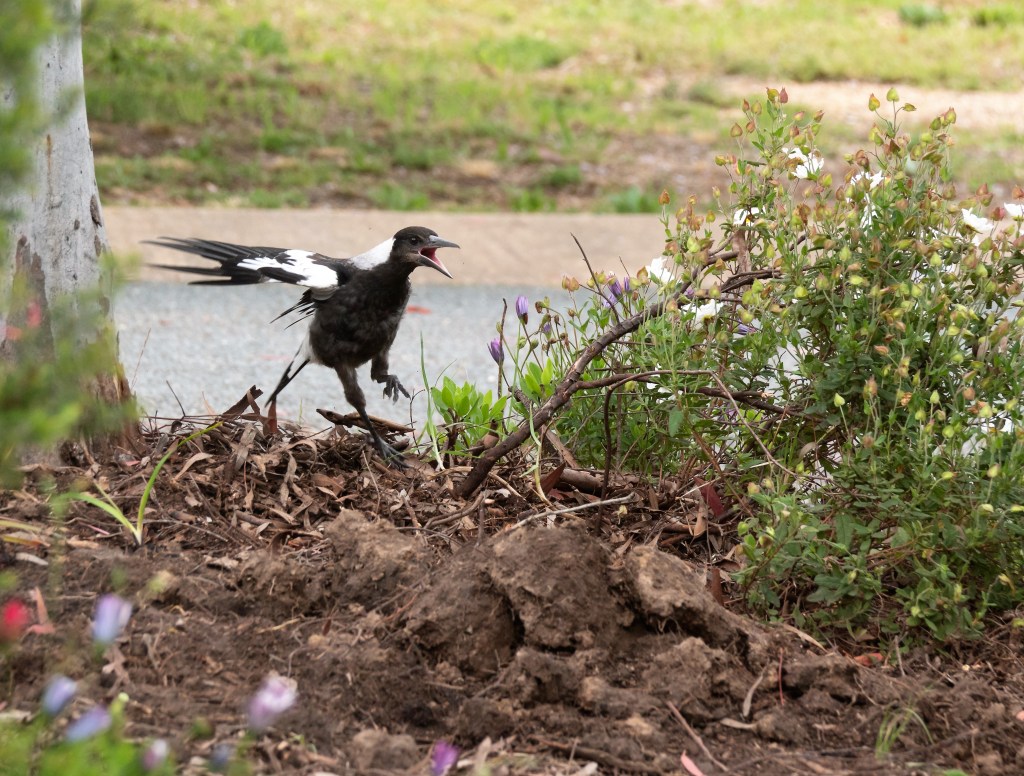
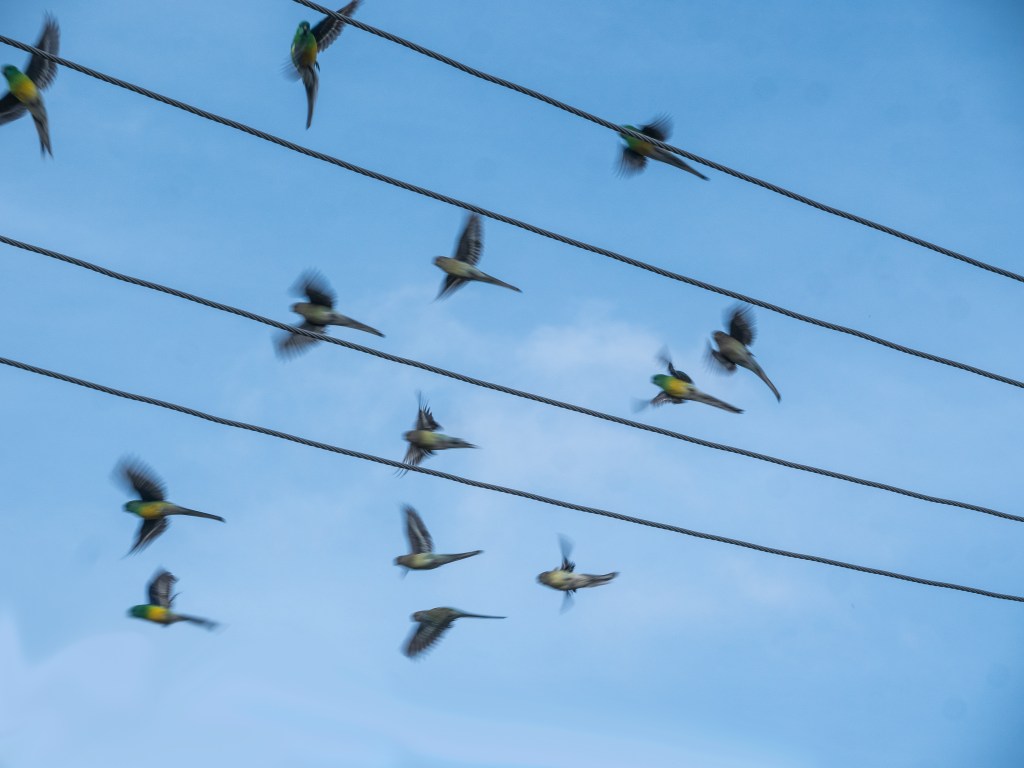
I just happened to have a couple of motion shots that I haven’t published and one that I have. Only three photos, so I thought I would slip in a poem or three. Enjoy.
Strong is mother’s instinct to provide. Strong is the instinct to survive. Run along, hungry bird. Run to mummy.
Showers came in repeated waves in front of frigid wind. On the pinnacle, leaves jostled for attention, but no one saw or heard.
The air shimmers with your power. The future is green energy. It won’t hurt you.
Patti, who is back from her holiday, is hosting the Lens-Artists Photo Challenge this week. The theme for the challenge is Motion. Click on the link here to view Patti’s wonderfully creative photos and to discover how other Lens Artists have interpreted this theme.
Take care, everyone.
Kind Regards. Tracy.
Quick question. Is it acceptable to mix my tenses as I did in that second poem? Okay, I fixed it because it bothered me but it lacks something now. It will do.
Welcome to my regular Friday song/tune day, ladies and gentlemen, where I pick a piece of music that reflects my mood or the times, to share with you.
I’m struggling with my Friday song day. Perhaps after all these years, I’ve got no songs left in the tank? Some pretty eye watering inflation figures were released in Australia this week. Not as bad as some countries. Apparently, we’ve got coal and gas, to borrow a phrase from a friend, “up the wazoo”. There’s always a but. The price for Aussie gas is set by the global market so we pay the international price. Gas is not the only commodity that is determined by the global market. Aussies, do you reckon you’ll be able to afford your usual groceries in a war/pandemic/climate catastrophe-driven global food shortage?
In the forthcoming federal budget, I will be looking to the new Australian government to stop all public subsidies and public largesse for fossil fuel projects. Gosh, if ordinary people have to pay the fuel excise, I can see no reason why the coal and gas companies should continue to benefit from the diesel fuel rebate. Fair’s fair, right?
Anyway, I digress. I suppose I may have a few songs left. Today, I thought we should listen to an Aussie band. Here is Perch Creek performing Gold Shop. Enjoy.
Check out their album and if you’ve got cash to spare, musicians gotta eat.
The wild weather keeps coming, doesn’t it? We don’t have to wait to know how incredibly difficult sustaining life, livelihood and shelter will become if we exceed 1.5c degrees of warming.
All over the world, we are already experiencing the results of poor climate policy decisions. It has been a particularly stormy few months in eastern Australia, and it makes me wild. Like the wind. It does not pay to get too attached to your garden or the trees, for Canberra, the bush capital, is being rapidly re-modelled.
I have begun to think about the next piece in my climate change protest art series. I have time. The Aussie government isn’t in any hurry to beat me to the punch line. Its climate action ambitions do not appear to be high, or low, or whatever. despite its own peculiar protestations.














 Reflections of An Untidy Mind