Garden Artistry

I have been asked by one of my readers to post some progress photos on my verge garden that I started during Covid. Since my verge garden is pretty plain, even plainer than in the first year or two that I planted it out, I will extend this show-and-tell to another small patch of my front yard that I have been giving a makeover.

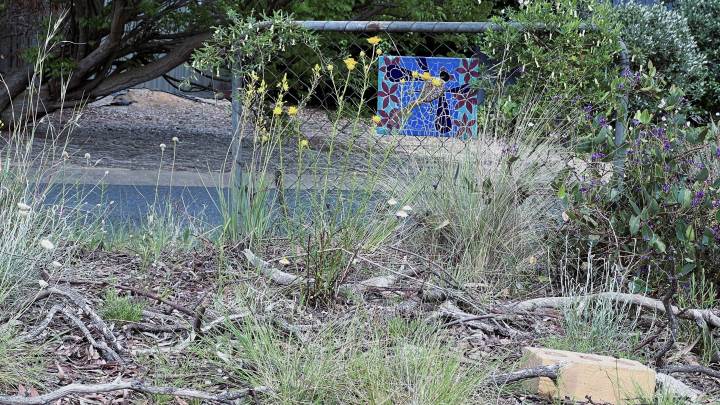
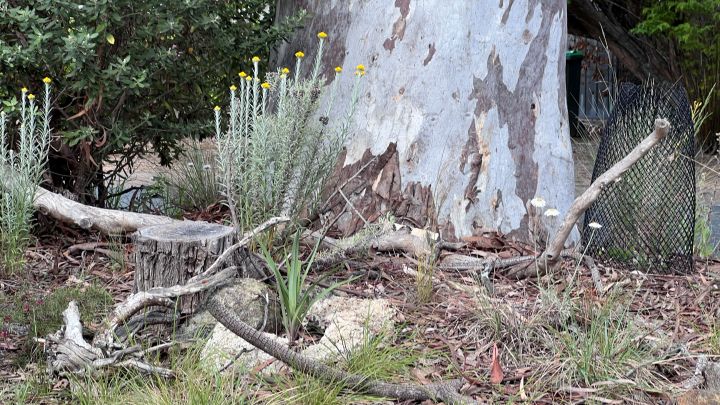
The verge garden has had some setbacks with several plants finding the conditions too harsh/cold/hot/wet/dry, etc. The central feature of my verge garden is the brittle gum (E. mannifera). Brittle gums are difficult trees to grow anything under, especially plants that come from Western Australia, which is on the other side of Australia from where I live. So, duh, I shouldn’t have been surprised by the outcome. So, I’ve found some plants that like to grow under brittle gums and they are going well. Let’s take a look.
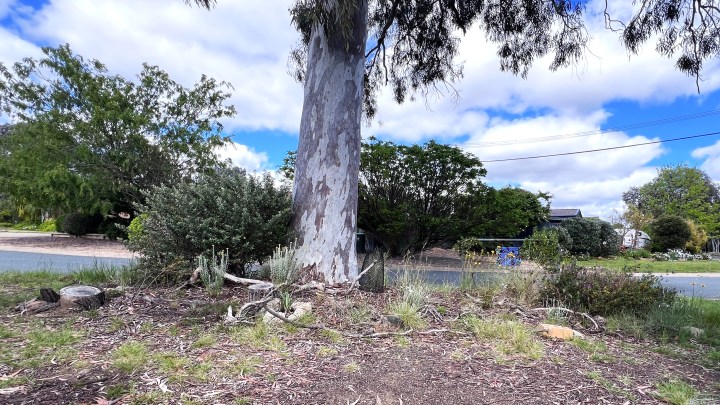
I’ve planted a couple of tiny shrubs on the right hand side because the lack of symmetry offends me.

Not much happening here but, fingers crossed, my vanilla lily might flower this year.

Your view of the bulbine lilies will be interrupted by a shrub in future years.

I’m being hyper-critical. If I was to come across a patch like this under a brittle gum in the bush, I would be delighted. So I’m delighted. Still, six years is a long time to see results.

Keeping with the natural bush theme and planting of locally indigenous plants, I decided to hack out the kikuyu in the front yard. I’ve been working on this for three years now and I’ve only rehabilitated a few square metres. It is one thing to work to improve a patch of woodland that already has an understorey of native plants. Nature is a great artist and she guides the way. However, it is more challenging to create a grassy woodland understorey from scratch, especially without a plan. Voilà the current state of gardening play –
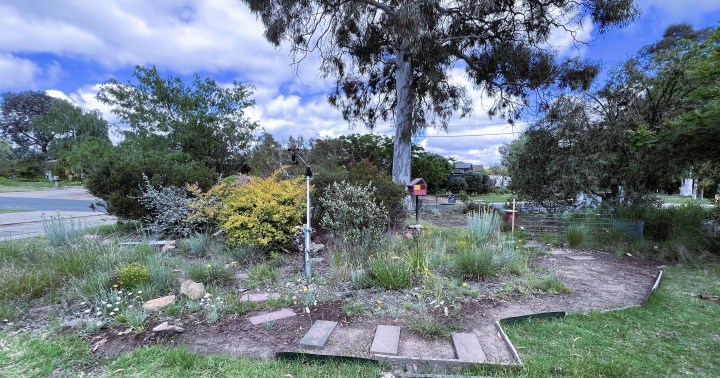
I started with a couple of existing tussocks of kangaroo grass (Themeda triandra) and a few wallaby grasses that I began to work around, clearing the kikuyu and other weeds. The plan is to gradually push back the exotic grass.
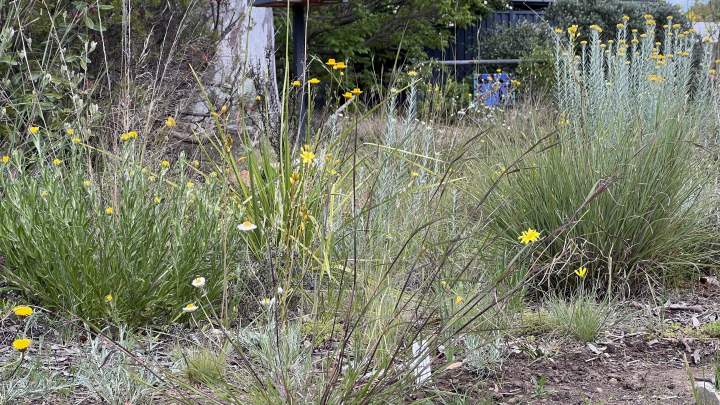
Two years ago I planted out the area below. It is very grassy now. I love it.
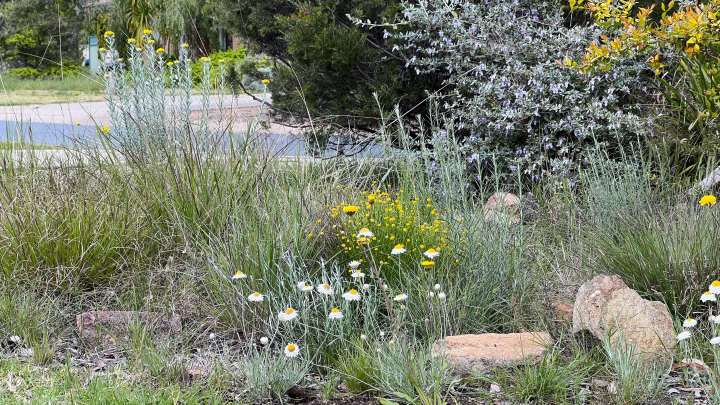
Then I started on the following area last winter and the current spring.
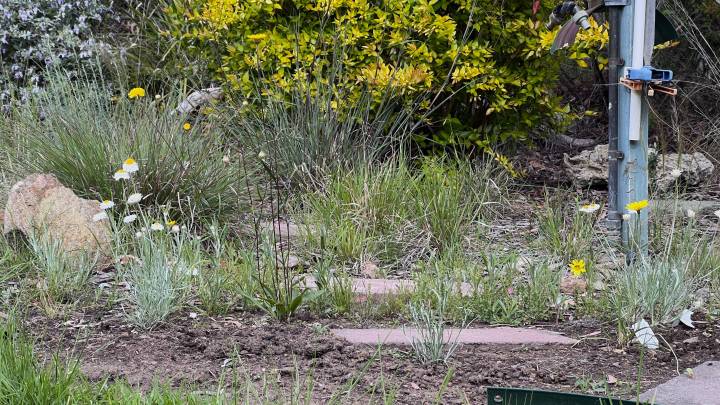
I’m thinking of moving to my twilight home. You know, the one with less yard. No one appreciates this type of garden so when we sell the house, no doubt someone will scrap the native garden and replace it with viburnum hedges and whatever else is the current fad. In the meantime, I need something to do so I will keep improving biodiversity in my own yard. Every little bit helps, especially these days.

Do you have a project to keep you sane and leave the world a little better off? If not, perhaps start something, or plant something, small and watch it grow. I highly recommend it.

Take care, everyone.

Kind Regards.
Tracy.

Spring Clean

Good morning.

A couple of photos so that long time readers will know that I am still alive. I want to say something, anything, but more and more, I am silent, assuaging my conscience by tending my garden.

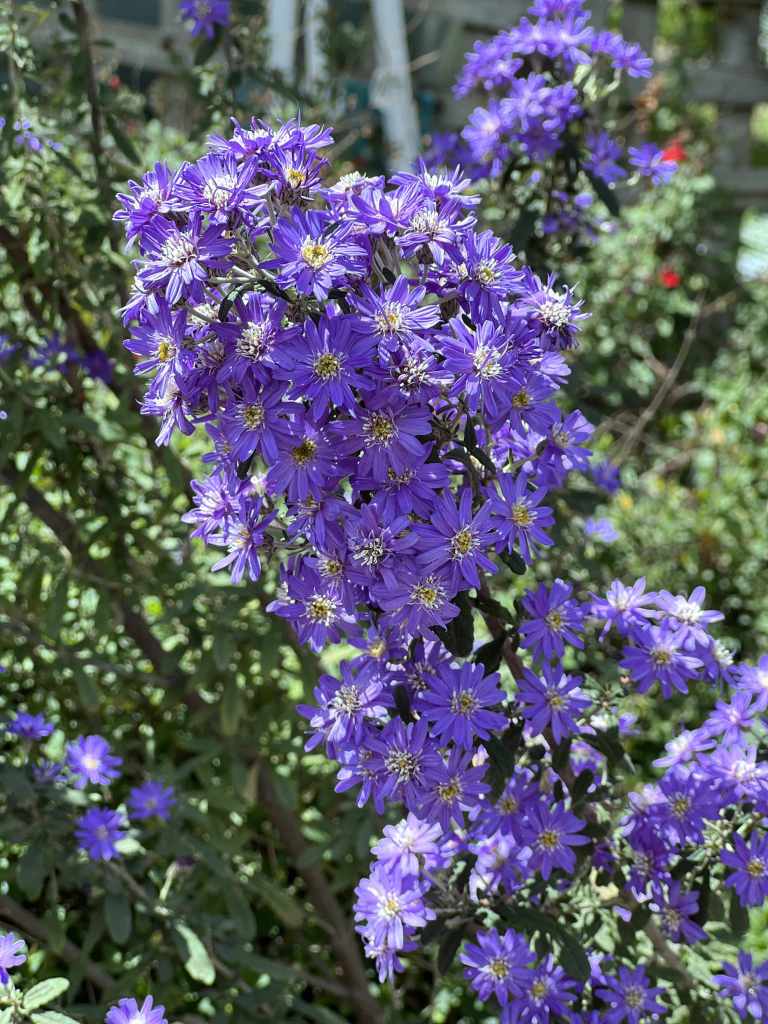
Alpine Daisy Bush (Olearia phlogopappa mauve form)

The daisy bush is a mass of flowers this year but there are few insects about. We expect to see more now that we have had a few drops of rain.

Bulbine Lily

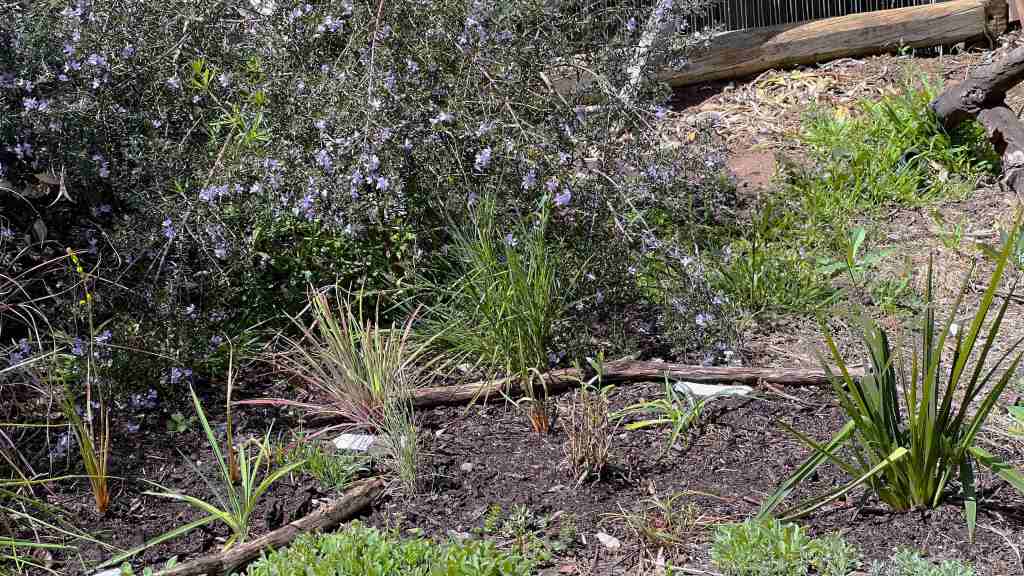
Gardening in the backyard has been on hold for the last two years. During this time, the bulbine lilies and the weeds have been multiplying gaily.

Back garden gets a reno.

I thought we might try to grow some of the native plants we have been trying to establish in the front yard in the back garden too. The soil is much better because it is has been left to go to weeds. The thick green patch at the bottom of the photo is an exotic cud weed. The work is strenuous and maybe a little mind-numbing, er, I mean, relaxing.

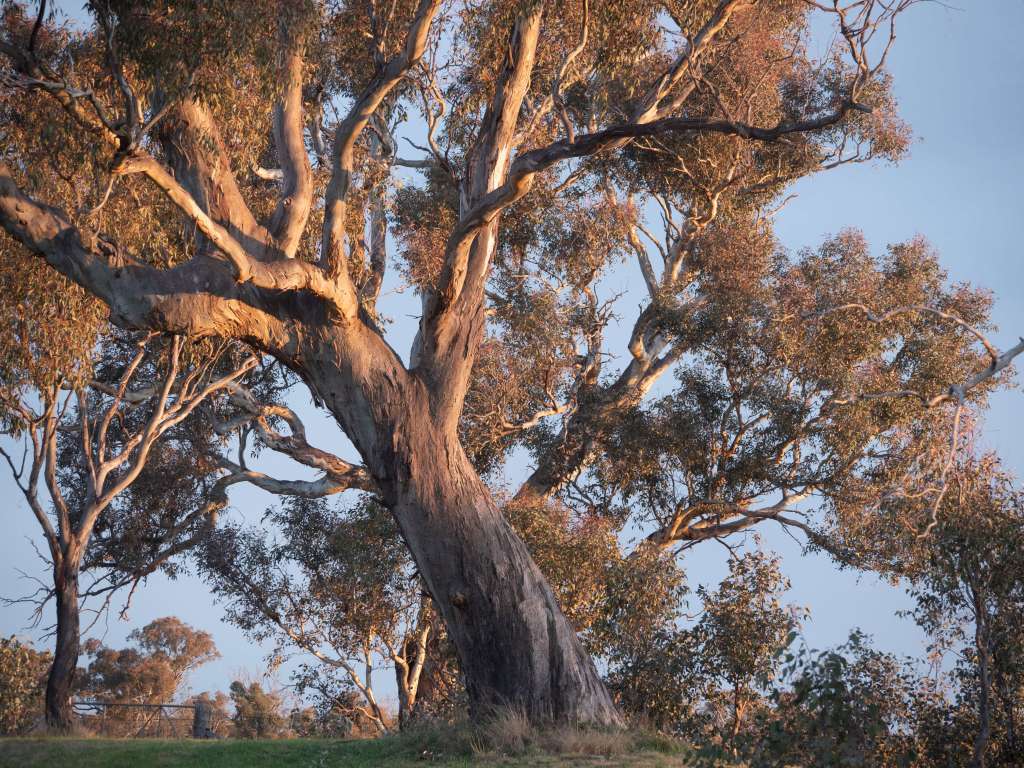
I’ve also started a campaign on face plough to save some big remnant eucalypts in my local area that are going to be cut down to make way for progress, er, I mean, for a road. I have all of 7 followers. A pointless exercise. Globally we are on track for a catastrophic 2.5c degrees warming and species extinction, but at least we will have good roads (until some disaster destroys them). Aren’t I a little ray of sunshine?

Below – one of the trees that may be cut down. I posted it first here in 2021. I knew blogging would come in handy one day.

Almost a quarter of a century ago, I asked someone why our emissions reduction target was so low. Emissions were increasing. That was the point. I had better stop there or I will start to sound self-righteous and, as you know, words are cheap but also powerful, which perfectly sums up many of life’s conundrums.

Well, better get back to my plants. As they say in the classics, “Have a good day.”

Cheerio and kind regards.
Tracy.

Gardening SOS – 28 May 2022

I thought I might do some garden posts since, well, it cheers me up. Today I am making my first contribution to Six on Saturday, a weekly gardening get-together hosted by The Propagator.

1. As some readers will know, I have been taking advantage of our extended La Niña event to establish a new garden with plants native to Australia on the front verge. The plants are tiny and as yet there is very little form or colour to the garden to give it depth and interest. So I whacked up this old gate that I had lying around out the back and hung my mosaic on it for the kids to enjoy when they walked past. The gate will also provide a frame for the climber, Appleberry, Billardiera scandens (not shown), that I have planted in front of the gate.

2. I have also planted a variety of native grasses in the new garden, including barbed-wire grass (Cymbopogon refractus) pictured above. A friend told me that barbed-wire grass is beloved of blue wrens and red-browed finches. I’ve not seen red-browed finches in our suburb so barbed-wire grass might be a grass to plant in our nearby reserve once we get rid of some of the dreaded African love grass.

3. For the last few winters, the Australian National Botanic Gardens has been showing off Qualup Bells, Pimelea physodes. It grows in Western Australia. When I saw it at the local nursery, I couldn’t resist it and brought it home with me. This plant has been grafted making it possible to grow in Canberra (which is located in eastern Australia). Mine is planted in a pot. It is covered with buds that are poised to open (above). I can’t wait.

4. Speaking of pots, I took a cutting of the pink salvia, Salvia microphylla (above), growing out back. It is now established in this pot out front. The Eastern spinebills love it. Winter frosts will inevitably knock it back. When that happens, I hope the spinebills will be tempted by the Qualup Bells.

5. In the backyard, it is a shower of autumn leaves. This coral bark maple, Acer palmatum ‘Sango-kaku’ (above), has a few leaves that have not yet been washed away by today’s deluge. This tree was originally a rescue plant. We had to lop it as it did not have a central leader so it is unlikely to grow more than 3 or 4 metres. I really enjoy this tree, as do the little birds who swoop in to gather the fine sticky branches for nesting material.

6. And finally, a pink camellia (species unknown) peeks out from between the salvia and chocolate vine which are attempting to overwhelm it.

Happy gardening, everyone.

Kind Regards.
Tracy.
Back On The Food Chain Gang

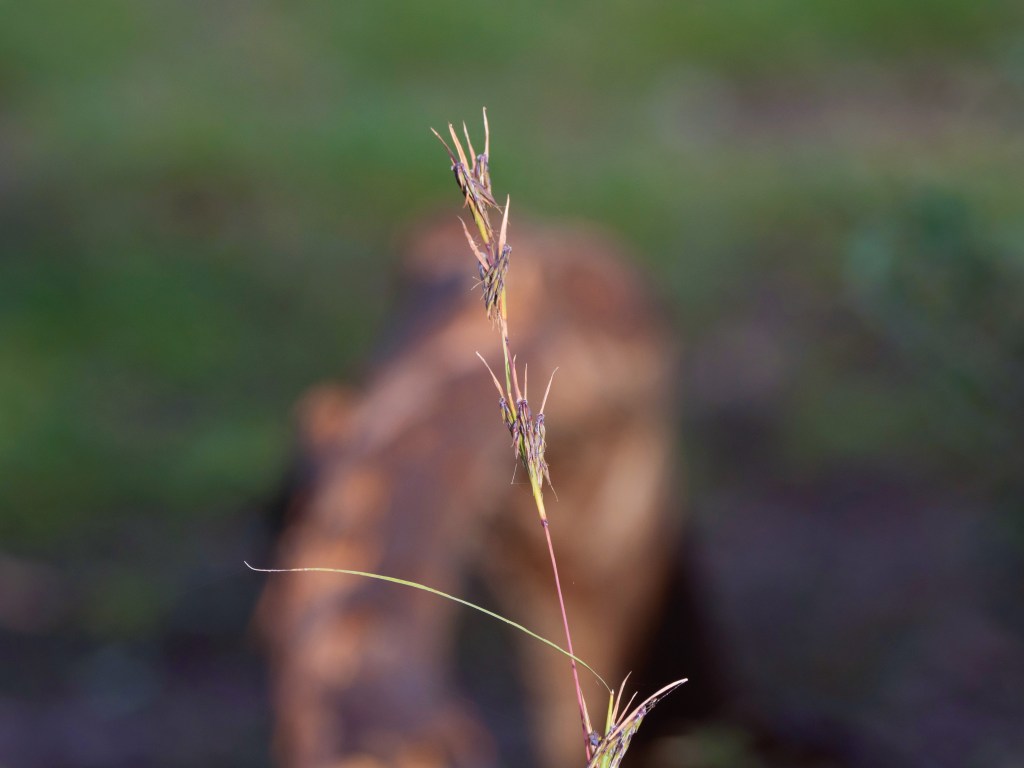
It is Friday, so it is time for a song.  But first, a couple of photos and a story about the one that got away.  There are some photos, ladies and gentlemen, that should never be cropped and enlarged, so of course, I couldn’t resist.

(This post contains content that may gross out some readers.) Read more

The Changing Seasons – March 2019

Dear Readers, can you believe that it is already March?  So here I am, commencing my second year of The Changing Seasons challenge.  I’m feeling battered this month, like an incumbent government that is falling in the polls even though the economy is performing well.  Don’t the punters know that they have never had it so good?  I suppose that is because we don’t live in an economy; we live in a society, and there has been a fair bit of societal ugliness going round.  So yep, although I want to crawl under a rock or hide in my own little “Canberra bubble” (sorry. in joke), March was mostly good for me.

So, let’s get started. Read more

The Changing Seasons – January

January —  the season of abundance.  It can’t help it if it so hot.  Temperature records were broken again during January, including in my little part of the world.  Our town had four consecutive days above 40ºc, a new record.  Due to the bushfire hazard, many of our nature reserves were closed to the public.  So I’ve been housebound and cabin fever has set in.  Hence, this month’s post focuses on the small haven that is my garden. Read more

How Does Your Tromboncino Grow?

Weekly Photo Challenge –  Growth

This week the theme for the WordPress Weekly Photo Challenge is ‘growth’.  Here is my photo.  It is the Zucchini Tromboncino.  We haven’t had much luck growing regular zucchini (courgette) over the last couple of years, so we decided to give the big guy a go. Read more