Is it okay to be safe and sound, and relatively happy when so many people are trying to survive under incredibly difficult circumstances? Dunno.
I concentrate on the small things. That reminds me of Arundhati Roy’s novel, The God of Small Things, which was one of the most depressing books I’ve ever read. But I digress.
Another hot summer here in sunny Canberra (Australia). We had no rain and then fortunately the rain arrived. Plant reprieve. While we waited for this momentous event, we sprinkled some little birds which made them and my garden happy.
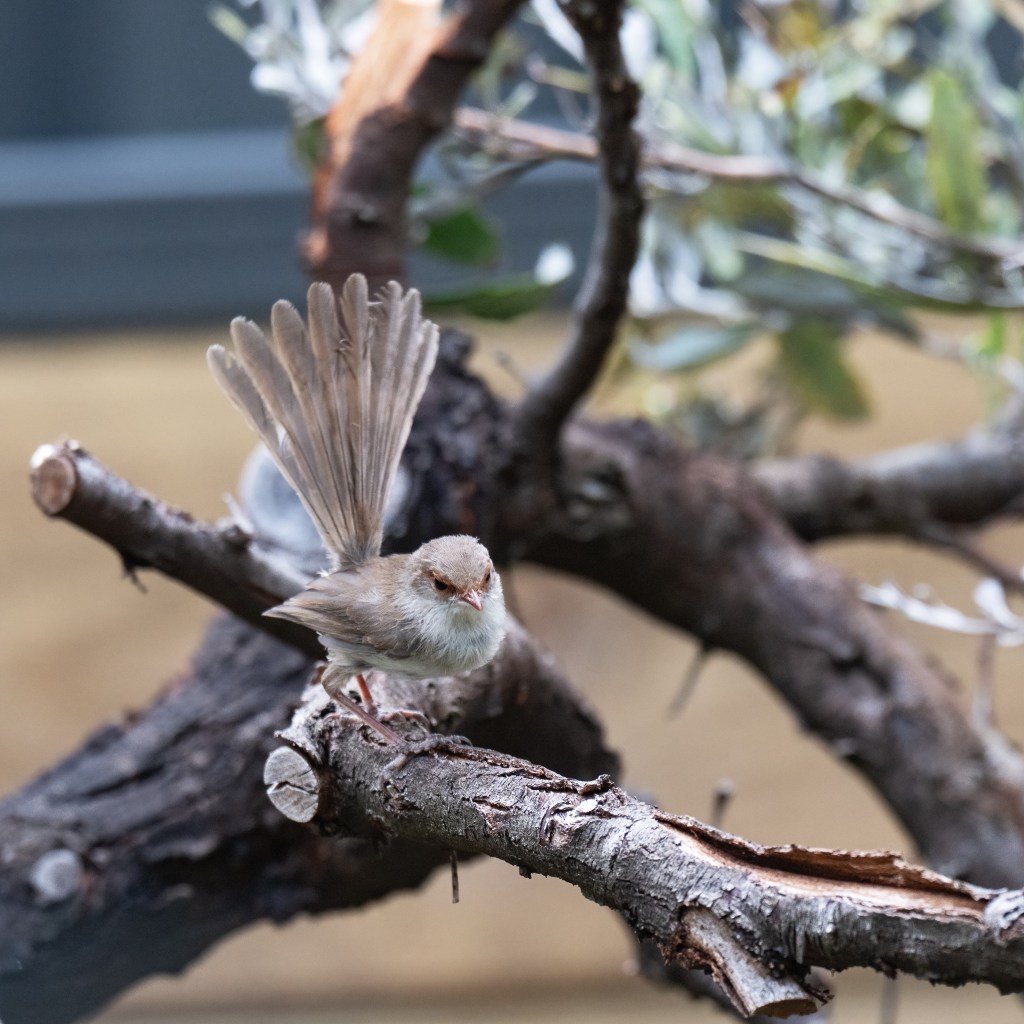
Check out this cutie.
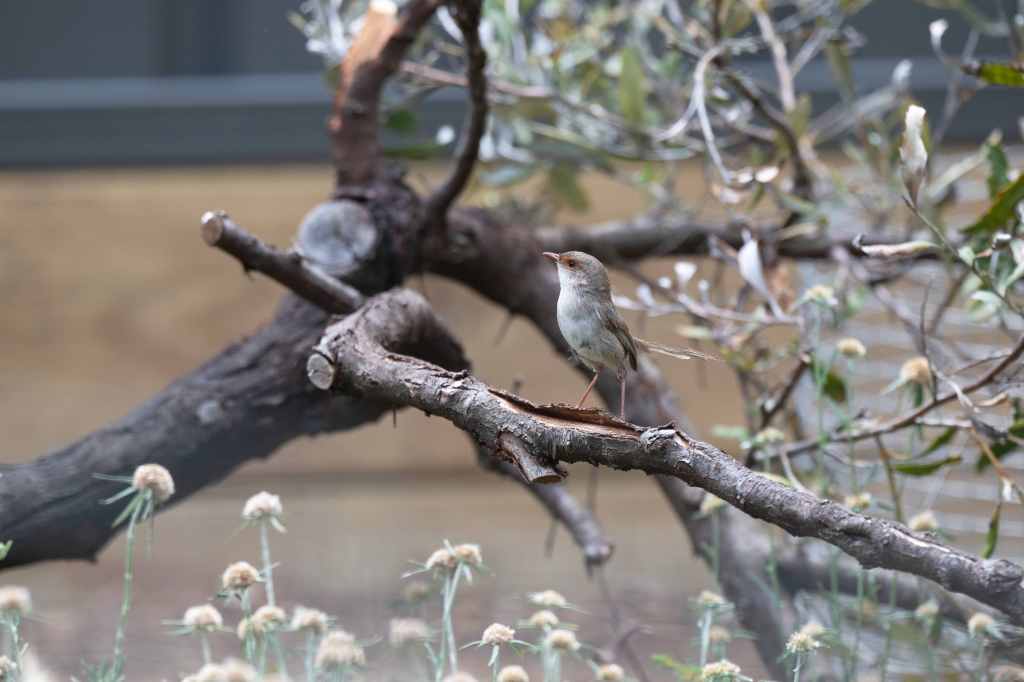
Waiting.
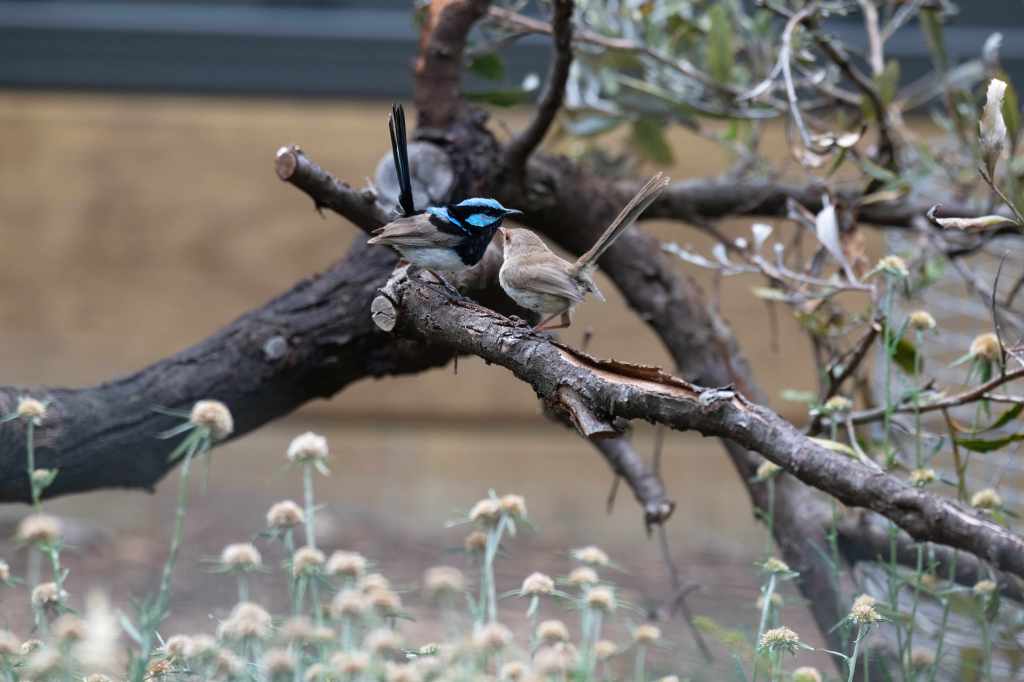
For a boy like you.
And the whole extended wren family. Must have been over a dozen. My camera didn’t know where to point. But they were too fast. And the grass too long.
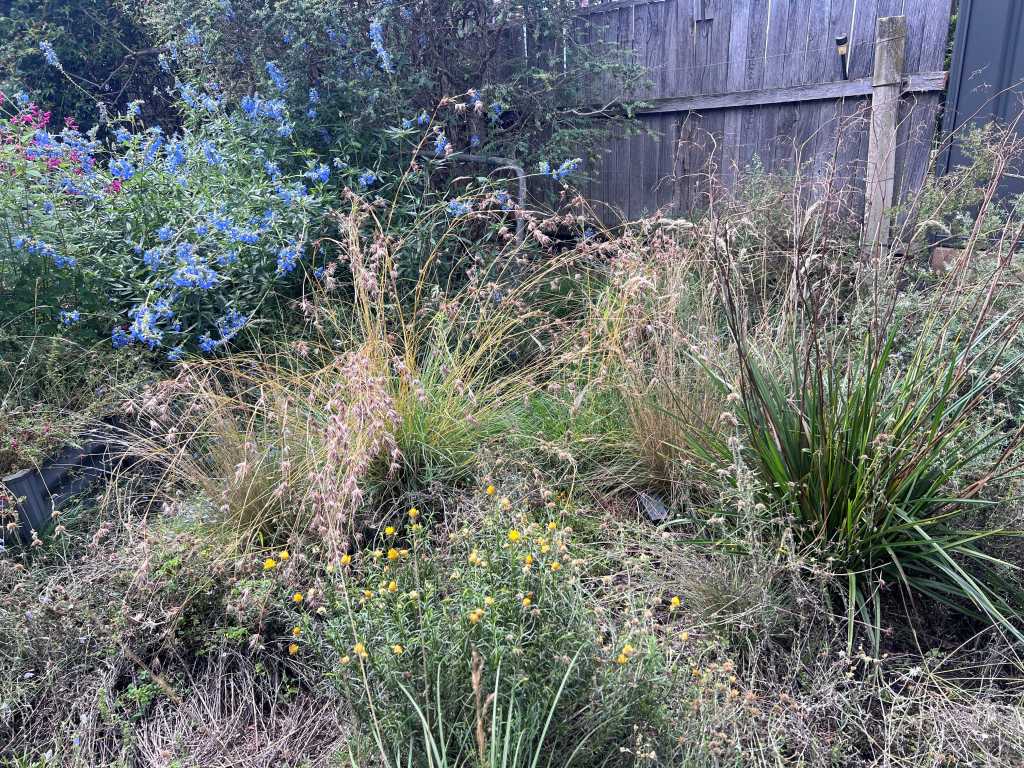
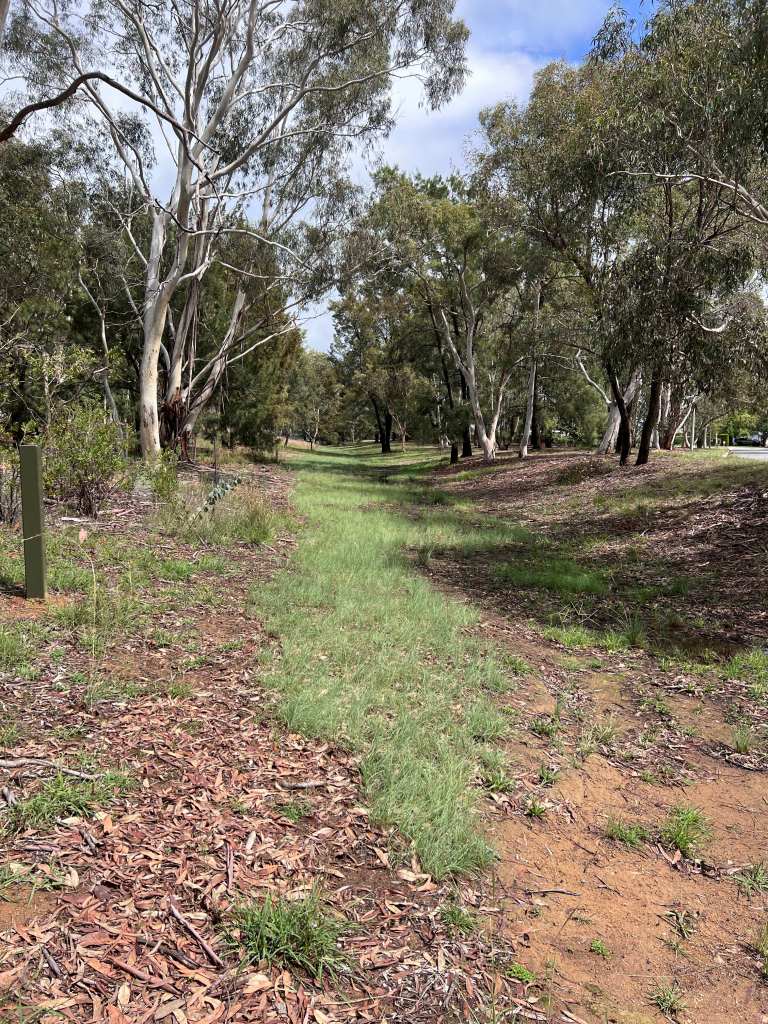
The bird garden is tiny like its inhabitants. When the garden closes in, there is always neighbourhood weeding. A few hectares. With my friends. Sometimes by myself. Note the long thin strip of newly green African Love Grass that is currently the focus of our combined attention.
Having weeded the outsides, we are now meeting in the middle. Not bad considering we don’t have elephants or power tools. Everything is done the very old-fashioned way. By hand.
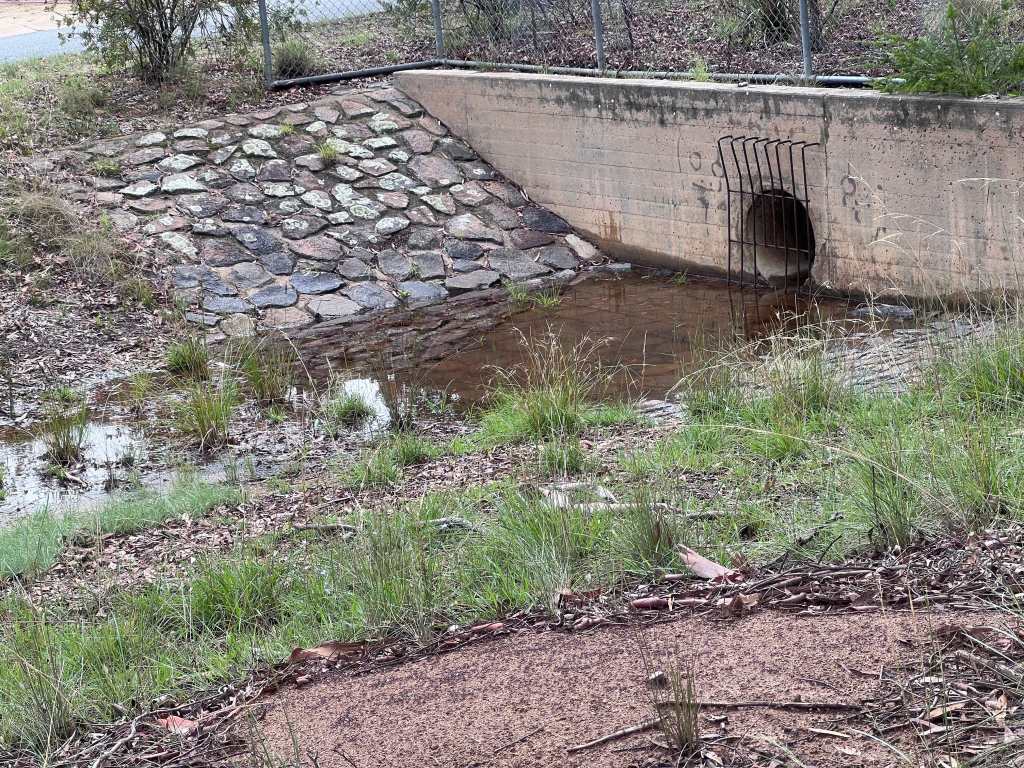
The next drain photo is from another angle. We’ve woman-handled the ALG, the festuca, goose grass and paspalum from this once rampantly weedy area. My True Love helps but he still has a big to-do list that he is working his way through. The reeds and native grasses are doing their job too, filtering the run-off.
Small steps. And then there is the admin and advocacy for our natural spaces. So I sleep a lot. And the photos sit in their catalogue and another Silent Sunday opportunity slips by. And yet, here I am. It’s not even midnight! The crickets sing summer nothings. Sounds of autumn. Time to get even busier.
And to all my lovely readers, I hope you too are okay, and are able to breathe in a few small things each day. Take care.
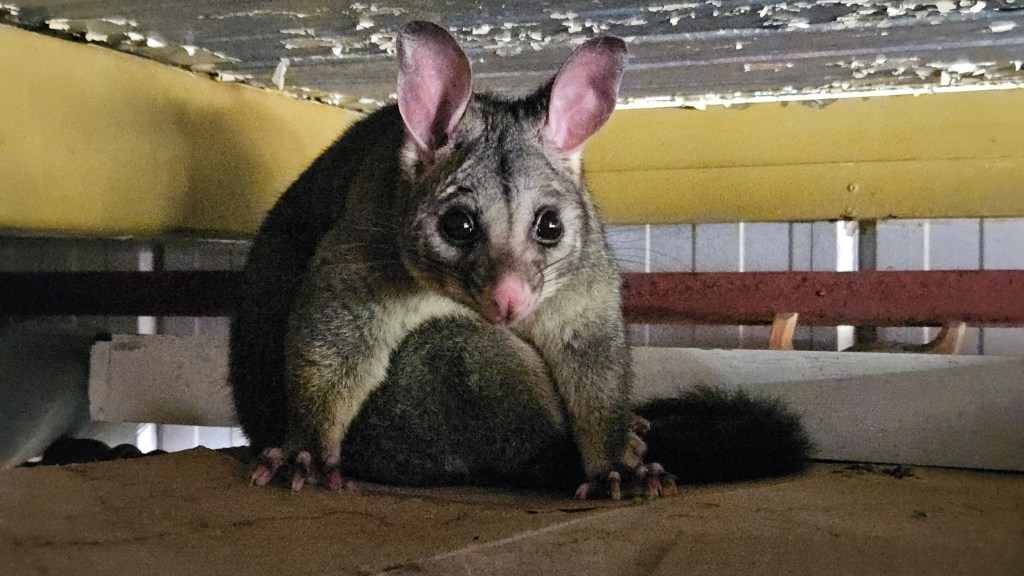
We are fairly certain that Junior Miss has been very naughty this year.
Not me!I’m so hot!
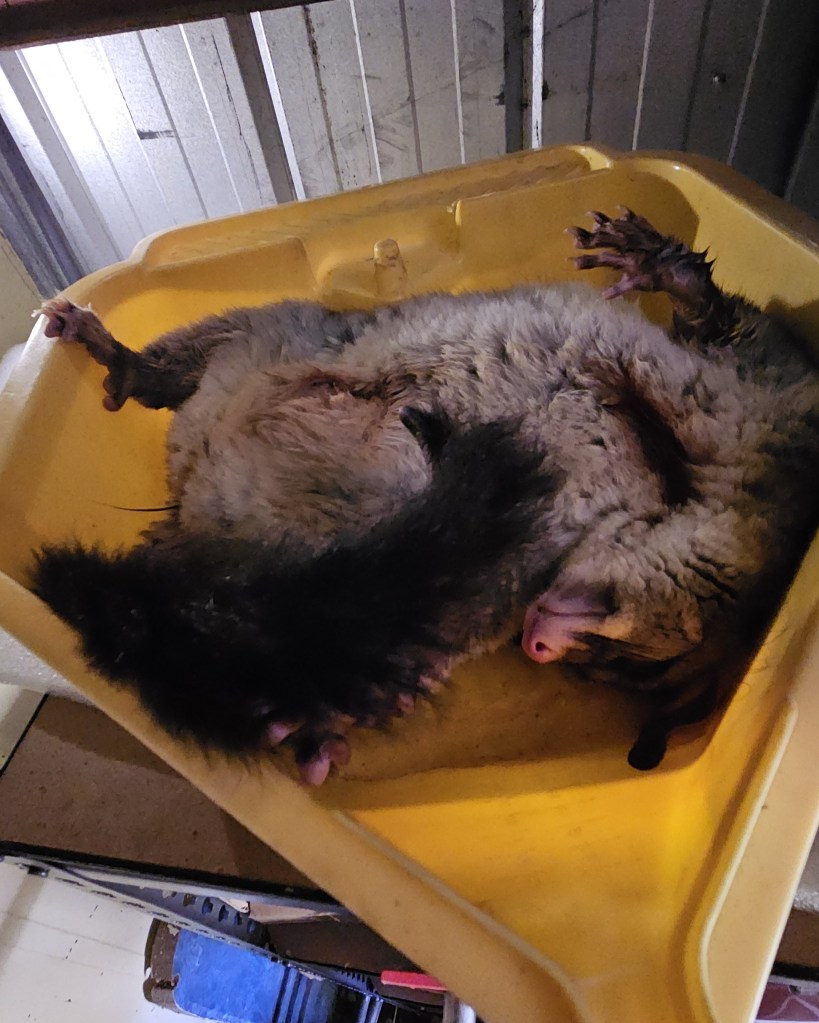
Brush-tailed possums wee on themselves and lick their paws to cool down. It is currently 33oc in the tinny.
No matter the time of year, a kind word and a kind deed are worth more than all the riches in the world. My TL and I hope you spread your warmth and kindness generously over the festive period and we wish you all the very best for 2026.
Who knew that watching the grass grow and grow was so interesting?
I’ve written a thousand blog posts in my mind over the last couple of months. I’m usually down the park at the time undertaking landcare activities (aka weeding). One of our team members described me as indefatigable. Sure, I can spend five or six hours weeding in oppressive heat but I don’t feel indefatigable. I feel exhausted. Many a time I have just wanted to lie down under a tree and have a sleep. The ants would like that. I think anxious would be a better term to describe me rather than indefatigable.
The hot, humid conditions and the shutdown over the Christmas break has led to an even greater explosion of African Love Grass (Eragrostiscurvula) across Canberra (Australia). African Love Grass consumes all other grasses in its path and is highly flammable. So yeah, I am focussed on weeding as much of it out as quickly as I can so that the native grasses can provide it with some competition, improve biodiversity and mitigate fire risk. I’m not doing this alone by any means. Do you think I want to kill myself? Fortunately, our urban park has also been designated a conservation zone because it contains a patch of critically endangered box gum grassy woodland and hence a native grass-friendly mowing program has recently been established for it. Without that change to the mowing regime, there would be no hope of containing that Love Grass.
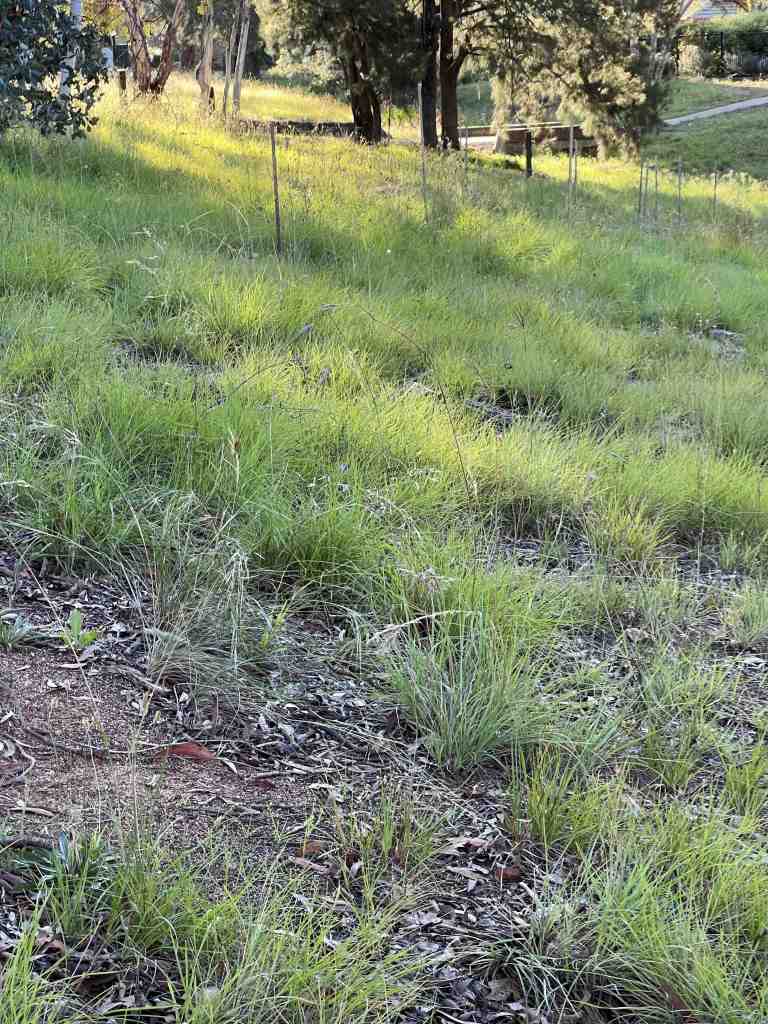
Australian native grasses are touted as a way of mitigating the fire risk of African Love Grass. A patch of Themeda triandra (below) holds the moisture in the ground. It can compete against Africa Love Grass in sunny aspects given a modified mowing program and some TLC. This patch took much weeding and new mowing arrangements to bring it back to match fitness. Themeda triandra is native to Australia, Asia and the Pacific.
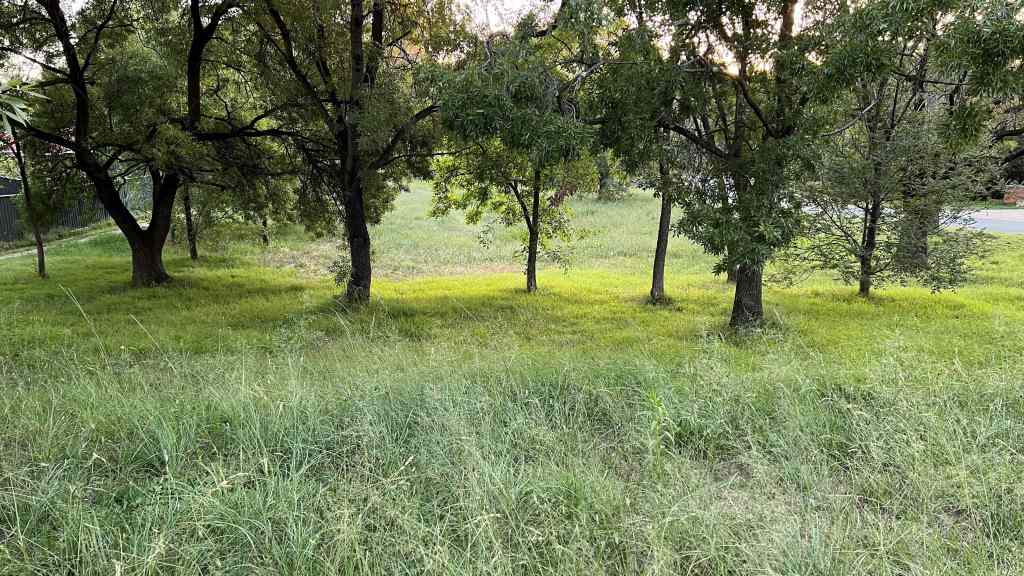
African Love Grass is not a fan of shade. In the shade, our lovely weeping grass (Microlaena stipoides) can put a break on it and other tall, weedy exotic grasses.
Microlaena growing under a stand of deciduous trees is flanked by African Love Grass.Microlaena under a eucalypt in one of Canberra’s nature reserves. Not mown, except by kangaroos, completely surrounded by exotic weeds.
Unfortunately, the general population doesn’t appreciate the distinction between native grass and weedy grasses like African Love Grass (ALG), Chilean needle grass and serrated tussock. Except for the Rural Fire Service, who would know this stuff? I certainly didn’t know until I started my landcare activities. Moreover, what government is going to admit to the fire hazard in the heart of our city? There is no asset protection when ALG is allowed to grow unchecked across Canberra. That’s my personal view. Our local government must indeed be worried. When hot dry winds are predicted, one can hear the constant buzz of municipal lawn mowers racing to slash the grass across the city. But mowing in those conditions can also be a hazard. Late last year, one of our landcare members saw a mowing crew trying to stamp out a grass fire started by their mower on a hot and windy day. Scary. Thankfully the fire was on a median strip.
It must a real conundrum for the government on how best to educate people about the fire mitigating properties of native grasses without encouraging lunatic fire bugs to take advantage of our city’s vulnerability. It would be a brave government that would try that. Instead, governments and oppositions exhort the benefits of increased mowing even though this is to the detriment of any native grasses that might be just hanging in there. Nuance and politics don’t go together. I feel their pain. It is really not practical or economic to massively scale up the sort of weed reduction and rehabilitation efforts that many of Canberra’s landcare teams are undertaking. Nevertheless, call it biodiversity protection, call it landcare, call it what you will, educating people about our local grassland assets and their care can benefit us all by at least starting a conversation on what can be achieved with community support. At the very least, people may be more inclined to mow their ALG infested yards.
Native grasses re-establishing under eucalypts. We have our eye on the African Love Grass beyond the conservation bollard. It will take time to get there but get there, we will.
Thanks for reading this far. I have to rush out now. Bit more ALG to pull out before it gets too warm. Plus, we have identified a second remnant woodland in our suburb and it too needs care. I’ll leave you with this presentation from the Bredbo Rural Fire Service. They know their grass and they know fires. Best we do too.
Is a nondescript plant unworthy of the lingering gaze? Must the ugly duckling metamorphise into that beautiful swan? Does a light shine with none to see it, invisible when eyes are closed?
The winter woodland keeps its secrets. Echo chambers climb from forest floor until – tendril – summer’s fertile heat provides the desiccant, the bluffer and ephemera of nature’s final call.
Clematis microphylla in seed, Australian National Botanic Gardens
I read a recent disparaging comment about the lovely Australian native climber, Clematis microphylla. Perhaps you are yet to discover it or if you have, perhaps you have been underwhelmed? Be patient, dear Readers, and look again.
The wild weather keeps coming, doesn’t it? We don’t have to wait to know how incredibly difficult sustaining life, livelihood and shelter will become if we exceed 1.5c degrees of warming.
All over the world, we are already experiencing the results of poor climate policy decisions. It has been a particularly stormy few months in eastern Australia, and it makes me wild. Like the wind. It does not pay to get too attached to your garden or the trees, for Canberra, the bush capital, is being rapidly re-modelled.
Summer ends in the national capital, Canberra (Australia) – Clean air, clean water, good nutrition, shelter and safety; the essentials of life in the national capital, the rest of Australia and globally. I do think about these issues quite a lot. February was no exception.
It has been a grey, often wet and windy end to summer in the national capital. The sun has shone too but it hasn’t really had any bite to it like it has in recent years. Thank goodness, I say. Who needs that howling inferno we had last year. However, we know the clement weather is temporary so we enjoy it while we can.
December in Canberra (Australia) – So many babies; so much grass; a lot of cutting, over-committed and Christmas.
Ladies and gentlemen, I am so very tired this month. I bet you know the feeling. It has been a long year and December has been super busy. Apart from the usual mundane activities, furniture shopping and mosaic production, I did get out a couple of times into my local area for relaxation. I was surprised by how many babies I saw. Tis the season I guess. Let’s look at some.
Namadgi burning / Canberra burning / Australia burning
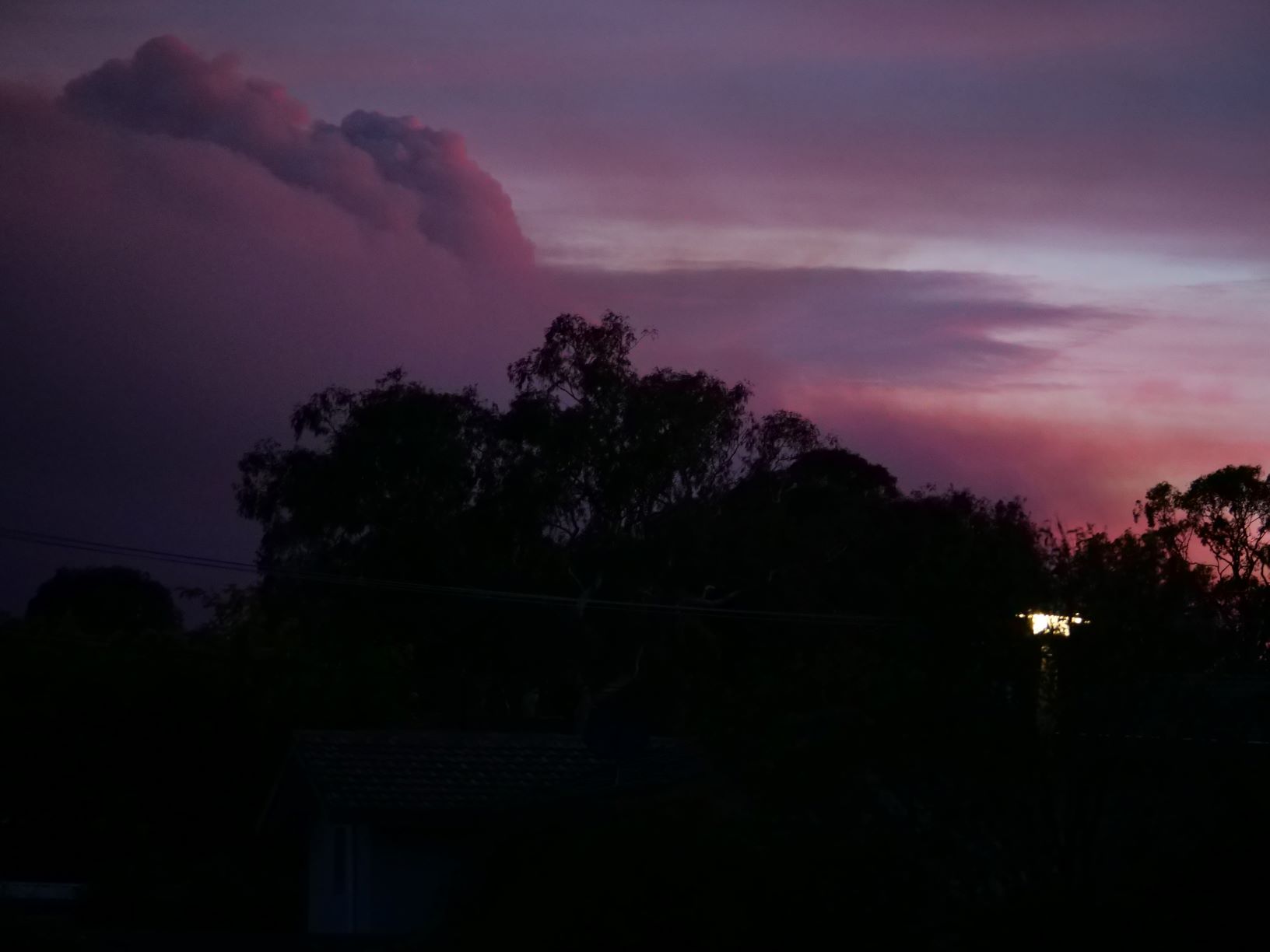
Sometimes sh*t happens, ladies and gentlemen. Or accidents happen, to be more polite. Canberra’s beloved Namadgi National Park is on fire and the fire is heading towards Canberra’s southern most rural settlement, located just beyond the city proper. It’s just been one day after wretched day for over a month now. Many Canberrans will spend an anxious night and next few days. Some southsiders in the path of the fire have already evacuated. My family lives on the other side of town to the fire. We are fine for now. Read more






 Reflections of An Untidy Mind