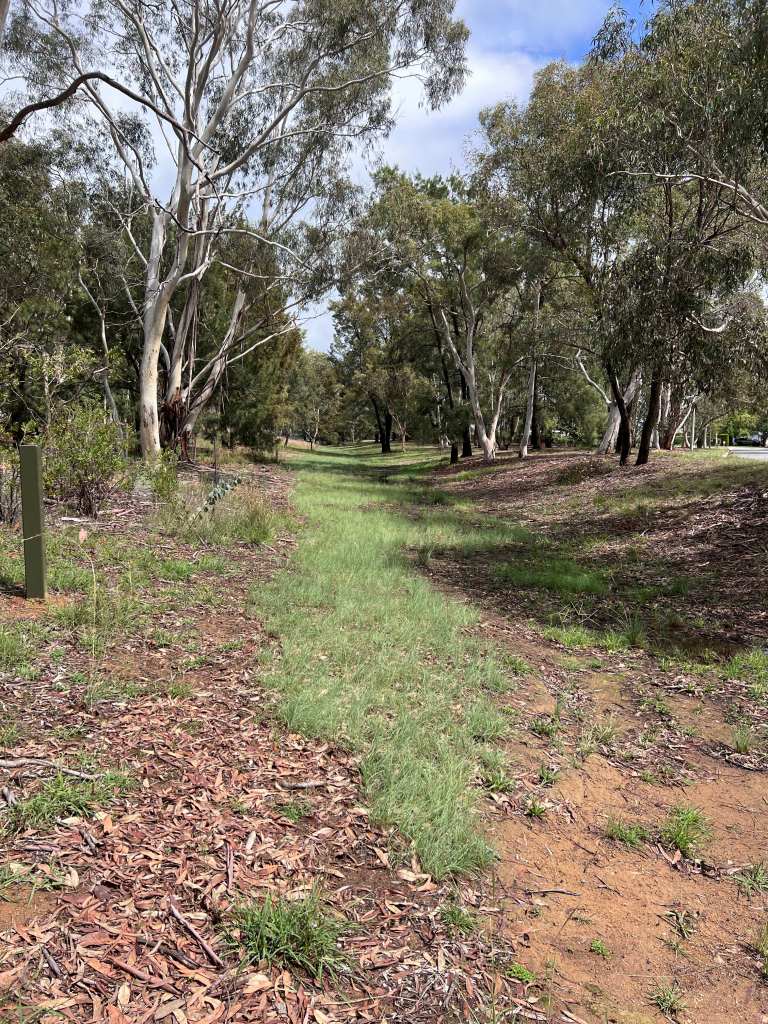
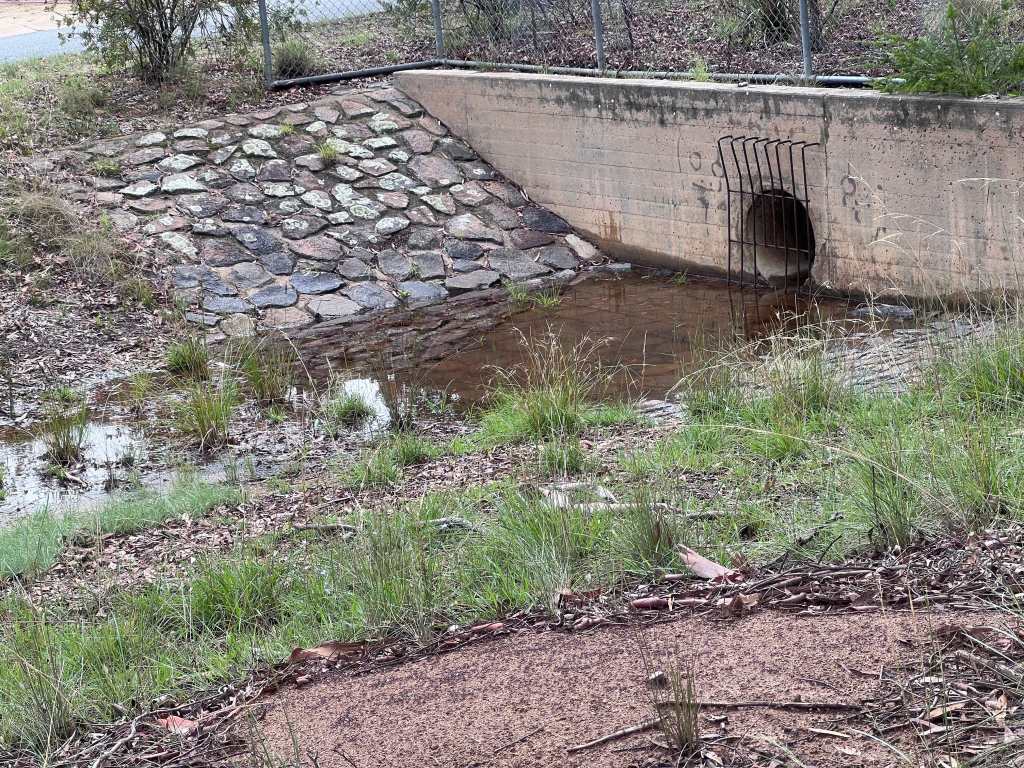
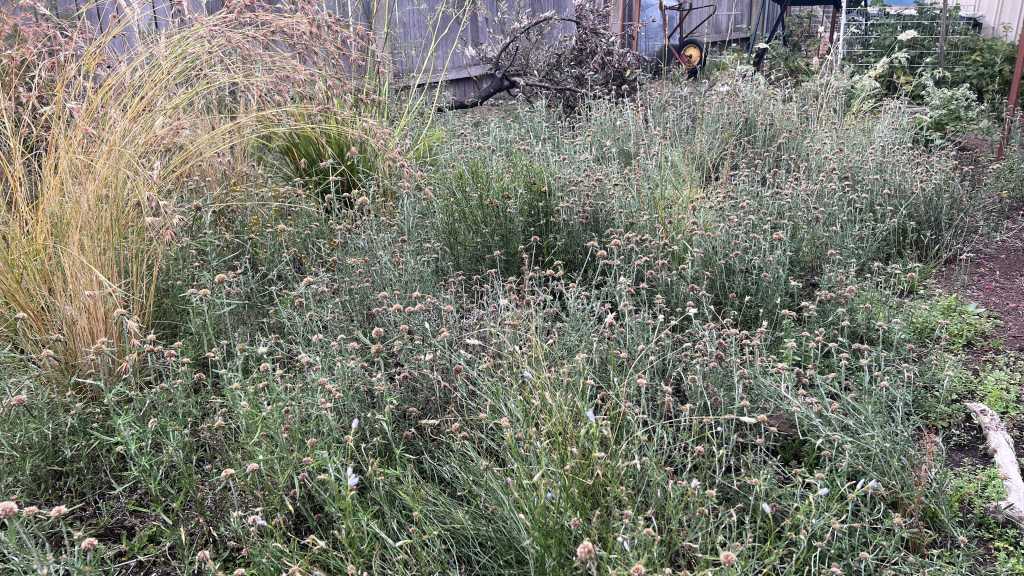
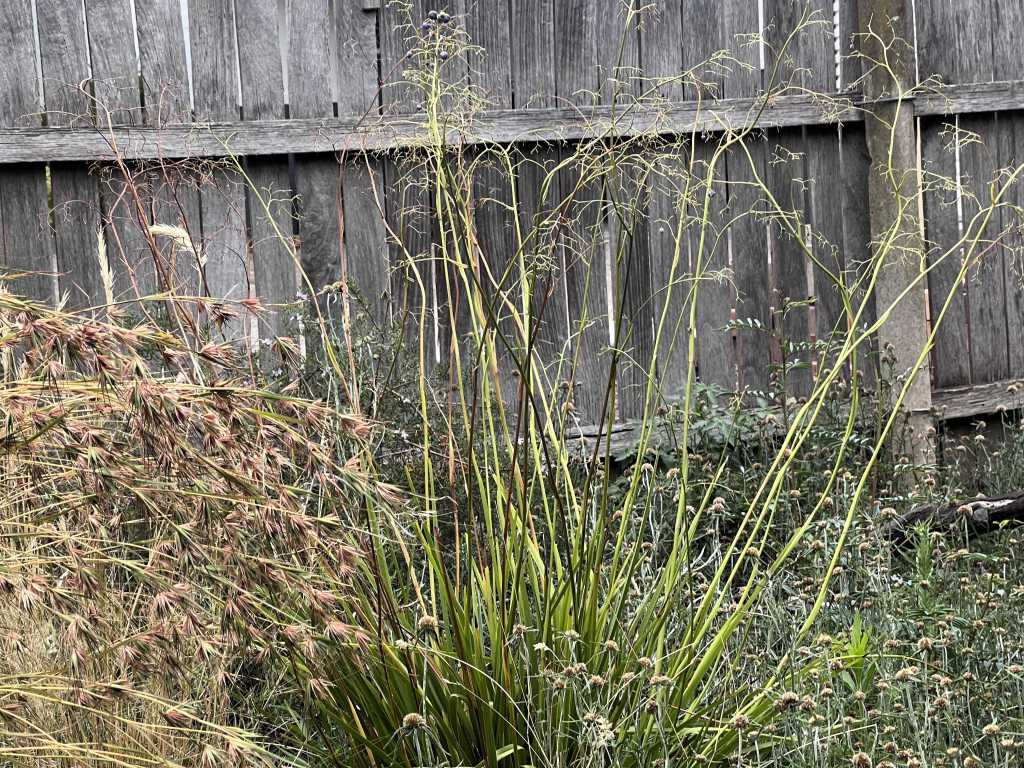
Just wanted to say a big thank you to our small band of dedicated volunteers who have been pitching in over the last 18 months to help a small green space be its true self. You make a difference.
If only there were less red tape and more green ribbons, but that is an interesting understory for another time. Time for a photo.
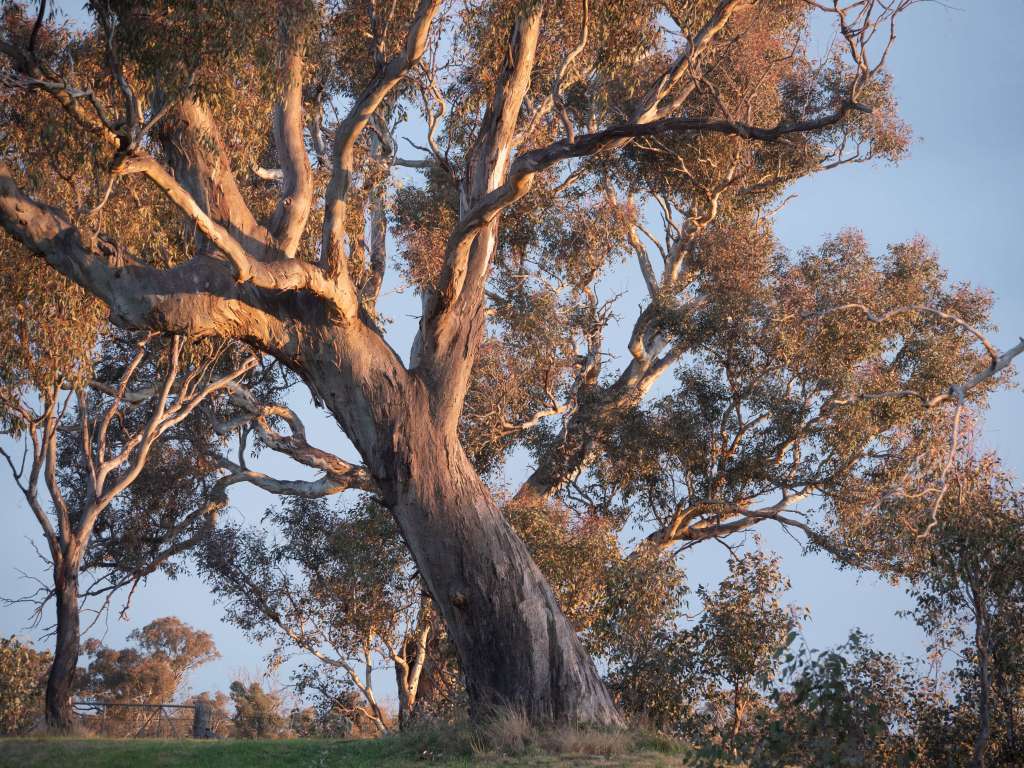
I’m so glad I work for love now. Box gum grassy woodlands with a healthy understory are critically endangered but not yet extinct in our suburbs.
The honeyeater migration is underway. As I have gone native, that is, planting species indigenous to my local area, I have been contemplating ripping out all my exotic plants. It doesn’t help that my new neighbour is trying to hedge me in with European plants. This is ‘Straya, I feel like saying.
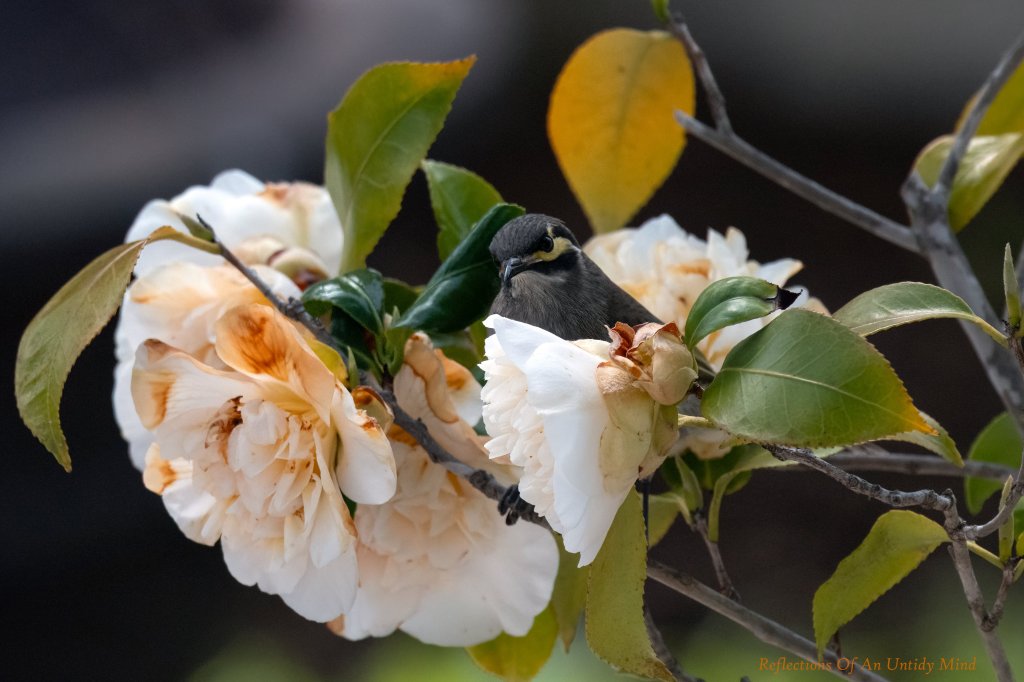
Anyway, the visiting Yellow-faced honeyeaters have reminded me that it is okay to retain a few of my less weedy exotic shrubs.
I knew it! Everyone loves camellias.
Still, the woodland birds really love the garden changes. They are coming in droves now.
Yuma from Ngunawal country. This week it was Landcare Week and to celebrate, Landcare ACT organised a conference for environmental volunteers. Our local government coughed up the money for the conference and many of their terrific parks and conservation staff, as well as a host of other experts, ensured it all went smoothly and shared their knowledge with us. A big thank you to everyone involved.
I particularly liked the field trips and the session on story telling, the latter being a subject very close to my heart. I haven’t written much about my garden conversion or landcare activities recently, so here is a quick and dirty update.
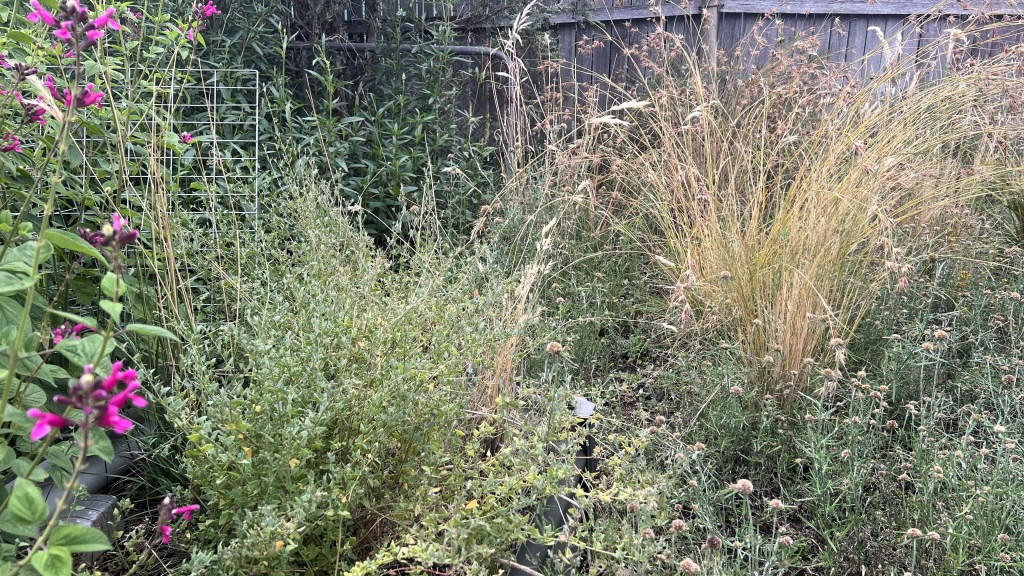
Above is a photo of my personal landcare project. Hasn’t it grown? I’ve had to fence it to keep the rabbits out. My True Love asked me whether I going to tell the story of how I came a gutser on the fence today? A passerby raced over to help me up. Some people are really kind. There’s not much more to tell. I’m fine. But that wasn’t quite what I had in mind.
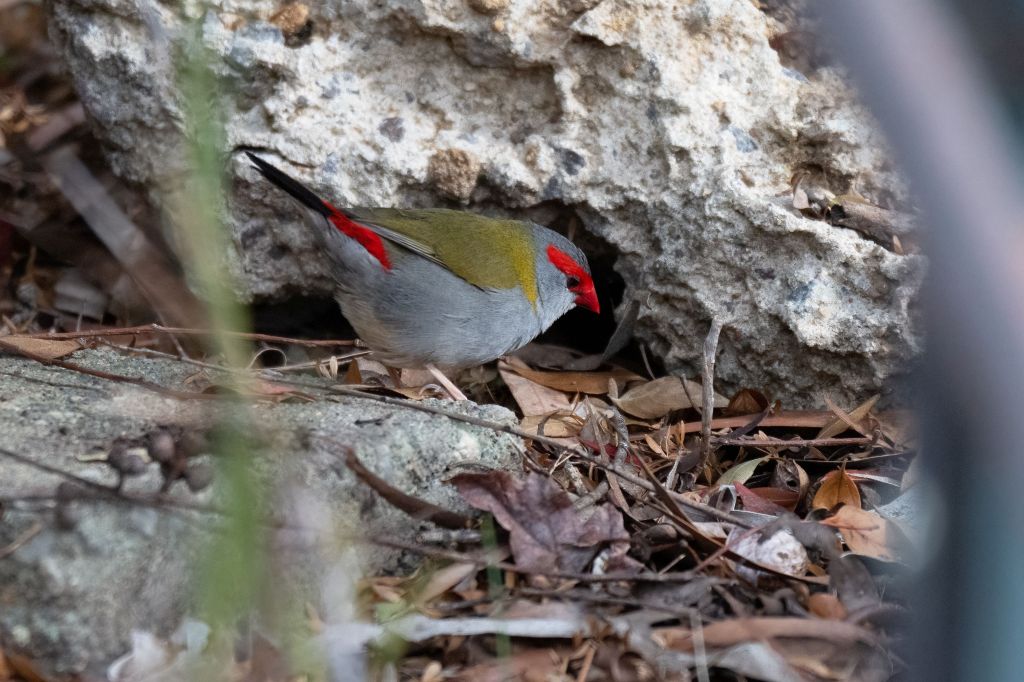
Check out this Red-browed finch (below). These sassy little finches are becoming regular visitors to my yard. It is very difficult to photograph my little visitors with so much paraphernalia in the way. I digress.
Finally, there was much excitement today as my True Love photographed a Fuscous honeyeater at our official landcare session. Perhaps Fuscous honeyeaters visit a lot? It is hard to tell when we are normally heads-down, bums-up working. Anyway, it’s a great story. Can’t wait to share it with our whole team.
I told someone at the conference about my art and my website. I probably should have reviewed my website first. My stories have been a bit dreary lately and my artwork is hard to find. Hope I didn’t put them off. And my (3am) grammar is terrible! The moral of this story must be fewer words, right? Here goes.
Family Ties Fruits of our labour. Roll out the Welcome Matt. Your story of resilience and strength. Your vulnerability. The Difference you make. Our time to grow.
How was that?
More importantly, how’s my blog family going? I’ve been rather preoccupied lately, but that’s another story.
My time flies when one becomes the latest keyboard warrior. More letters have flown off, winging on a slow breeze rather than darting quickly to strike their target. At the pace I’m keeping, the road will be built and trees chopped down before I strike my final cursive blow. Weeding also bounds along at a more rapid pace given the procrastination factor. Work on the home garden continues when the park care weeding does not provide sufficient distraction from the sardonic writing.
At one of my group weeding sessions, I had to flee due to a medical tech malfunction and in our haste to leave, my camera fell out of my tool bucket and smashed. My True Love made it up to me by buying me a new camera. Given I haven’t been quite in my right mind, I decided on a camera that I thought my True Love would like – you know, in the event that I drop off my perch, it wouldn’t be a waste of money.
Anyway, anyway, I’ve taken up backyard photography again while I work out how to operate this new camera. Also, my True Love tells me I am not allowed to put the new one in the tool bucket.
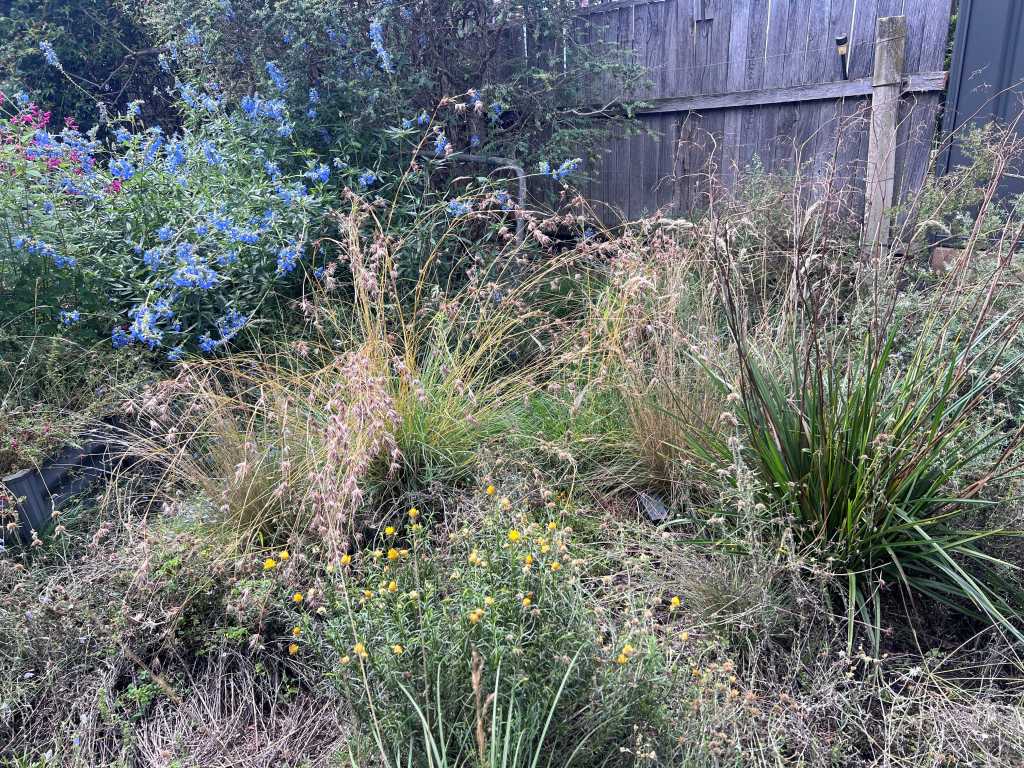
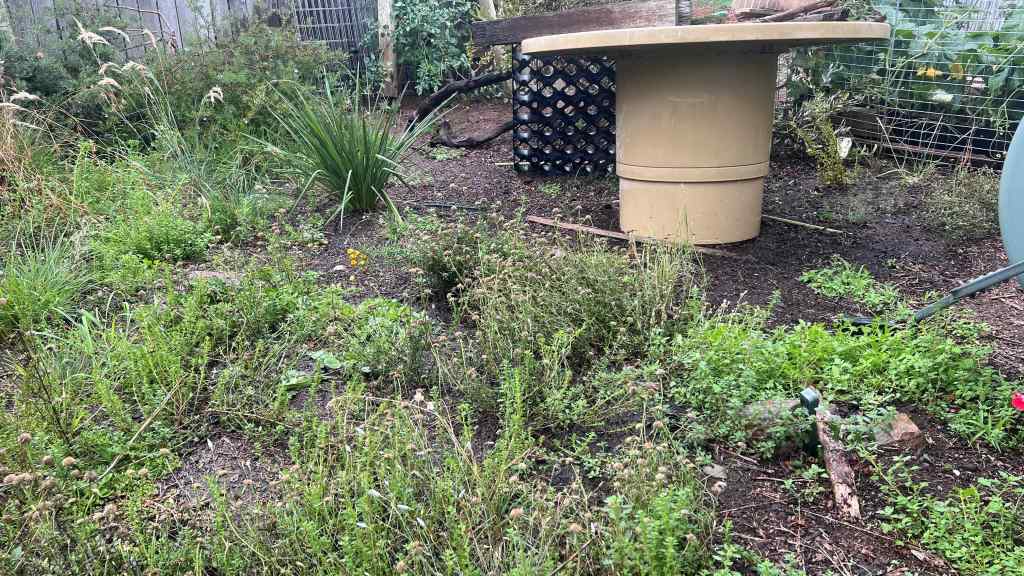
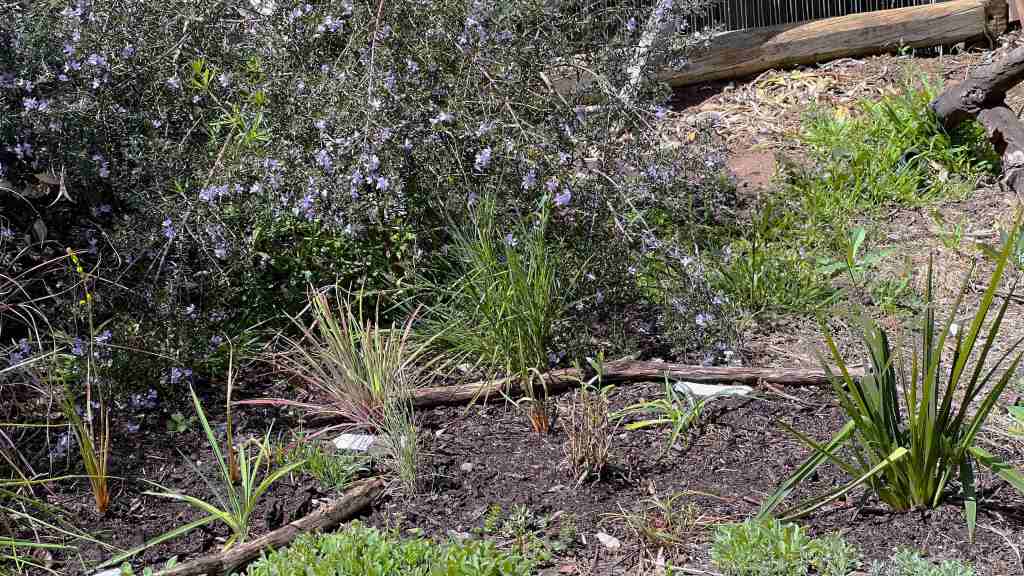
I’m using weedy native colonisers to enrich the soil in the backyard and as protection for some of the more difficult to establish local natives. I’ve discovered that it is far easier to establish new plants in soil that already has a good ground cover rather than in bare dirt. I suppose all you gardeners already knew that.
Phone photo.
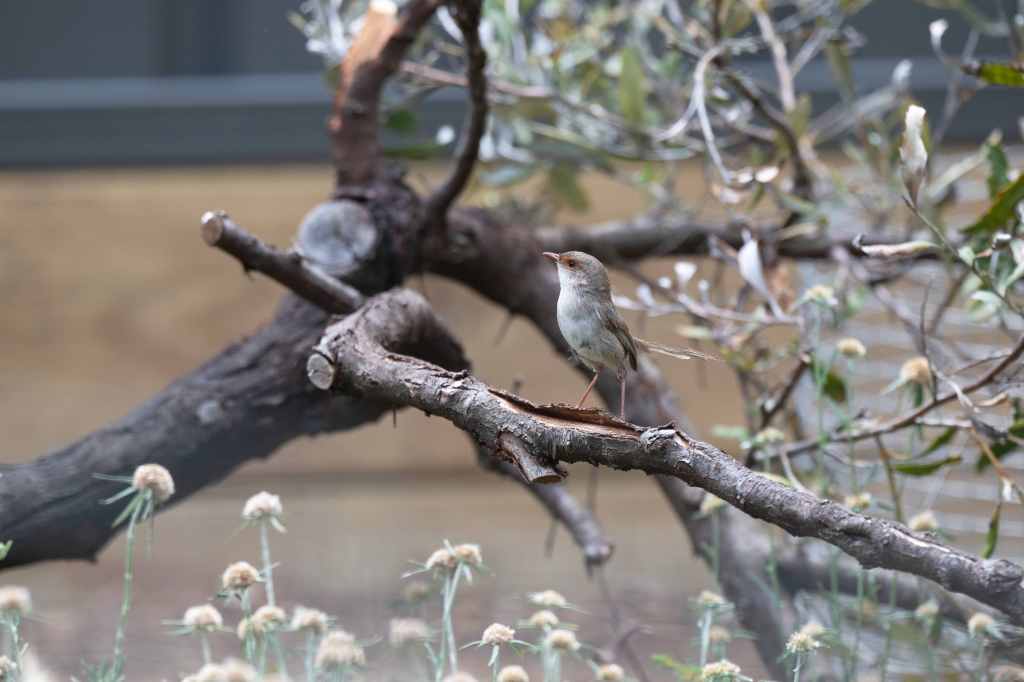
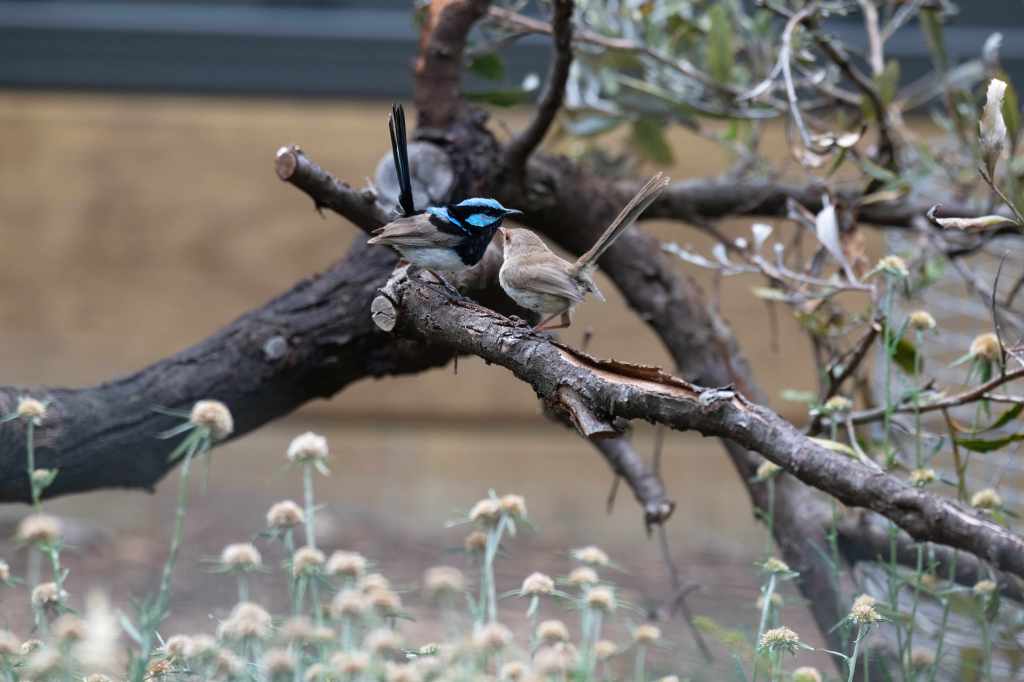
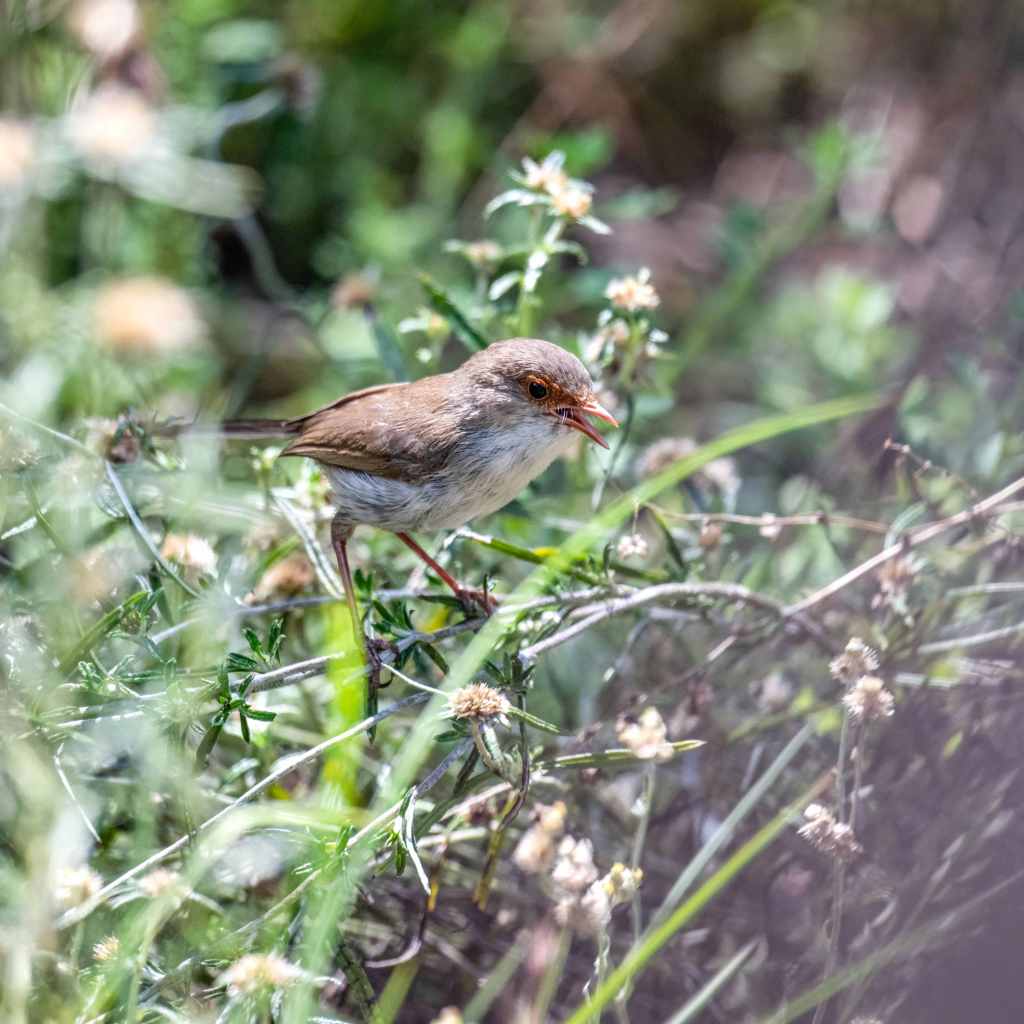
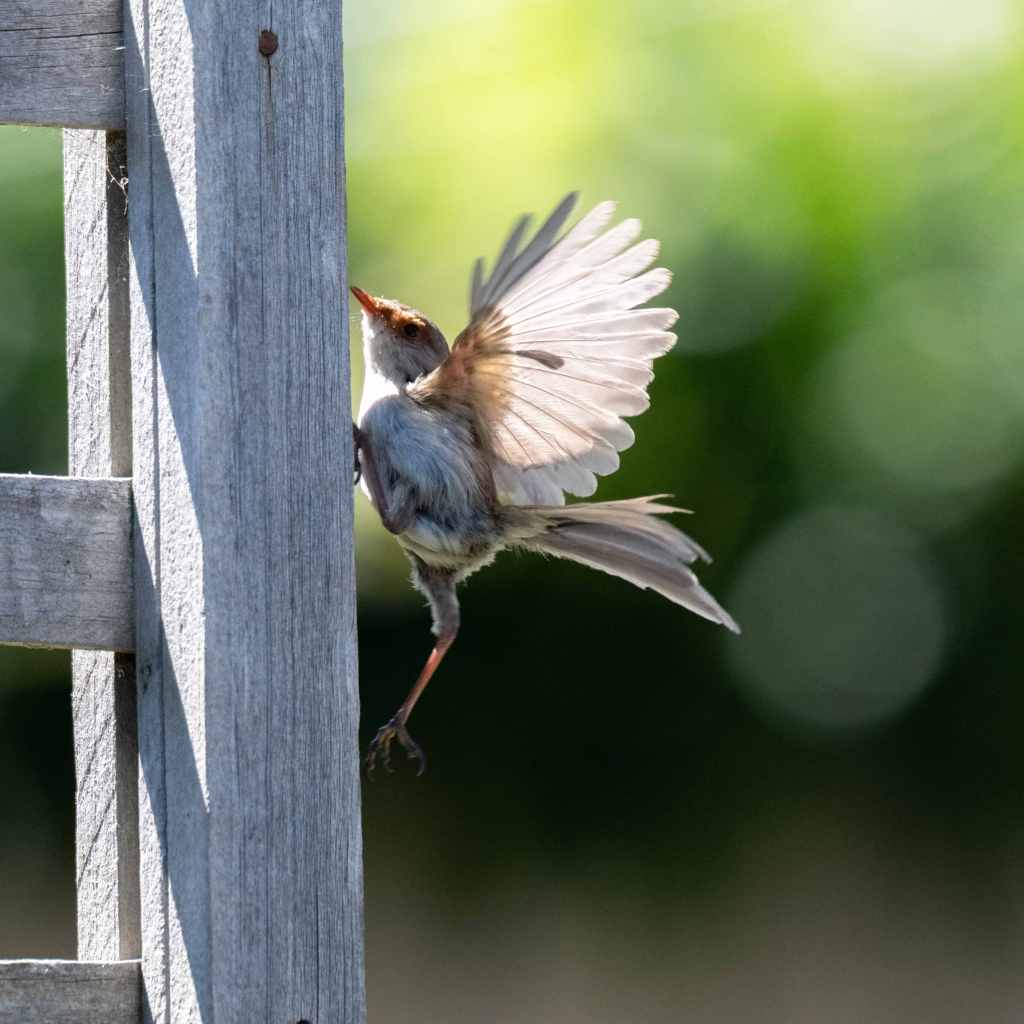
The wrens like all the weedy colonisers, eg native cudweed and crumbweed.
New camera. It can take photos through lots of grass. Not brilliant but you get the idea of what these little birds like.
Anyway, anyway, anyway, gotta fly.
She’s off.
Take care, everyone, and see you again when next procrastination strikes.
It has taken me three years to grow this small clump of Button Wrinklewort on my street verge. Button Wrinklewort (Rutidosis leptorynchoides) is critically endangered. At least 10 plants are needed to establish a self-sustaining population. I only have five in this patch. Who knows what the new year might bring?
If you are going to attempt growing some endangered plants, please make sure that you source seed or tubestock from a reputable supplier. We bought tubestock from a local nursery who often grows rare plants for the local government.
Happy New Year, everyone. Hope is a Button Wrinklewort.
A couple of photos so that long time readers will know that I am still alive. I want to say something, anything, but more and more, I am silent, assuaging my conscience by tending my garden.
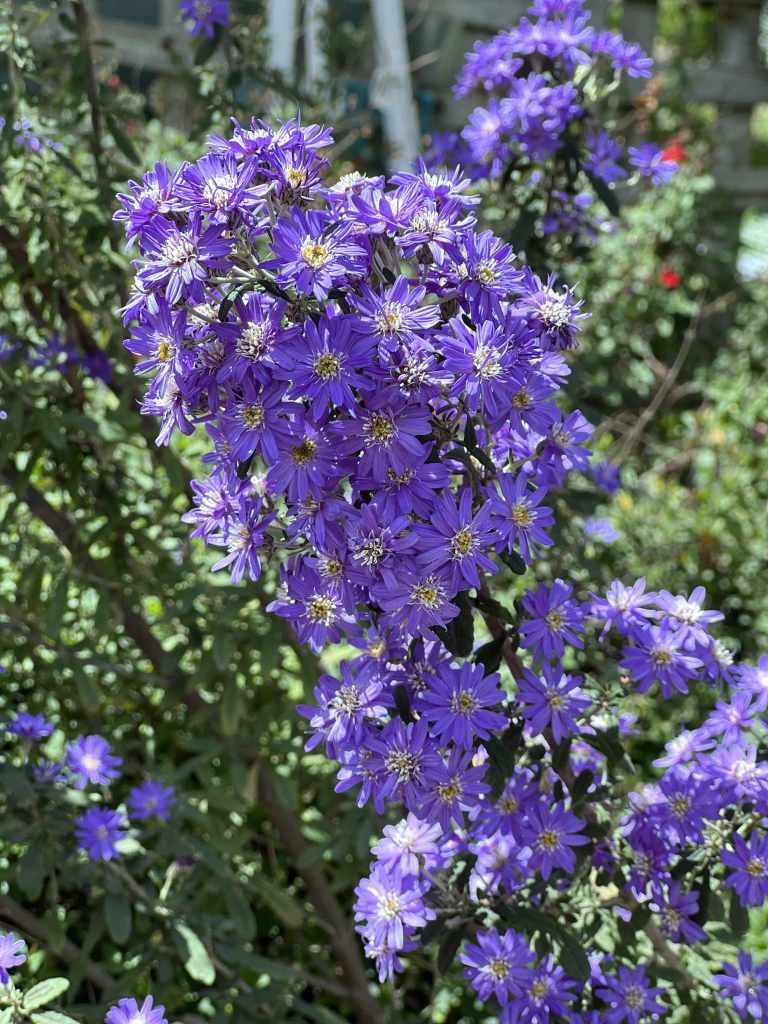
Alpine Daisy Bush (Olearia phlogopappa mauve form)
The daisy bush is a mass of flowers this year but there are few insects about. We expect to see more now that we have had a few drops of rain.
Bulbine Lily
Gardening in the backyard has been on hold for the last two years. During this time, the bulbine lilies and the weeds have been multiplying gaily.
Back garden gets a reno.
I thought we might try to grow some of the native plants we have been trying to establish in the front yard in the back garden too. The soil is much better because it is has been left to go to weeds. The thick green patch at the bottom of the photo is an exotic cud weed. The work is strenuous and maybe a little mind-numbing, er, I mean, relaxing.
I’ve also started a campaign on face plough to save some big remnant eucalypts in my local area that are going to be cut down to make way for progress, er, I mean, for a road. I have all of 7 followers. A pointless exercise. Globally we are on track for a catastrophic 2.5c degrees warming and species extinction, but at least we will have good roads (until some disaster destroys them). Aren’t I a little ray of sunshine?
Below – one of the trees that may be cut down. I posted it first here in 2021. I knew blogging would come in handy one day.
Almost a quarter of a century ago, I asked someone why our emissions reduction target was so low. Emissions were increasing. That was the point. I had better stop there or I will start to sound self-righteous and, as you know, words are cheap but also powerful, which perfectly sums up many of life’s conundrums.
Well, better get back to my plants. As they say in the classics, “Have a good day.”
It has been ages since I have taken part in the Lens Artists Photo Challenge, but since Ann-Christine asked this week “What’s in a garden?”, I thought, well, how hard can it be to take one photo that would suit? Fortunately, I took one photo yesterday that I quite liked but I had no one with whom to share it, so I thought why not share it with my lovely readers?
A place that I often visit when I am feeling untidy is our wonderful Australian National Botanic Gardens (ANBG) here in Canberra. I have been feeling untidy for a while now so it was only a matter of time before I would find myself there again. As usual, I struggled getting a decent photo so I was absolutely stoked to come home with this nice bird photo that required no editing to make it look decent. The bird was in a garden so it met the criteria, don’t you agree?
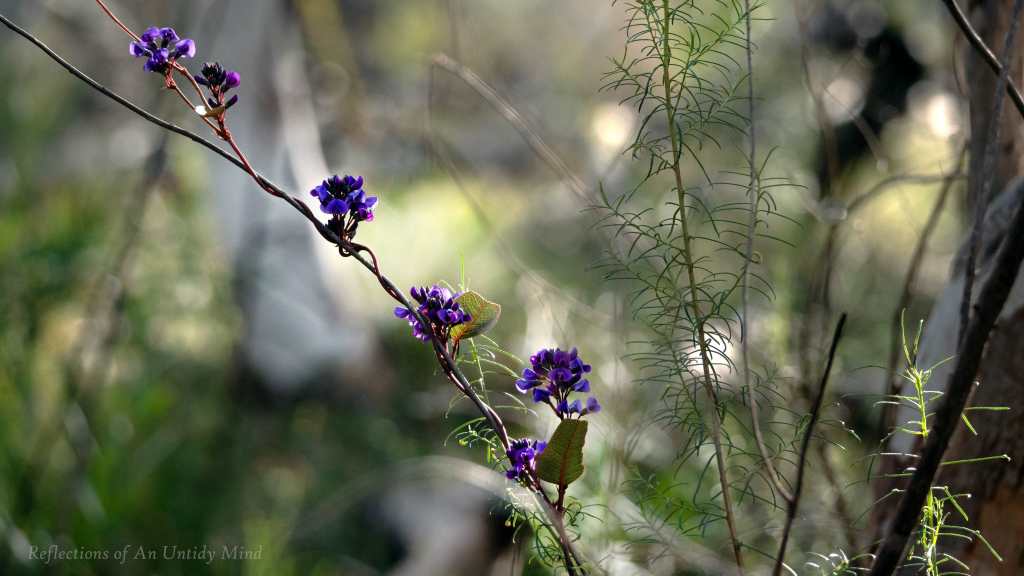
I had to use Photoshop to brighten up the next two photos. The following plant was flowering in the rainforest garden. The rainforest garden was created completely from scratch when the ANBG was established. The rainforest is such a haven for birds, animals and people when city temperatures soar. It was a pleasant 17oC when we were there.
I think the plant in the next photo is Hardenbergia violacae. It was so lovely and delicate, glinting red where the sun fell on the twining stems. We saw many plants in bud, so if you happen to be in Canberra (Australia) over the next month, the floral displays at the ANBG are sure to be even more spectacular and well worth a visit. A tip – I much prefer the somewhat dishevelled, natural gardens up the hill rather than the more manicured, curated gardens that are on the lower levels.
Finally, a photo from today’s visit to my son’s house. This was the first day that all three dogs had visited him at the same time. They had fun and Ama tried to eat a lot of sticky weed. That, and the fake grass, has gotta go. I suspect there will also be some other modifications to make it more of a haven for small woodland birds. All in good time.
I hope you enjoyed my garden tour. Please visit Ann-Christine’s post here to see all the fabulous garden examples from her many contributors.
Our big community park day event is over. Our team worked so hard on the event. I didn’t take a single photo. We had quite a few kids show up. They really got into fishing out the water bugs, insect hunting and planting (plants, not insects). I gave a little speech. I have a phobia about public speaking so consequently I remember nothing of what I said. I think I may have said something about birds or plants …. Who doesn’t love wildflowers?
No need for further Saturday house inspections. My son has found a small house and will be moving in shortly. Apparently the seller preferred to sell to a first-home buyer rather than an investor. There are still some kind people in this world. We are so excited for our son. The house is lovely. I think he will be very happy there. It is within walking distance so there are plans for the dogs to visit regularly and perhaps stay over for a few days at a time …. My son remained super calm through the whole stressful process.
Announcement to Shoppers. I went to the local hardware store. There was a public announcement in store asking shoppers not to be rude or aggressive to staff. It seems rudeness and aggression is a thing now. People are mostly kind to our park volunteers but not all. Those unkind people must be so miserable.
Strange Weather. It rained for a few days so we didn’t get to see the Southern Aurora. We are still waiting for the first frost of the year.
I am so proud of everyone who made our park day such a success. I am so proud of our park. I am so proud of my son – his kindness and calmness. He was an exemplary buyer. Kindness makes the world a better place. The sun has returned. We may get a frost soon.
Canberra, Australia – Turns out we have our fair share of tools.
I downed gardening tools the other day to go for a short walk with my love. I’ve spent a lot of time looking down lately at the garden so it was a nice change to look up.
March got a little merry when I met up with Mary. Hairy Mary, aka Anthela varia, mistook me for a tree. It crawled up the inside of my trouser leg. It was a good photo opportunity. No nudity involved. Check it out.
Many of my readers know that I have been focussing on some landcare activities at my local park over the last year. I have met some wonderful people doing that, but every now and then, such as when people continue to illegally dump their garden and other household waste in the park, or when they pull out our plants, or they ignore our greetings, it is dispiriting. I am actually shocked by the mean and petty behaviour we have encountered. I would be really embarrassed if I have behaved like that. Anyway, if I have few words to say here on this space, that is the reason why.
So my sanity saving strategy is just to plug away, pick up their rubbish, plant our government-approved plants and complete the government-approved weeding. And hope like hell that the culprits’ dicks rot off. One can only hope.
Now, where was I? The small woodland birds have returned from their summer homes in the hills. Their migration through our woodland is proving unexpectedly challenging due to the increased presence of larger predators attracted by the increase in insect numbers. [L-R Grey Fantail chick, Spotted Pardalote]
I have learnt that there is a subtlety to an Australian autumn. How have I not appreciated this quite so much before?
Boisduval’s Autumn Moth waited for the cold front to arrive before she emerged.
My ever evolving verge garden has faced a number of challenges in the last 18 months. The weather has been temperamental – overly wet or overly dry. Consequently some plants have rotted and some have fried. I also have one of those eucalypts that are known for being allelopathic to plants growing underneath them. I have recently replaced some of the moisture-happy plants with more dry tolerant plants. Hence, it rained. Rather a lot. Unsurprisingly the plants that are doing best are the unobtrusive ones that are local to our area that can still be found hiding in some of our urban green spaces. What do you think? Is my verge looking more Australian bush-like?
In order of appearance below – The Glycine clandestina (Twining Glycine) has been a star performer in this rather harsh environment. It delicately weaves its way between sticks and leaves. It is so delicate and unobtrusive that the Brittle gum barely even notices that it is there. Another scrambler is Einadia nutans (Climbing Saltbush). It loves the sunny spot I found for it. I love how it is climbing its way through the Themeda triandra (Kangaroo grass). I bought three Bossiaea (possibly the prostrata variety) but only one has survived. It was too hot when I planted them or maybe they are difficult to get started? I hope it survives because I love the muted orange and olive tones among the meatier brown of the fallen leaf litter.
I fell in love with the Dichelachne crinita (Long-haired plume grass) growing down at our nearby park, so I planted some on the verge. It likes water so I sprinkle it from time to time but it seems reasonably adapted to both wet and dry conditions. I have also incorporated plantings of Wahlenbergia stricta (Tall Bluebell). My verge plantings will provide seed for our neighbourhood park restoration project.
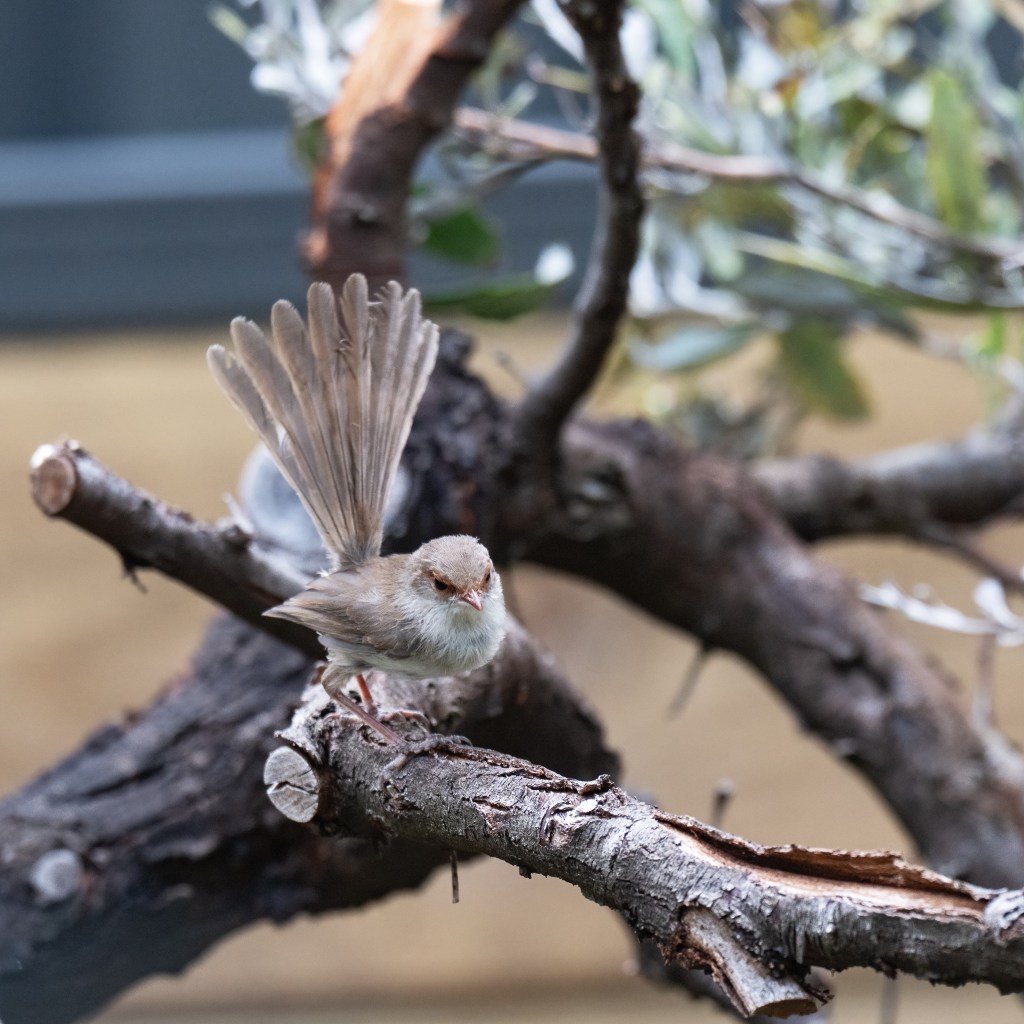
And finally, one last photo. We had a family of Superb Fairy Wrens visit us for the last year. This year they made it to our front yard. We have also seen them venture to the edge of the park. We hope that one day they will be just as comfortable in the small thicket of shrubs our landcare group is establishing for them there. Plant some dense shrub cover and native grasses, invite the insects in, and the little birds will come.