G’day, Readers. I hope you are all well and keeping busy. It seems I have lost the ability and will to blog at 3am. These days, 5pm seems to be my bedtime. It is all a bit strange really. I’m sure I have mentioned this before but it has been a long time between blog posts and I am sure you would have forgotten.
I’ve been watching a doctor show on the tele. The head doc is rude and his offsiders are pretty FITH. But they know their stuff. Amyloidosis, anyone? Since I am a real hypochondriac, it passes the time pleasantly. When I take my long list of ailments to my doctor, I get sent home with a fact sheet on menopause. What a cheek! Despite this, I am happy. A sure sign that I have really lost it.
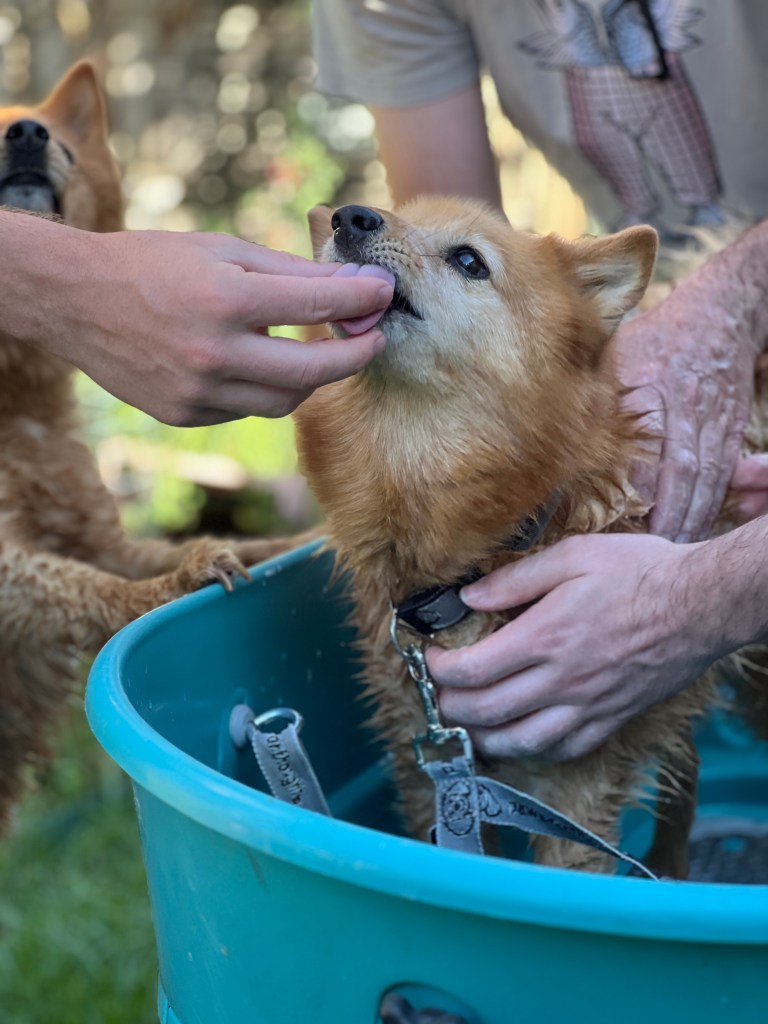
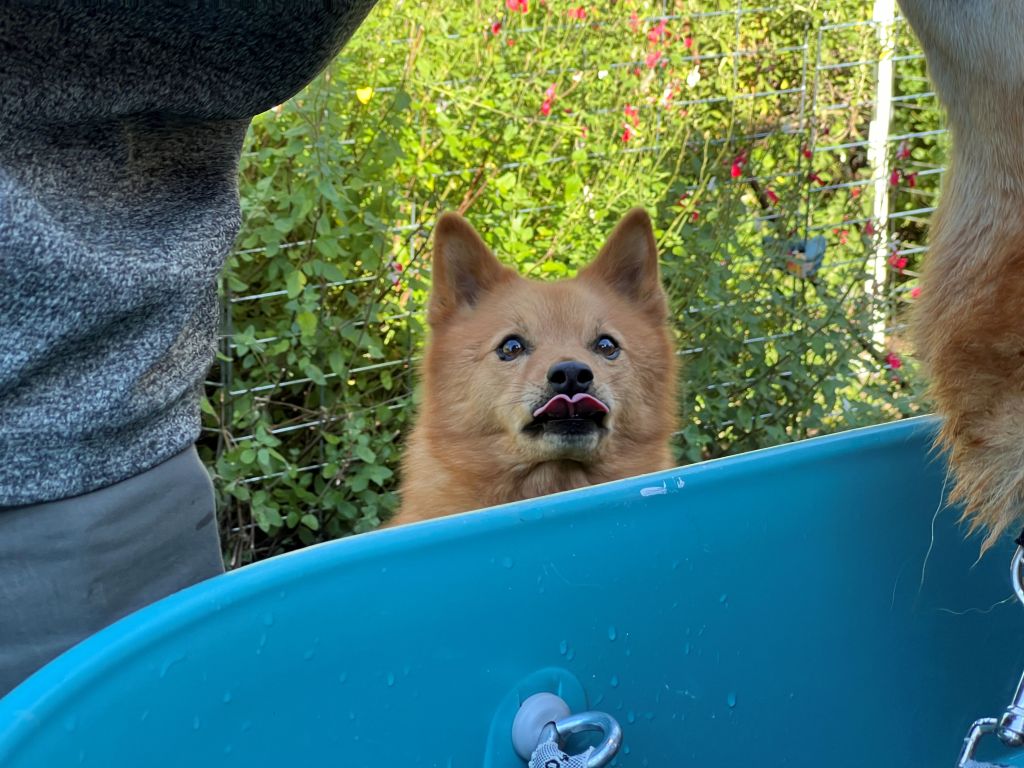
However, continuing with all things positive, I thought I would overshare my dogs first bath in about three years. I bitch about my phone camera, but it sure does take nice dog photos. Makea had her bath last week when I was sleeping, so it was just Fynnie and Ama that faced today’s particular torture.
Actually, Ama was a little champion. She always is.
Plus, a well placed distraction.
Say cheese.
Excuse me!
Hope your day brings you a little slice of happiness.
Who knew that watching the grass grow and grow was so interesting?
I’ve written a thousand blog posts in my mind over the last couple of months. I’m usually down the park at the time undertaking landcare activities (aka weeding). One of our team members described me as indefatigable. Sure, I can spend five or six hours weeding in oppressive heat but I don’t feel indefatigable. I feel exhausted. Many a time I have just wanted to lie down under a tree and have a sleep. The ants would like that. I think anxious would be a better term to describe me rather than indefatigable.
The hot, humid conditions and the shutdown over the Christmas break has led to an even greater explosion of African Love Grass (Eragrostiscurvula) across Canberra (Australia). African Love Grass consumes all other grasses in its path and is highly flammable. So yeah, I am focussed on weeding as much of it out as quickly as I can so that the native grasses can provide it with some competition, improve biodiversity and mitigate fire risk. I’m not doing this alone by any means. Do you think I want to kill myself? Fortunately, our urban park has also been designated a conservation zone because it contains a patch of critically endangered box gum grassy woodland and hence a native grass-friendly mowing program has recently been established for it. Without that change to the mowing regime, there would be no hope of containing that Love Grass.
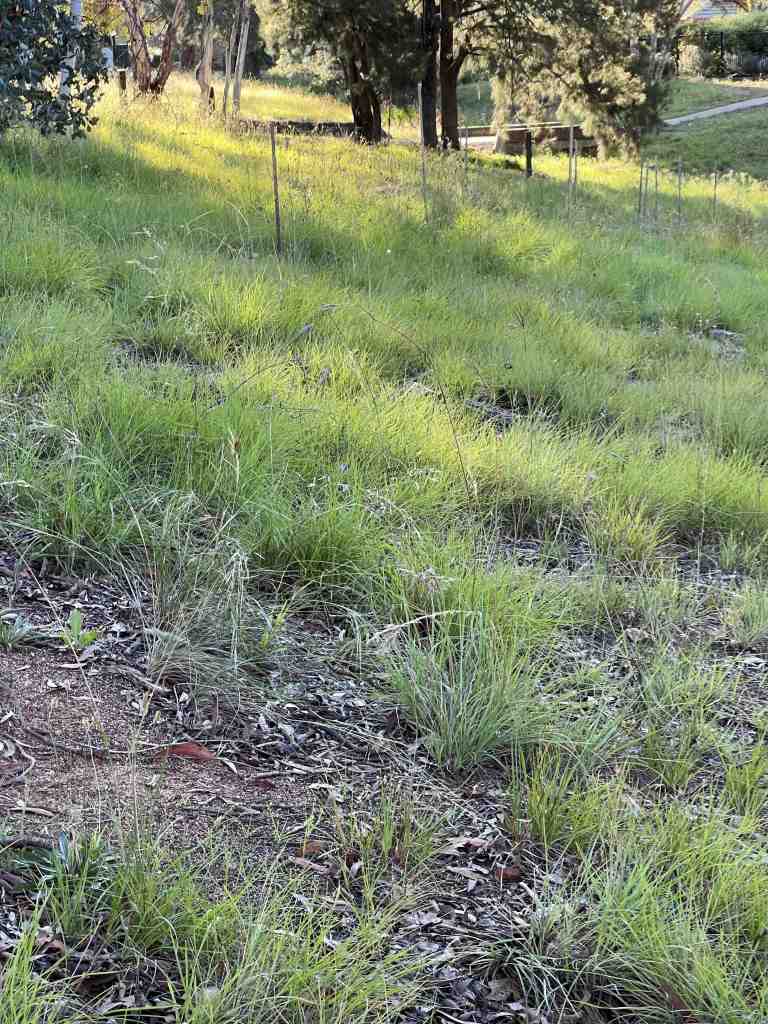
Australian native grasses are touted as a way of mitigating the fire risk of African Love Grass. A patch of Themeda triandra (below) holds the moisture in the ground. It can compete against Africa Love Grass in sunny aspects given a modified mowing program and some TLC. This patch took much weeding and new mowing arrangements to bring it back to match fitness. Themeda triandra is native to Australia, Asia and the Pacific.
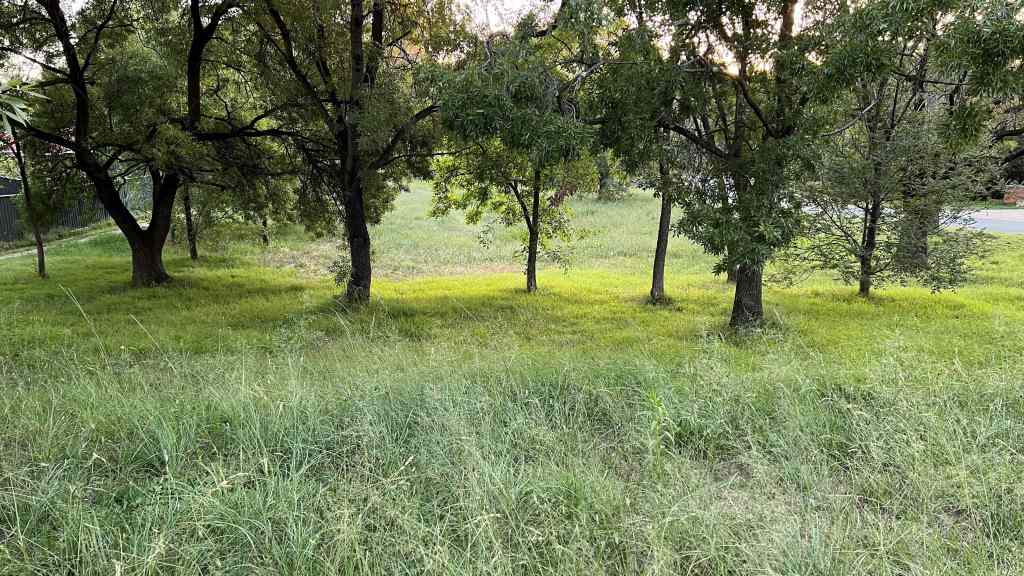
African Love Grass is not a fan of shade. In the shade, our lovely weeping grass (Microlaena stipoides) can put a break on it and other tall, weedy exotic grasses.
Microlaena growing under a stand of deciduous trees is flanked by African Love Grass.Microlaena under a eucalypt in one of Canberra’s nature reserves. Not mown, except by kangaroos, completely surrounded by exotic weeds.
Unfortunately, the general population doesn’t appreciate the distinction between native grass and weedy grasses like African Love Grass (ALG), Chilean needle grass and serrated tussock. Except for the Rural Fire Service, who would know this stuff? I certainly didn’t know until I started my landcare activities. Moreover, what government is going to admit to the fire hazard in the heart of our city? There is no asset protection when ALG is allowed to grow unchecked across Canberra. That’s my personal view. Our local government must indeed be worried. When hot dry winds are predicted, one can hear the constant buzz of municipal lawn mowers racing to slash the grass across the city. But mowing in those conditions can also be a hazard. Late last year, one of our landcare members saw a mowing crew trying to stamp out a grass fire started by their mower on a hot and windy day. Scary. Thankfully the fire was on a median strip.
It must a real conundrum for the government on how best to educate people about the fire mitigating properties of native grasses without encouraging lunatic fire bugs to take advantage of our city’s vulnerability. It would be a brave government that would try that. Instead, governments and oppositions exhort the benefits of increased mowing even though this is to the detriment of any native grasses that might be just hanging in there. Nuance and politics don’t go together. I feel their pain. It is really not practical or economic to massively scale up the sort of weed reduction and rehabilitation efforts that many of Canberra’s landcare teams are undertaking. Nevertheless, call it biodiversity protection, call it landcare, call it what you will, educating people about our local grassland assets and their care can benefit us all by at least starting a conversation on what can be achieved with community support. At the very least, people may be more inclined to mow their ALG infested yards.
Native grasses re-establishing under eucalypts. We have our eye on the African Love Grass beyond the conservation bollard. It will take time to get there but get there, we will.
Thanks for reading this far. I have to rush out now. Bit more ALG to pull out before it gets too warm. Plus, we have identified a second remnant woodland in our suburb and it too needs care. I’ll leave you with this presentation from the Bredbo Rural Fire Service. They know their grass and they know fires. Best we do too.
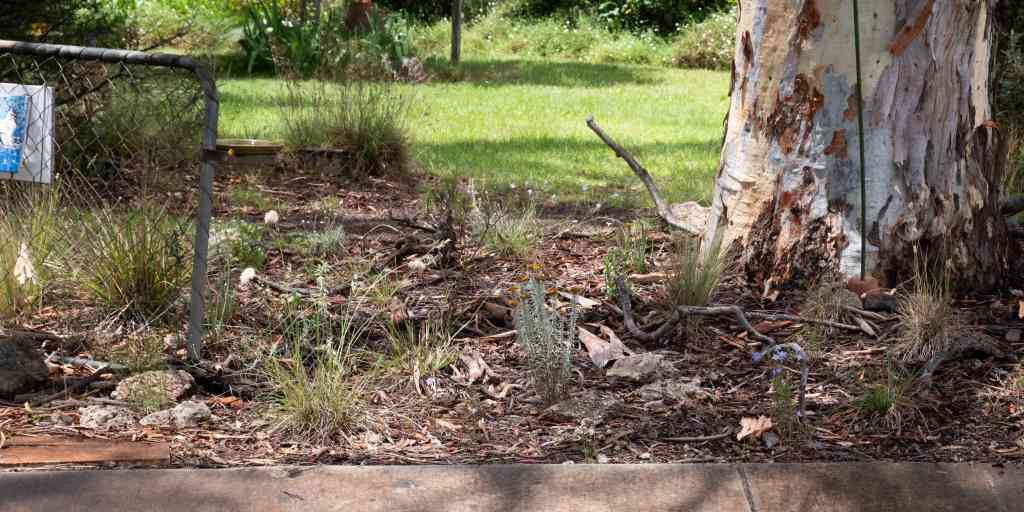
My ever evolving verge garden has faced a number of challenges in the last 18 months. The weather has been temperamental – overly wet or overly dry. Consequently some plants have rotted and some have fried. I also have one of those eucalypts that are known for being allelopathic to plants growing underneath them. I have recently replaced some of the moisture-happy plants with more dry tolerant plants. Hence, it rained. Rather a lot. Unsurprisingly the plants that are doing best are the unobtrusive ones that are local to our area that can still be found hiding in some of our urban green spaces. What do you think? Is my verge looking more Australian bush-like?
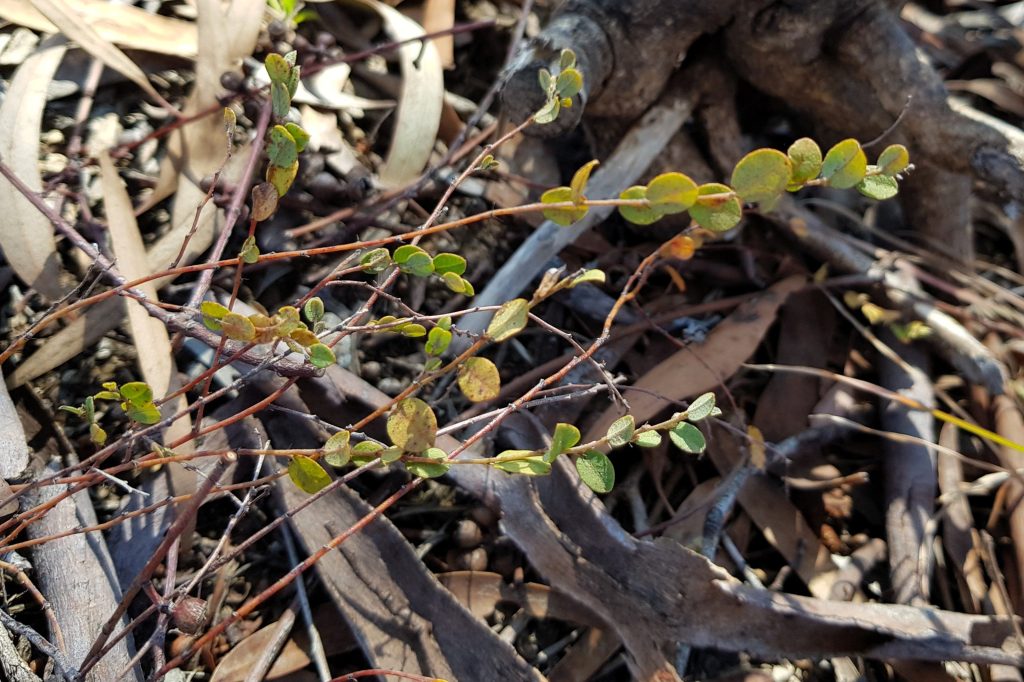
In order of appearance below – The Glycine clandestina (Twining Glycine) has been a star performer in this rather harsh environment. It delicately weaves its way between sticks and leaves. It is so delicate and unobtrusive that the Brittle gum barely even notices that it is there. Another scrambler is Einadia nutans (Climbing Saltbush). It loves the sunny spot I found for it. I love how it is climbing its way through the Themeda triandra (Kangaroo grass). I bought three Bossiaea (possibly the prostrata variety) but only one has survived. It was too hot when I planted them or maybe they are difficult to get started? I hope it survives because I love the muted orange and olive tones among the meatier brown of the fallen leaf litter.
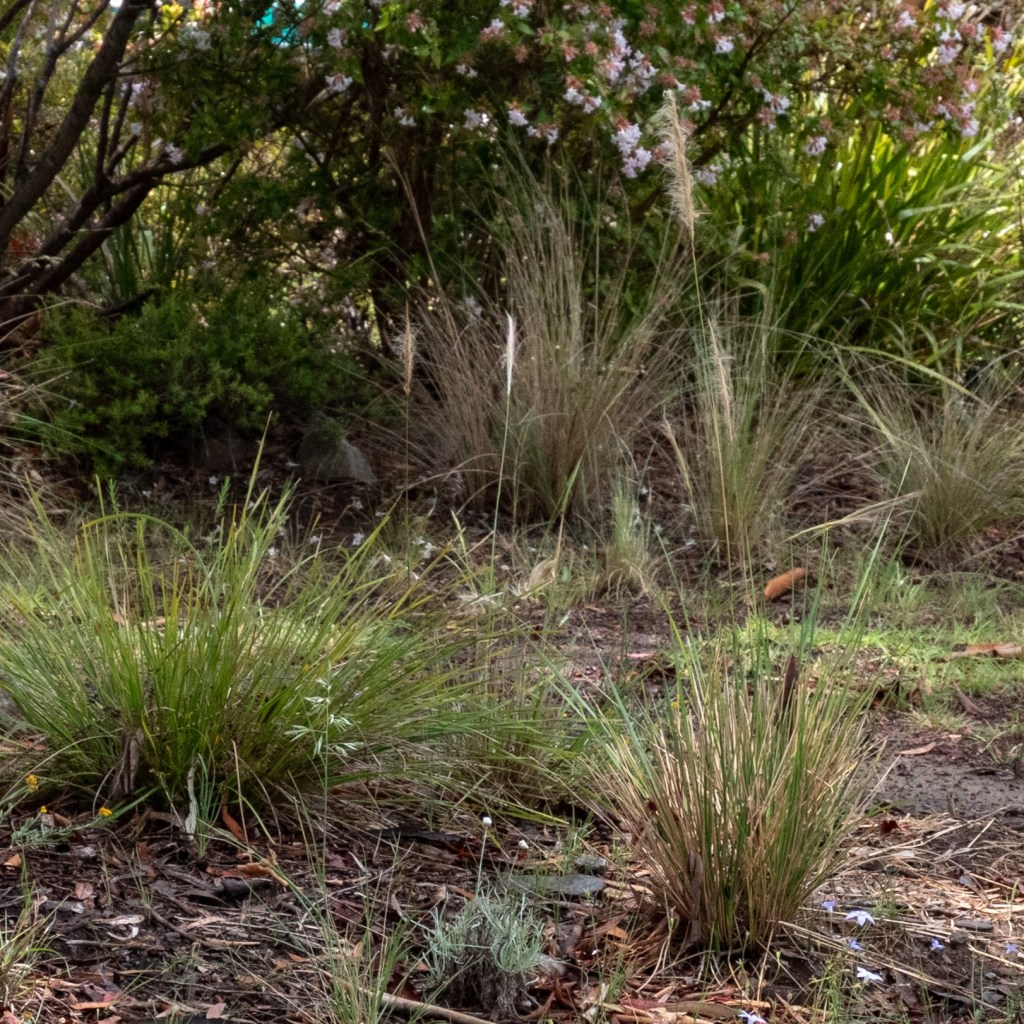
I fell in love with the Dichelachne crinita (Long-haired plume grass) growing down at our nearby park, so I planted some on the verge. It likes water so I sprinkle it from time to time but it seems reasonably adapted to both wet and dry conditions. I have also incorporated plantings of Wahlenbergia stricta (Tall Bluebell). My verge plantings will provide seed for our neighbourhood park restoration project.
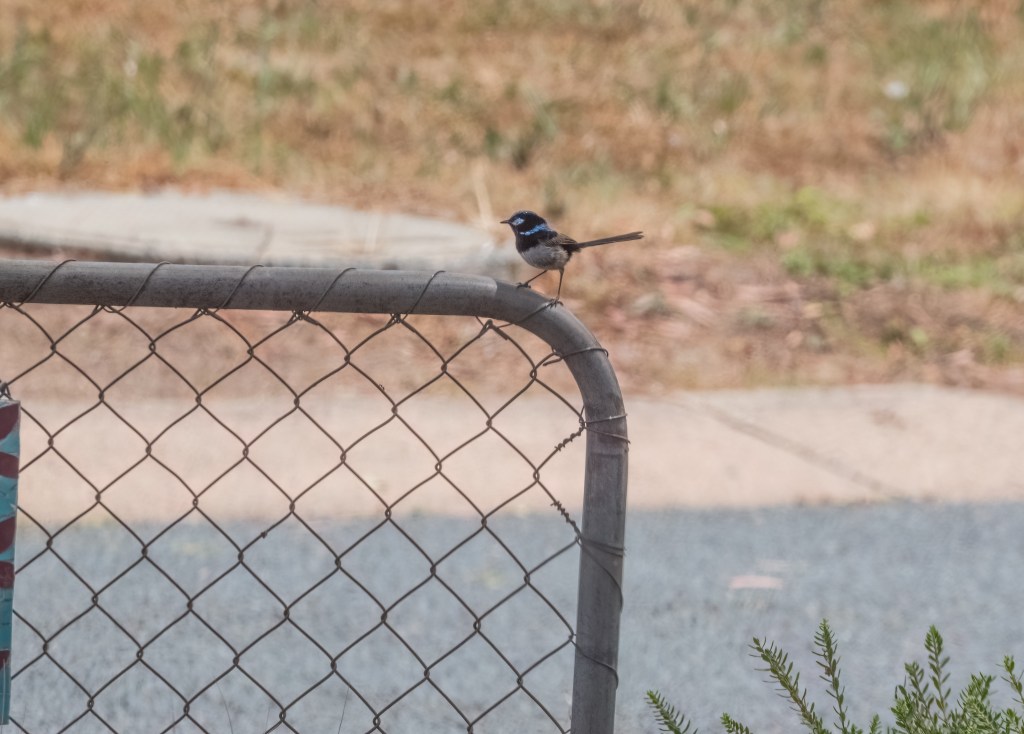
And finally, one last photo. We had a family of Superb Fairy Wrens visit us for the last year. This year they made it to our front yard. We have also seen them venture to the edge of the park. We hope that one day they will be just as comfortable in the small thicket of shrubs our landcare group is establishing for them there. Plant some dense shrub cover and native grasses, invite the insects in, and the little birds will come.
Good morning. It’s time for a few photos taken at the wonderful Australian National Botanic Gardens in Canberra.
These were the photos that I entered for a photography project run by my photography group, none of which were chosen. It was a learning exercise for me. An incredibly time consuming one. So I have decided that I probably won’t submit any entries for future projects until I have a bit more time. I might have to learn focus stacking first. I’m not sure I will ever have time for that …. We shall see. I hope to take some updated photos of my verge garden soon. I will give you a clue. Nothing much is happening.
By the way, the title of this post is an acknowledgement of how busy I’ve been and my complete inability to focus on 50 million things, including this blog. However, I am happy and I am learning heaps. Also, my True Love is retiring in a couple of weeks. How exciting is that? Sorry, for that digression, but how exciting is that?
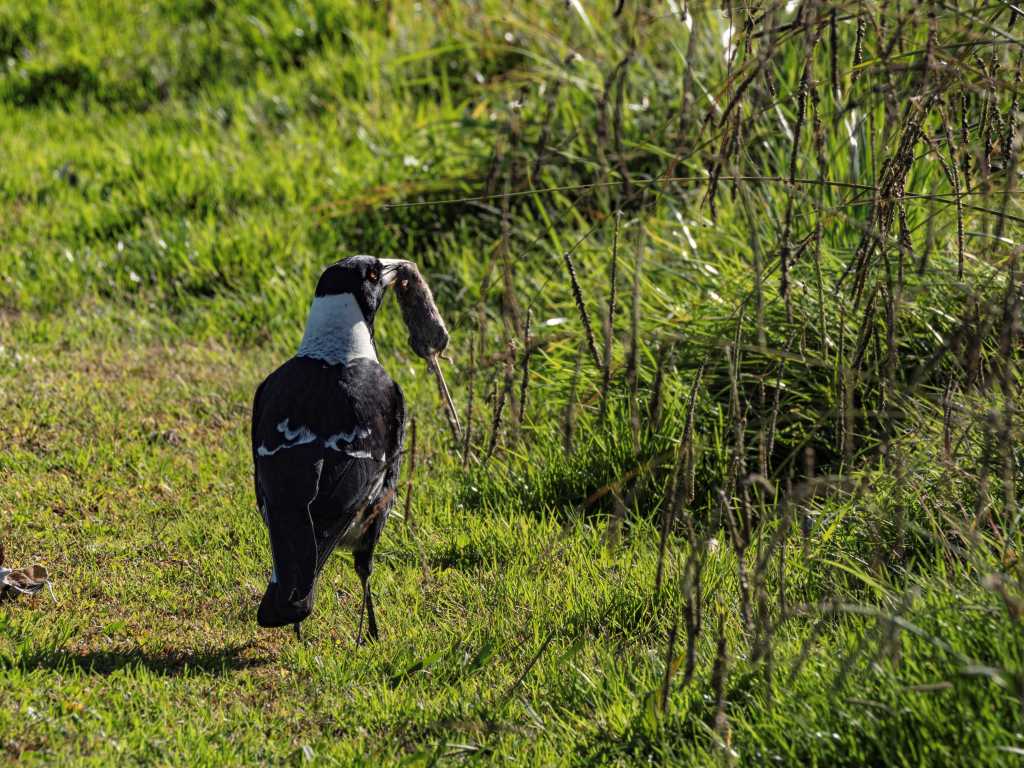
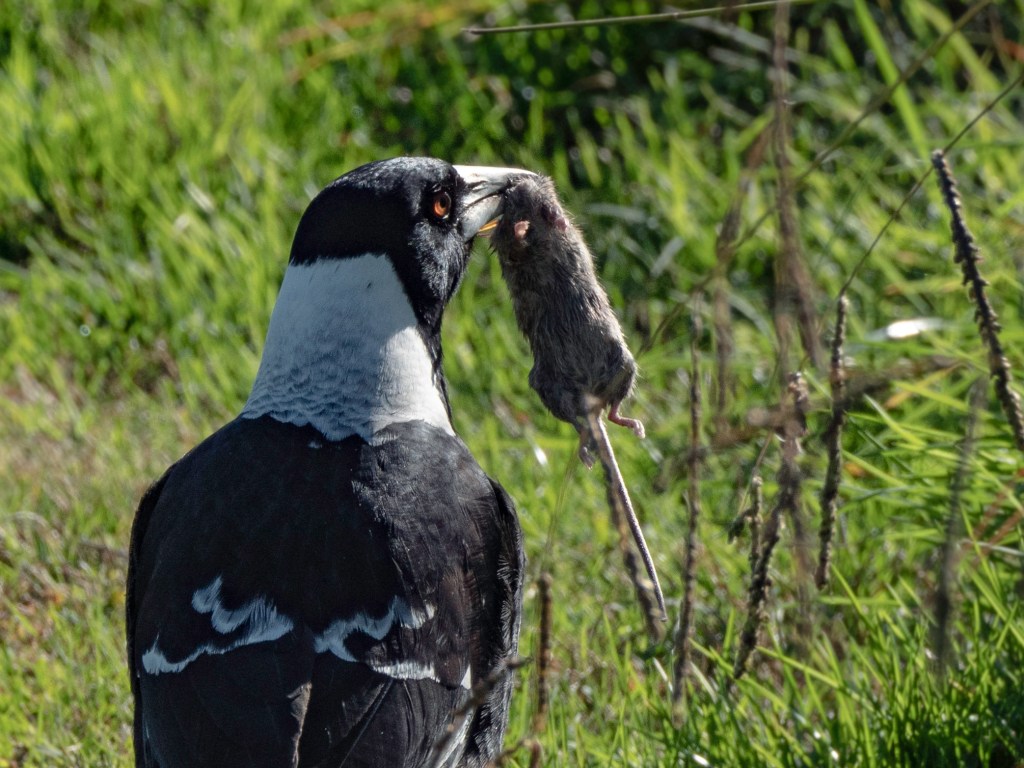
Regular readers will know that I have both a fascination for, and dislike of, rats that are not native to Australia. If you told me that the photo below was of a native bush rat, I would say, “Oh, poor thing!” However, if you told me that it was Rattus rattus, I would have no sympathy for it. I would have some sympathy for the magpie though, my first thought being that I hoped the rat wasn’t poisoned lest the magpie die of secondary poisoning.
Anyway, I have been hanging on to this photo for a while, since April actually. I was out walking, contemplating fording some long weedy grass – a wilderness experience – when I caught this magpie acting strangely on the edge of the sports oval. All of a sudden it darted into the long grass (magpies much prefer short grass) and pulled out a rat.
So the long tail tells me that it was Rattus rattus. Do you agree? I suspect it was a dead rat because it didn’t put up a fight and the magpie spent a good minute wondering what to do with it before she flew away with it. It is likely that the rat was poisoned. Or old. Anyway, anyway, there was nothing much I could do about the situation. After that, I decided not to head into the long grass.
You know how I love a good story. I cropped the photo for Show & Tell at my photography group. I think the members quite liked this photo and the story.
This may or may not be my final word on matters rattus. It depends …. Speaking of photography, I submitted some photos for a bookmark that my photography group is producing. I’ve never done anything like that before but why am I in this group if I am not going to participate in the activities? I am keen to know the outcome because I really liked the photos and I would love to share them with you.
Apart from that, my life is pretty ordinary. Given the events elsewhere, this is a good thing.
You may be excused for thinking this is Bushboy’s blog, readers. It isn’t! I suppose one of the consolations of having so many rats this year, is that we have had so many more little birds visiting us as well. Anyway, my True Love spent the three weeks of his holiday plugging tiny gaps to prevent the rats getting into the house, thus trapping most of the rats in our roof and wall cavities. We can hear them thundering across the ceiling, perhaps in some rat version of Lord Of The Flies. So maybe the little birds are more comfy to stick around for longer. Anyway, anyway, I digress. There were at least 30 little birds in my yard this morning. This is really extraordinary for our place. They usually never stop to bath in the bird bath but now … they’re into it.
However, one of these birds is not like the others. Equal opportunity here, readers. Well, apart from the rats.
Fortunately, I can now share the joy with you as my youngest son has repaired our internet cable. Our dog, Fynn, chewed through the data cable because he was convinced if he could just rip out the cable, he could start on the wall next, and thus have the starving rodents leap out of the wall cavity into his waiting jaws. Life’s never boring with a Finnish Spitz! But it is not just our house, readers. My vet told me that his cat keeps bringing live rats into the house through the cat door. I am so glad I don’t have a cat.
When my family got involved in the regeneration of our local woodland, I never imagined that one of our tasks would be to photograph the insects in that space. My True Love (TL) needed little encouragement as he already had an interest in insects. Suffice to say, he has found it extraordinarily difficult to get these small creatures in focus. The wind seems to blow constantly and the insects make haste to avoid being eaten or to eat others. Kudos to all the insect photographers out there. I’m not one of them. You have to take lots of photos to get one or two in focus, at least my TL does on his particular camera. Anyway, today I am featuring a few of the photos my TL has taken over the last six months. Let’s get started.
Bug eyes.
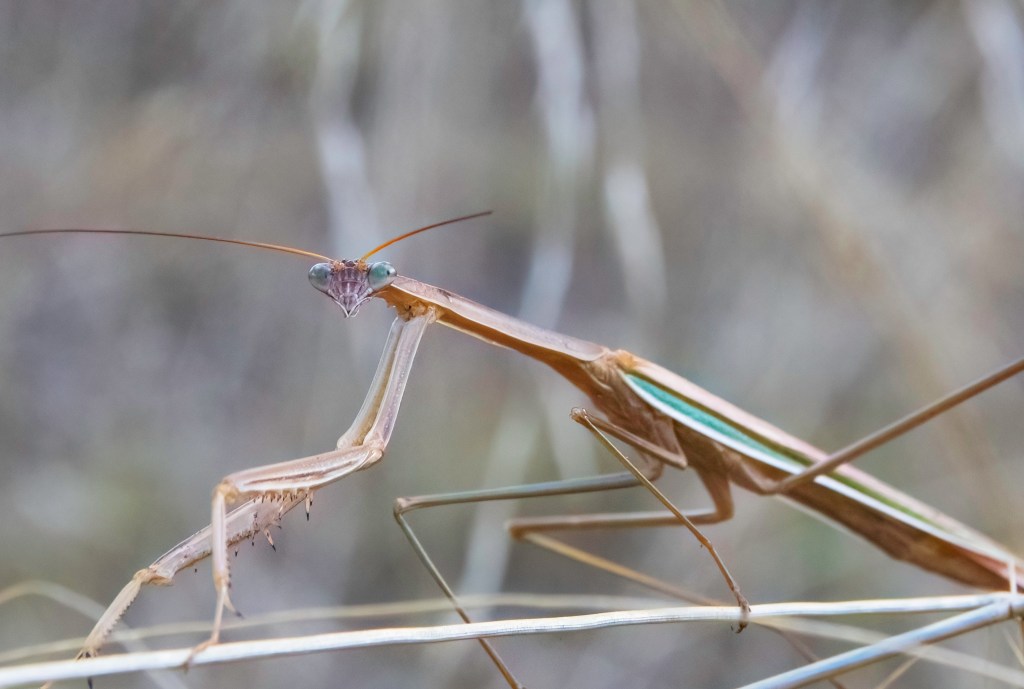
Purple-winged mantid – Tenodera australasiae
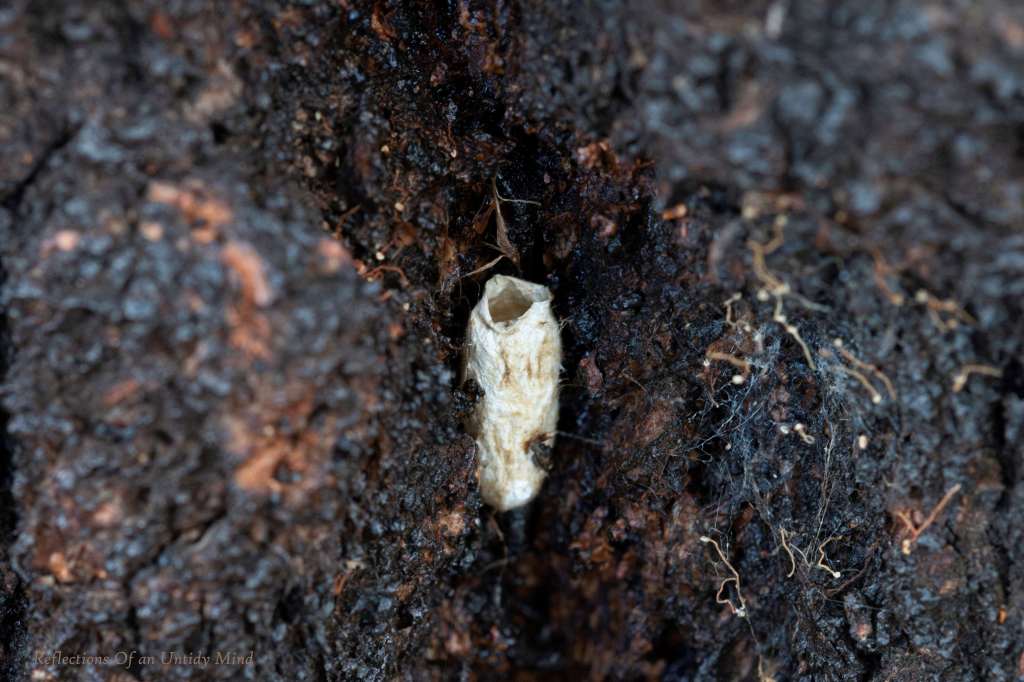
What do you think? Spider egg sacs?
Two-tailed spider egg sac?
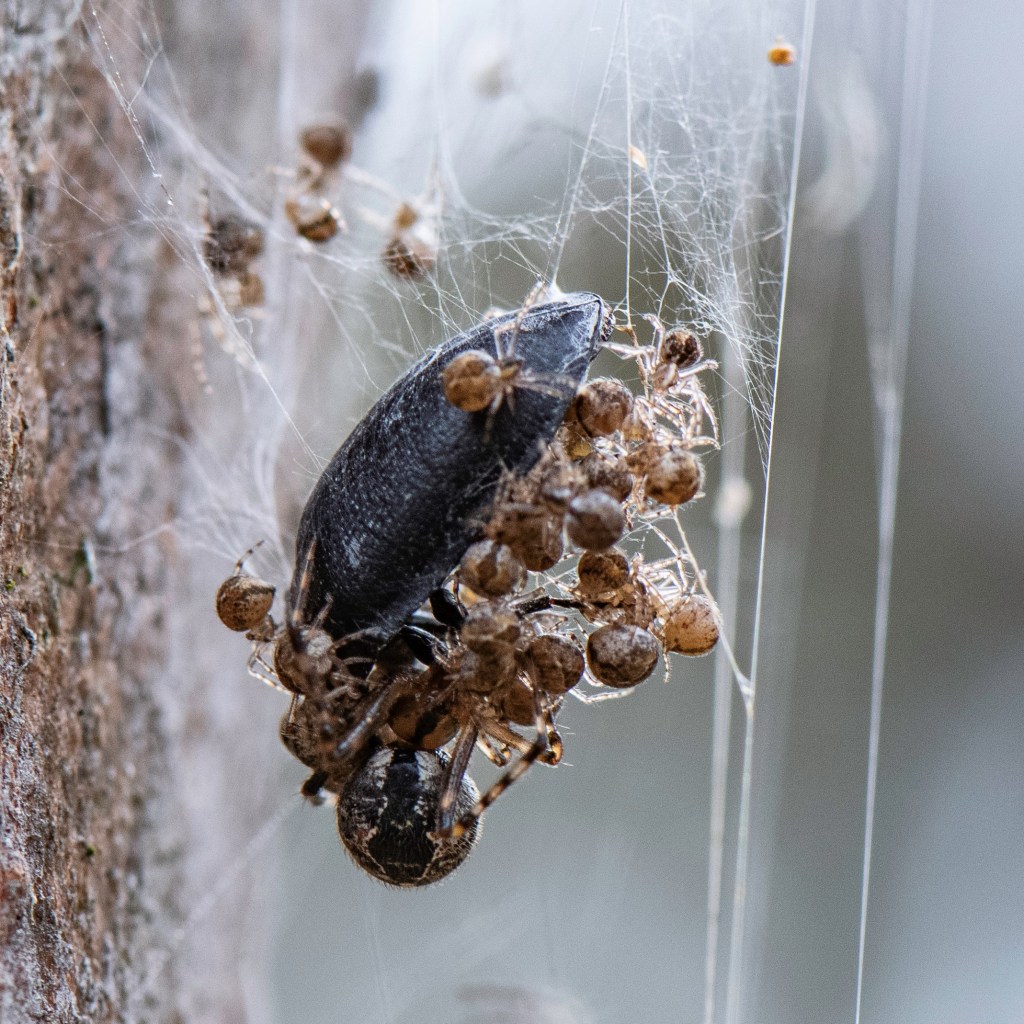
Beetles seem to be the favourite prey of many insects, although to be strictly accurate, spiders are not insects.
Apparently the Cerceris, or digger, wasp likes beetles too. My TL is lucky enough just to get the photo of the wasp, so no beetles were eaten in this photo. Cute, don’t you think?
Cerceris wasp – Cerceris sp. (genus)
My TL also took some photos of cuckoos. How about this tiny cuckoo wasp? It is only about 4-5mm long and super fast.
Cuckoo Wasp – Primeuchroeus sp. (genus)
And a Chequered cuckoo bee. Seriously, there is such a thing.
Chequered Cuckoo Bee – Thyreus caeruleopunctatus
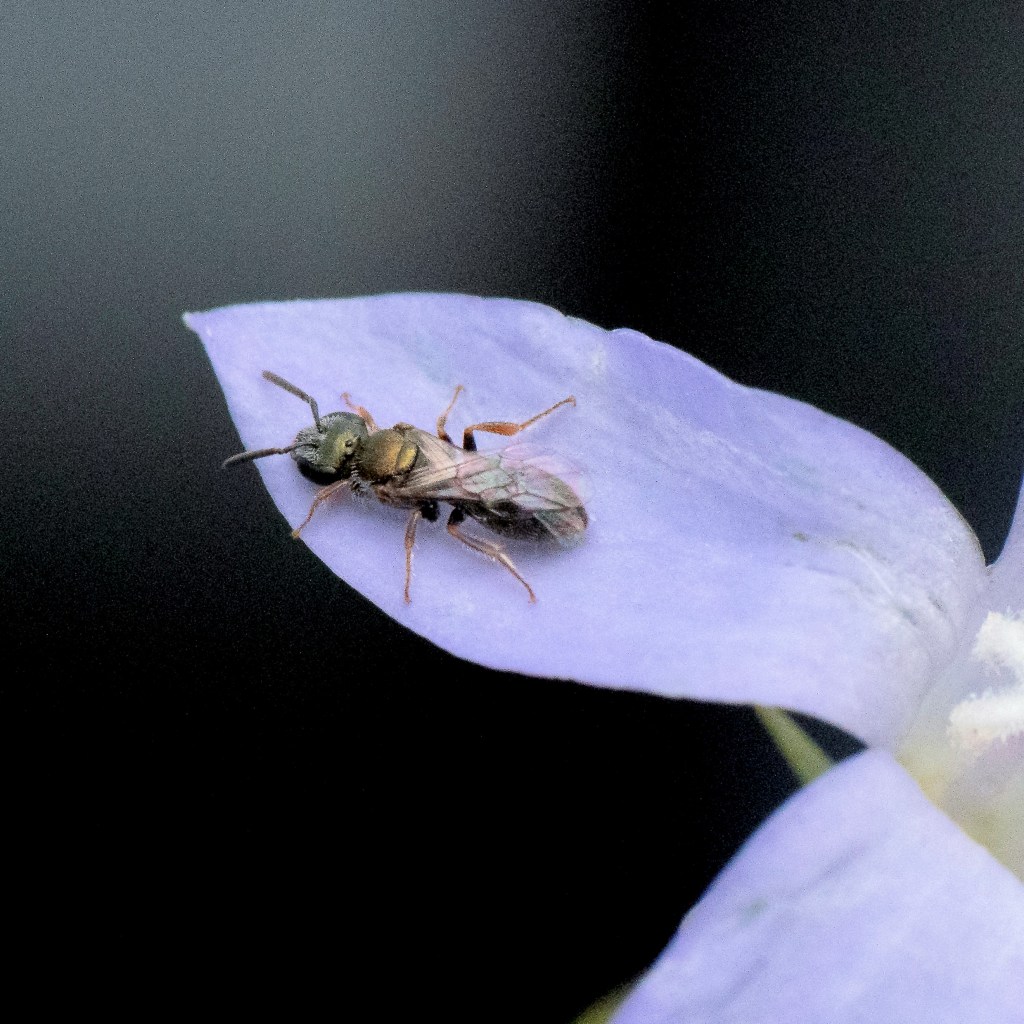
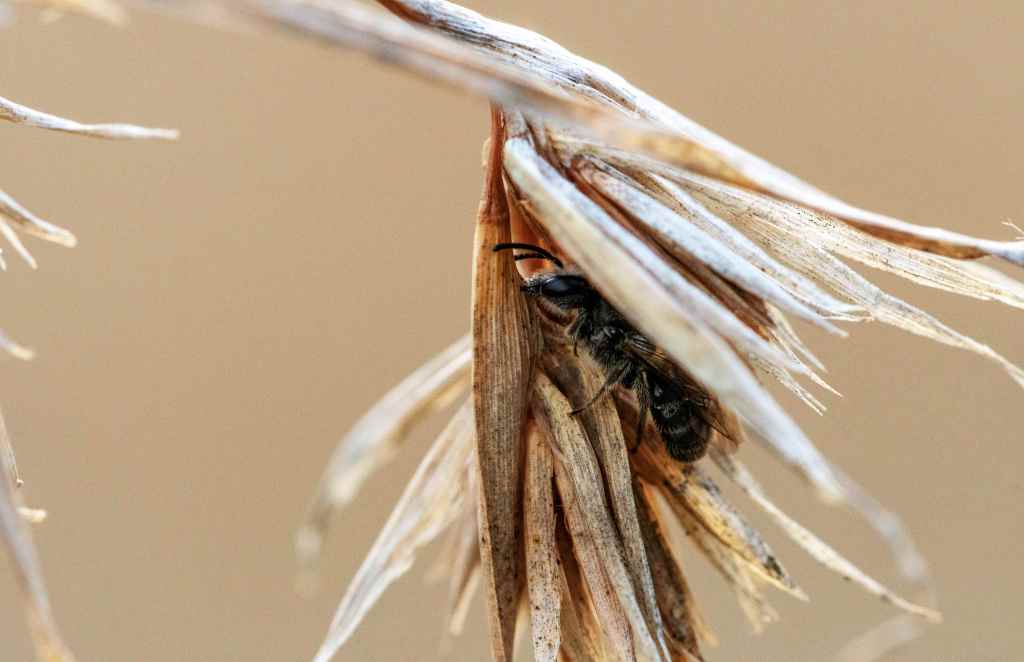
Halictad bees are also tiny. At least, these ones are. The first one has just emerged from a tiny Wahlenbergia, our native bluebell, and the second is roosting in some grass.
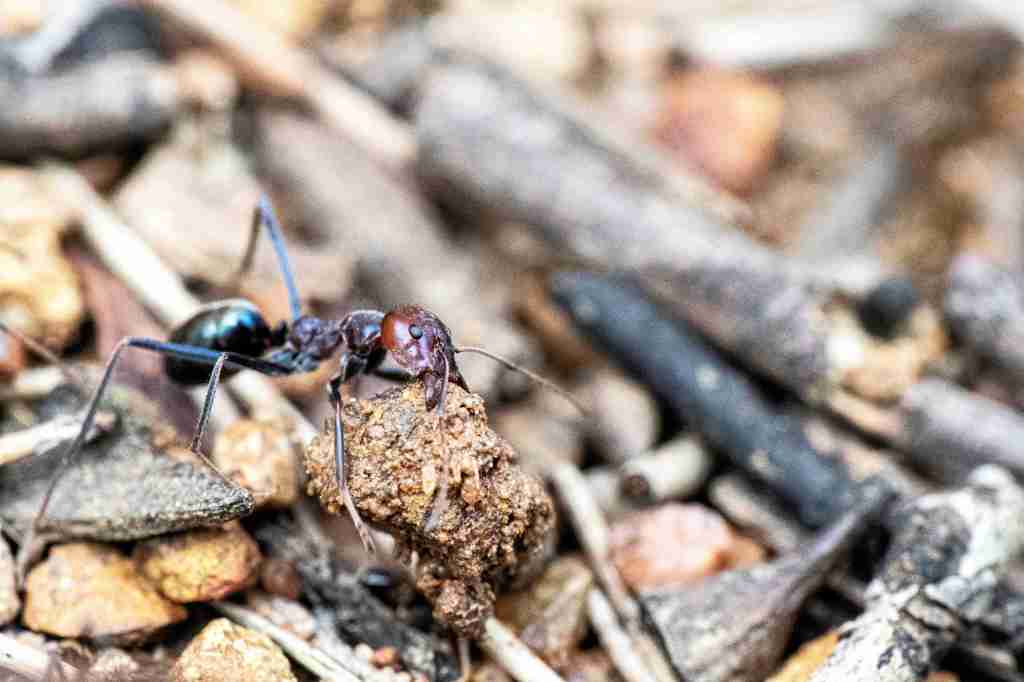
My TL tried to take some photos of meat ants launching their queens. But it was a bit hard to get them in focus. I was hollering in the background because the ants were biting me as they were scrambling up my jeans. Definitely had ants in me pants. We had to move away quickly. I thought I would have to drop my dacks on the track to get them out. Just imagine if other walkers had came across a man doing the same thing? He probably would have got into some serious trouble for being a flasher. Anyway, back to the photos – a meat ant pushing a lump of dirt downhill.
Meat Ant – Iridomyrmex purpureus
Speaking of beetles being eaten alive …. We know ants gotta eat, but my TL nevertheless rescued this beetle. The ants would not let that poor beetle go. My TL had a devil of a job freeing it. You have got to be joking if you think I am going anywhere near those ants.
Well, I can’t leave you traumatised so I will finish off with this lovely photo of a Yellow Admiral butterfly on a scribbly gum.
Yellow Admiral Butterfly – Vanessa itea
Thank you to Donna from Wind Kisses for coming up with this theme. It is probably the only subject that I can talk a lot about but don’t have to do any of the work to bring the images to you.
Now bugger off (Aussie slang for “Off you go.” No offense intended.)
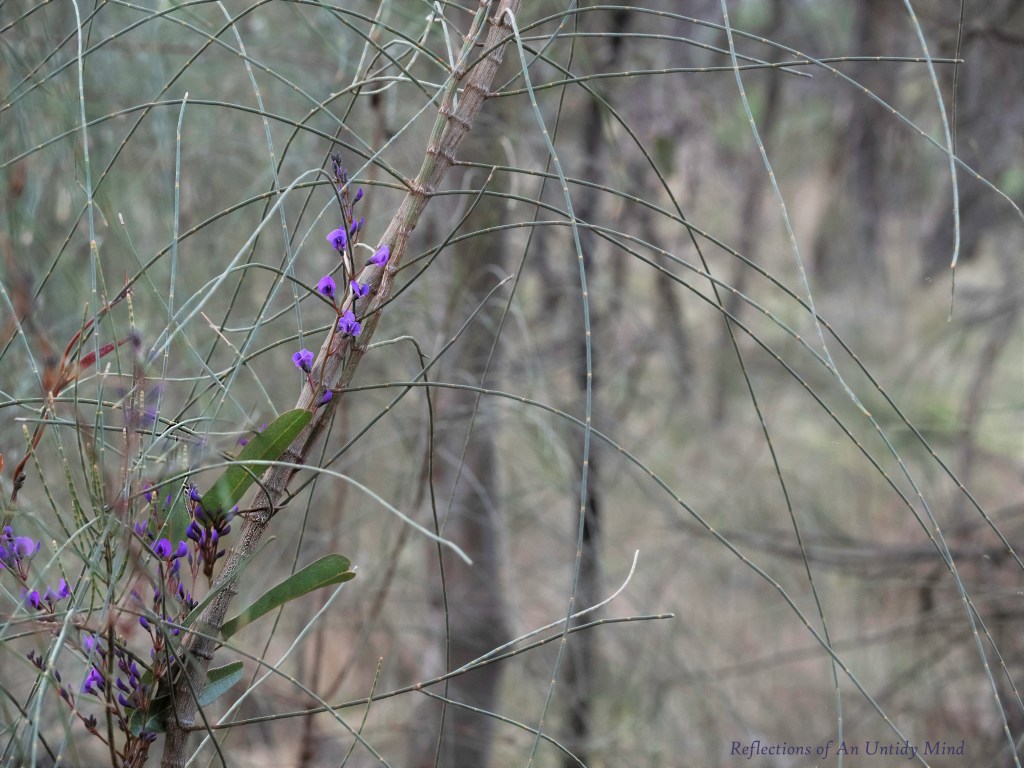
Okay, a few words. Our cameras and the software can do magic these day to sharpen and lighten up soft photos taken in the gloom. I constantly debate with myself about using all this tech to massage the photo into what I’ve been told is the correct exposure. I confess that I did touch up this photo. Just a bit. There is no point in posting something that people can’t see, I chide myself. But I like dark photos where shapes and colours merge together.



















 Reflections of An Untidy Mind